Denying Personal Liberty at the Gate: How India’s Passport Verification System Undermines Article 21 and Civil Rights
The freedom to travel abroad represents a core constitutional right under Article 21, yet India’s administrative machinery systematically compromises this personal liberty through arbitrary police verification procedures. Unregulated field discretion, coercive demands for non-statutory records, and artificial non-availability claims transform a fundamental right into a bureaucratic concession. Restoring constitutional protection requires replacing subjective physical checks with automated, rights-respecting digital verification.
By Rakesh Raman
New Delhi | September 17, 2026
1. Constitutional Foundations: Foreign Travel as an Inalienable Right
International movement is not an indulgence granted at the discretion of executive agencies; it is a vital pillar of personal liberty protected by constitutional law. In India, the legal framework governing citizen mobility was firmly established in the seminal Supreme Court judgment Maneka Gandhi versus Union of India (1978).
The court affirmed that the right to travel abroad forms an intrinsic element of Article 21 of the Constitution, guaranteeing life and personal liberty. On the international stage, Article 13 of the Universal Declaration of Human Rights echoes this principle by establishing the universal right of every person to leave any country, including their own.
Despite these established legal foundations, the operational reality for Indian citizens seeking passports reveals a stark structural conflict. Executive authorities have delegated gatekeeping power to lower-tier police personnel whose routine practices run contrary to constitutional standards. By treating passport verification as a discretionary clearance mechanism rather than a streamlined administrative duty, the state permits local field officers to restrict constitutional liberties through subjective, unmonitored procedures.
2. Procedural Arbitrariness and Structural Coercion
The current verification model relies heavily on physical, manual home visits by local police officers. This structural setup lacks digital accountability, enabling subjective decision-making that can lead to administrative abuse.
A common issue reported by applicants is the generation of unfounded “Applicant Not Found” or “Adverse” status logs. Applicants routinely report remaining present at their registered residences, only for field officers to file false entries declaring them absent or unreachable. Once an adverse entry enters the official tracking portal, the presumption of legitimacy is stripped from the citizen.
This mechanism places the applicant under severe pressure. Faced with the threat of indefinite processing delays, career disruption, or cancelled educational plans, citizens are often forced into paying unprescribed sums merely to secure a factual report. Higher-level administrative bodies consistently overlook these procedural anomalies, treating systemic field misconduct as routine processing rather than an infringement of fundamental rights.
3. Grievance Black Holes and the Denial of Due Process
The erosion of citizen rights is further aggravated by a lack of effective administrative oversight within the Ministry of External Affairs. Executive offices frequently accept field police submissions without validating their internal logic or cross-checking them against independent identity records already submitted by the applicant. This passive reliance converts the police apparatus into an unmonitored arbiter of personal freedom.
When citizens seek redress through institutional channels such as the Centralized Public Grievance Redress and Monitoring System (CPGRAMS or PGPORTAL), they encounter significant procedural roadblocks. Instead of initiating independent inquiries, the portal routinely routes complaints back to the specific local stations or officials accused of improper conduct. This practice creates a closed procedural loop that yields standardized rejections, shielding field personnel from accountability.
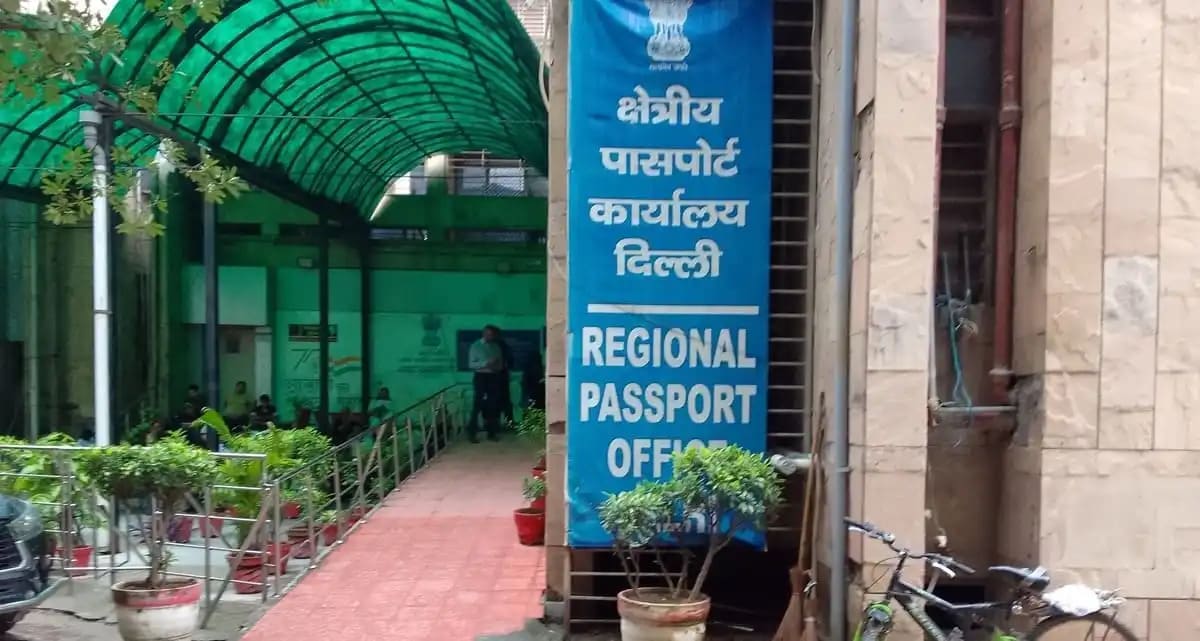
Similarly, physical interactions at Regional Passport Offices reflect systemic neglect. Applicants with valid, complete documentation are subjected to long wait times and crowded conditions to defend their applications before indifferent administrative staff, undermining the principle that public institutions must treat rights-bearing citizens with dignity.
4. Unlawful State Surveillance and Non-Statutory Overreach
Beyond financial exploitation, manual police verification is increasingly used to conduct non-statutory ideological and genealogical inquiries. Under the umbrella of background checks, field officers frequently demand documentation that extends far beyond official requirements.
Field personnel have been documented instructing applicants to produce ancestral land titles, parental birth records, and historical state residency documents. This practice amounts to an unauthorized National Register of Citizens (NRC) audit conducted without legislative authority or constitutional backing. Interrogating citizens about their family’s geographic origins transforms a routine identity check into an unlawful data collection exercise that violates citizen privacy and dignity.
5. Legal Boundaries of State Power: Empowering the Citizen
Public awareness of legal boundaries is essential to counter administrative overreach during passport processing. Citizens must understand the specific statutory mandate governing police involvement under Section 5(2) of the Passports Act, 1967.
Lawful Scope of Police Verification:
- Identity Confirmation: Verifying that the individual submitting the application matches the submitted official credentials.
- Current Address Verification: Confirming that the applicant physically resides at the declared residential location.
- Criminal Record Screening: Checking official databases to determine whether the applicant is subject to active criminal proceedings or outstanding judicial warrants.
Prohibited Police Actions:
- Demanding Non-Statutory Documents: Police officers possess no legal authority to require documentation outside the official checklist on the Passport Seva Portal. Demanding parental birth credentials, ancestral land deeds, or lineage records is illegal.
- Compulsory Police Station Attendance: Standard verification procedures require a residential visit by the designated officer. Forcing applicants to present themselves at a police station is an unauthorized practice used to exert leverage over citizens.
- Conducting Ancestral or Citizenship Inquiries: Field officers hold no statutory mandate to investigate an applicant’s family lineage or historical geographic background.
6. Rights-Respecting Reforms: A Digital Framework for Accountability
Eliminating administrative arbitrariness requires replacing colonial-era manual verification with a modernized, transparent system. Protecting citizen liberty requires four structural reforms:
- Eliminating Manual Address Checks: Physical home visits should be phased out. Address records verified through secure national digital repositories, such as Aadhaar, the Voter Registry, or Income Tax records, must be accepted automatically without manual police intervention.
- Automated Criminal Record Searches: The role of local police should be limited to automated database queries via the Crime and Criminal Tracking Network and Systems (CCTNS). A clear record search should generate immediate digital clearance, removing human discretion from the approval process.
- Mandatory Recording of Manual Interactions: Where physical visits remain necessary, field personnel must wear mandatory body-worn cameras. Timestamped, unedited video footage must be uploaded directly to central Ministry servers to provide objective proof of compliance.
- Independent Oversight and Reversal of Burden of Proof: The Ministry of External Affairs must establish a dedicated grievance mechanism independent of standard routing channels. Complaints should be reviewed by an independent judicial ombudsman. In contested cases, the legal burden of proof must rest on the police department to demonstrate full adherence to official protocols.
India’s development as a modern democracy requires aligning administrative practices with constitutional principles. Replacing arbitrary police gatekeeping with automated digital systems is essential to protect personal liberty and uphold the fundamental right to travel.
Frequently Asked Questions (FAQs)
Q1: Why is international travel classified as a constitutional right in India?
In the landmark 1978 case Maneka Gandhi versus Union of India, the Supreme Court of India established that the right to travel abroad is an integral aspect of personal liberty guaranteed under Article 21 of the Constitution. Executive interference with this right must satisfy strict legal and procedural standards.
Q2: Can police officers demand ancestral property deeds or parental birth certificates during verification?
No. Police officers are legally restricted to checking the specific documents listed on the official Passport Seva Portal. Demanding ancestral land records, parental birth proofs, or family lineage certificates constitutes an illegal overreach of statutory authority.
Q3: Is an applicant legally obligated to attend a police station for passport verification?
No. Official guidelines state that verification should occur via a residential visit by the field officer to confirm physical occupancy. Compelling applicants to visit a police station is an unauthorized practice that lacks legal standing.
Q4: What legal recourse is available if a false adverse police report is filed?
If a false adverse report is submitted, the applicant should submit a formal representation to the Regional Passport Officer (RPO) providing proof of residence and detailing the procedural non-compliance. Applicants may also lodge a formal complaint citing administrative misconduct.
Q5: How do digital verification systems safeguard fundamental rights?
Digital verification replaces subjective human checks with automated database queries across official records like Aadhaar and CCTNS. Removing subjective field discretion prevents arbitrary delays and protects citizens’ constitutional rights.
This article is published by RMN Foundation to promote administrative transparency, constitutional literacy, and public sector accountability.
By Rakesh Raman, who is a national award-winning journalist and social activist. He is the founder of the humanitarian organization RMN Foundation which is working in diverse areas to help the disadvantaged and distressed people in the society.
He also runs the RMN Consumer Rights Network, a public-interest initiative to protect consumers from corporate negligence, misleading advertising, government apathy, and other practices that harm people’s rights, health, and financial interests.
Donation to RMN Foundation