Archive: June 28, 2024

Narges Mohammadi. Photo: Gulf Centre for Human Rights

Iran Urged to End Harassment of Narges Mohammadi

Narges Mohammadi. Photo: Gulf Centre for Human Rights

Iran Urged to End Harassment of Narges Mohammadi

Narges Mohammadi is serving multiple sentences amounting to more than 13 years of imprisonment. 

A group of independent experts has urged the Islamic Republic of Iran to immediately and unconditionally release Narges Mohammadi and all women human rights defenders, who remain in jail on charges relating to their defence of human rights.

“We are alarmed about the unfair proceedings and lengthy sentences handed to human rights defender, Narges Mohammadi, directly related to her peaceful exercise of her rights to freedom of expression and assembly in the pursuit of gender equality in Iran,” the experts said. “Unduly covering charges under the framework of “national security” or “propaganda against the state in order to silence critical voices” need to stop.”

Narges Mohammadi is serving multiple sentences amounting to more than 13 years of imprisonment. Her sentence was extended by an additional 15-months in January 2024 for new charges concerning “spreading propaganda against the state”.

On 18 June, Branch 29 of the Tehran Revolutionary Court sentenced Mohammadi to one additional year in prison on the charge of “propaganda activities against the state.” This is her sixth conviction since March 2021, three of which appear to be in relation to her human rights activism in prison, including advocating for the rights of other female prisoners in relation to sexual offenses by government officials.

The Working Group on Arbitrary Detention has previously found, in its Opinion 48/2017, her detention arbitrary.

“We are deeply concerned about the climate of discrimination and fear that women human rights defenders’ live under in Iran,” the experts said.

They said this was compounded by the absence of a rules-based justice system that is gender-responsive and accessible to women, and by impunity for violations of the rights of women and girls.

“The extreme discrimination and violence against women and girls are unacceptable,” the experts said. “We wish to remind the Iranian Government of its obligation to protect and promote the rights of all human rights defenders as they peacefully carry out their legitimate work,” they said.

In a statement issued on June 27, the experts also received disturbing reports which indicate that Narges Mohammadi has been denied access to her lawyer and prevented from contacting her family since 29 November 2023, shortly after having been awarded the Nobel Peace Prize. Even more worryingly, Mohammadi has reportedly been denied medical aid. They recalled that access to medical and legal support for detainees are fundamental rights and must always be respected.

Arrests of women’s rights activists have reportedly increased in recent years, with Iranian officials warning that other people protesting against the compulsory wearing of the veil may be charged with national security offences.

“Women human rights defenders challenging the imposition of a compulsory dress code on women are acting in defense of universally guaranteed human rights. We urge the government of Iran to remember that,” the experts said.

They recalled that the use of repressive legislation to criminalize the exercise of freedom of expression and peaceful assembly is incompatible with Iran’s obligations under international human rights law.

Courtesy: UN Human Rights Office
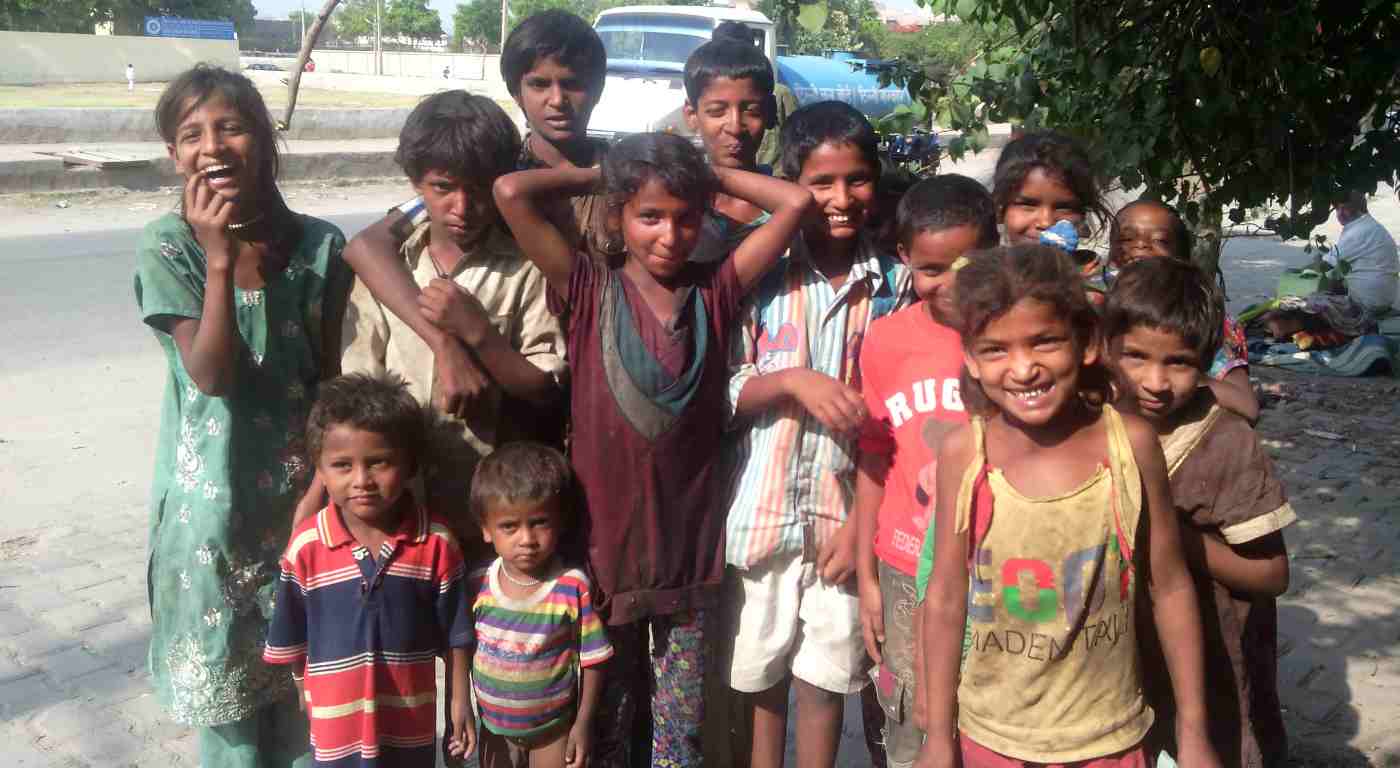
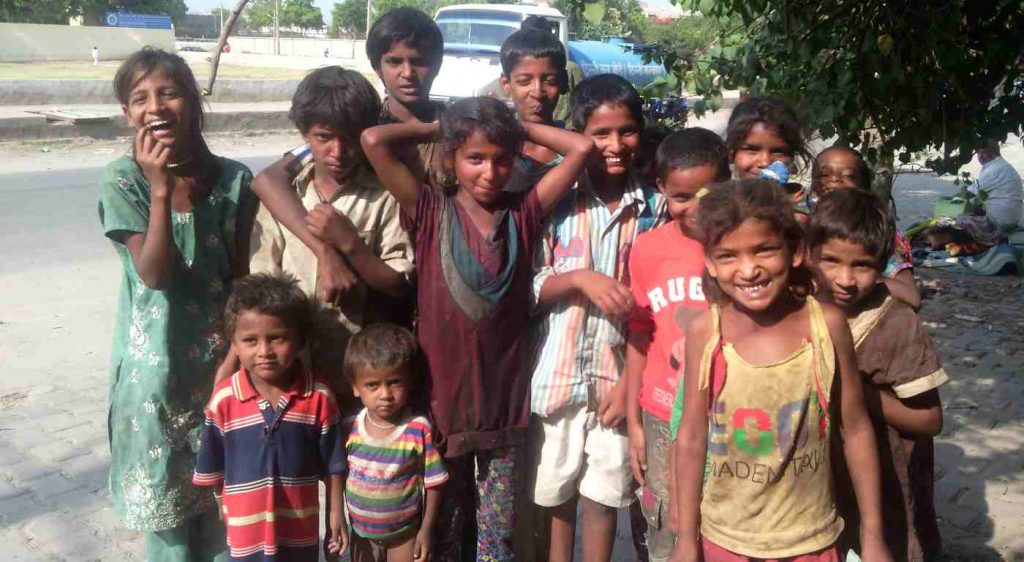
Poor children who live and sleep on the open pavements in India’s capital New Delhi. Photo: Rakesh Raman / RMN News Service (Representational Image)

Safeguarding Democracy and Human Rights in the Digital Age

Poor children who live and sleep on the open pavements in India’s capital New Delhi. Photo: Rakesh Raman / RMN News Service (Representational Image)

Safeguarding Democracy and Human Rights in the Digital Age

The Digital Democracy Initiative works closely with civil society partners CIVICUS, Global Focus, Digital Defenders Partnership, and Access Now. 

As autocrats are increasingly misusing digital platforms to spread fake news, suppress dissenting voices, and deprive people of their fundamental rights, new programs are required to protect people’s rights in the technology-driven world.

In this direction, the Digital Democracy Initiative (DDI) is a program aimed at safeguarding inclusive democracy and human rights in the digital age. The DDI focuses on support to local civil society in the Global South, particularly in countries undergoing democratic regression and where civic space is under pressure.

The Digital Democracy Initiative was launched during the 2023 Summit for Democracy by the Danish Government and the EU Commission as a TeamEurope initiative, with the aim of supporting local organizations and activists in the Global South in their fight for democracy and human rights in the digital age. 

The program focuses on organizations representing women, youth, and marginalized groups as well as informal actors and social movements with limited access to funding and other resources.

The DDI program believes that the digital space has become a central arena in the efforts to expand and protect democratic rights. Digital technologies hold great potential for strengthening pluralist democracy, encouraging civic participation, and for giving a voice to marginalized groups. 

At the same time, digitalisation exposes human rights and democratic processes to new risks, including censorship, digital surveillance, mis- and disinformation, cyber-attacks, persecution, and harassment.

The DDI works closely with civil society partners CIVICUS, Global Focus, Digital Defenders Partnership, and Access Now. The DDI program is designed to facilitate scalability, both in terms of attracting additional donors and increasing the number of implementing partners during the implementation period 2023 to 2026. 

Through a Call for Proposals, the DDI will expand its support to Human Right Defenders and civil society activists in the Global South under three thematic areas:

Combatting technology facilitated gender-based violence

Leveraging digital technologies for climate activism

Strengthening youth engagement in the digital democratic space

The deadline for the submission of concept notes is 17 June 2024.

E-Filing Module of the Supreme Court of India

Why E-Filing Systems and E-Courts Fail to Deliver Justice in India

E-Filing Module of the Supreme Court of India

Why E-Filing Systems and E-Courts Fail to Deliver Justice in India

The excerpts from the Research Report: Defective E-Filing Systems of Indian Courts are given below. You can also download and read the full report.

One of the reasons for chaotic e-filing platforms is the inconsistent use of GUIs. The interfaces provided by the Supreme Court, high courts, and lower courts are totally different while they are supposed to serve the same objective of accepting legal documents online and presenting them in the courts.

The purpose of digital interfaces is supposed to provide an easy way to the advocates and particularly litigants who have little knowledge of technology and who are not quite familiar with the judicial processes. 

They should be able to convey their case in simple language and present it digitally in the court either through a PDF file or a hyperlinked webpage or even presentation slides including exhibits, photographs, video links, and so on. But the inconsistent web interfaces and complex filing mechanisms for different courts confuse the litigants completely.

The defective e-filling systems also show random errors written in confusing language. Therefore, the users are not able to file their cases smoothly in courts.

The e-filing platforms show random and wrongly written error messages, even when the user – litigant or advocate – has entered their details correctly. On the High Court of Delhi site, for example, the error message says, “Your Login ID could not be generated due to some technical reason. Please try again.”

Since the backend system and the error messaging database have not been properly configured, the user gets a confusing message of “some technical reason.” The user can keep trying repeatedly, but this error message will persist and thus the user will not be able to file the case online.

It is the height of stupidity that the e-filing system of the High Court of Delhi is asking users to file their cases on A4-size paper, while the digital courts are supposed to be paperless. Although this research report is giving examples of the High Court of Delhi, the e-filing systems of high courts in other states are expected to be equally defective.

It appears that the people who are handling backend systems and frontend interfaces are clueless about the purpose of e-filing and virtual courts. They are also not aware of the software implementation process which includes dry run, parallel run, and live run. The e-filing systems have been carelessly thrown out for public use without testing them properly.

The Supreme Court e-filing system interface is totally different from the interfaces of high courts and lower courts. The ignorant court officials are deliberately confusing the users who want to file their cases online and enjoy the facility of digital / e-courts. As a result, the e-filing and e-courts are not working despite false claims made by the top judicial officers including the Chief Justice. 

You can click here to download and read the research report which is also given below.

Contact

Rakesh Raman
Editor, RMN News Service [ Website ]
Founder, RMN Foundation [ Website ]
463, DPS Apts., Plot No. 16, Sector 4
Dwarka, Phase I, New Delhi 110 078, India
WhatsApp / Mobile: 9810319059 | Contact by Email

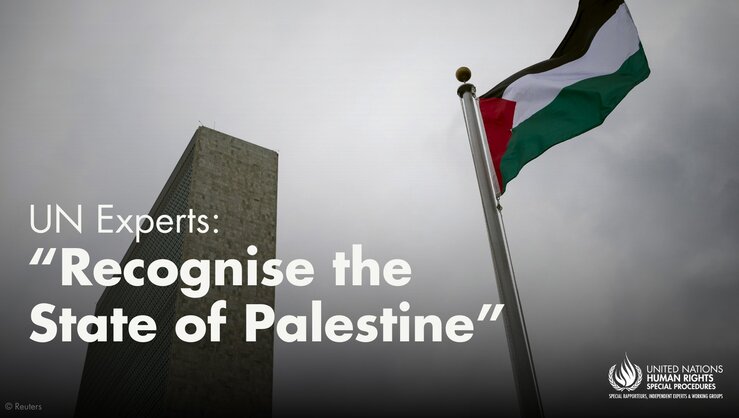
UN Experts Urge All States to Recognise State of Palestine. Photo: UN Human Rights Office

UN Experts Urge All States to Recognise State of Palestine

UN Experts Urge All States to Recognise State of Palestine. Photo: UN Human Rights Office

UN Experts Urge All States to Recognise State of Palestine

As of 28 May 2024, the State of Palestine was recognised by the vast majority of Member States of the United Nations.

All States must follow the example of 146 United Nations Member States and recognise the State of Palestine and use all political and diplomatic resources at their disposal to bring about an immediate ceasefire in Gaza, UN experts said on June 3.

“This recognition is an important acknowledgement of the rights of the Palestinian people and their struggles and suffering towards freedom and independence,” the experts said.

They insisted that Palestine must be able to enjoy full self-determination, including the ability to exist, determine their destiny and develop freely as a people with safety and security.

“This is a precondition for lasting peace in Palestine and the entire Middle East – beginning with the immediate declaration of a ceasefire in Gaza and no further military incursions into Rafah,” the experts said.

The State of Palestine, formally declared by the Palestine Liberation Organization (PLO) on 15 November 1988, claims sovereignty over the remaining parts of historic Palestine that Israel occupied in 1967: the West Bank, including East Jerusalem, and the Gaza Strip.

As of 28 May 2024, the State of Palestine was recognised by the vast majority of Member States of the United Nations.

The experts welcomed the latest recognition of the occupied Palestinian territory as a State by Norway, Ireland and Spain, which comes after the General Assembly overwhelmingly voted – with 143 votes in favour to nine votes against – to back Palestine’s bid to become a full member of the United Nations on 10 May 2024.

“Even though the prospect of lasting peace and an end to occupation has remained elusive since the Oslo Accords more than 30 years ago, a political solution should not be considered foregone,” the experts said. “A two-State solution remains the only internationally agreed path to peace and security for both Palestine and Israel and a way out of generational cycles of violence and resentment.”

The UN experts said the move by the Prosecutor of the International Criminal Court (ICC) to seek arrest warrants against the Israeli Prime Minister, Minister of Defense and top Hamas leaders on suspicions of war crimes and crimes against humanity was a promise of accountability and an end to impunity in the occupied Palestinian territory.

“The International Court of Justice (ICJ) in its most recent ruling on provisional measures, ordering Israel to stop its military operations in Rafah, immediately reopen the Rafah crossing to allow life-saving humanitarian aid into the Gaza strip and grant unimpeded access for UN human rights mechanisms, complements the work of the ICC in ensuring full justice in Palestine and preventing any further bloodshed in Gaza,” the experts said.

“States must refrain from threats and attacks against the ICC and the ICJ,” they said. “These courts must operate without foreign interference and threats, to uphold the promise of global justice and individual accountability for all victims of the conflict.”

Courtesy: UN Human Rights Office