Archive: August 30, 2024

Václav Havel Human Rights Prize. Photo courtesy: Council of Europe

Human Rights: Three Candidates Shortlisted for the 2024 Václav Havel Prize
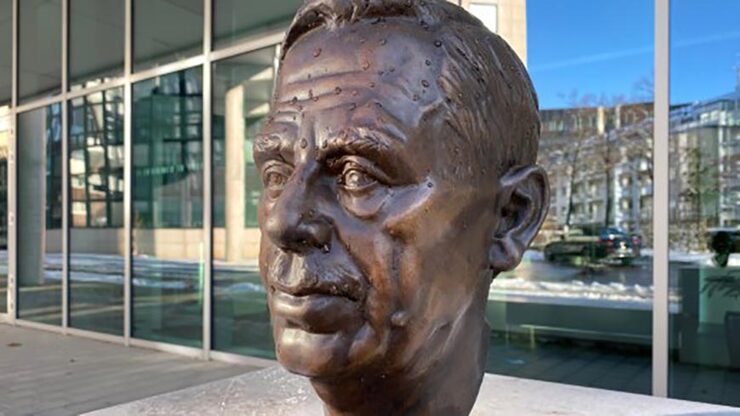
2024 Václav Havel Prize. Photo courtesy: Council of Europe

Human Rights: Three Candidates Shortlisted for the 2024 Václav Havel Prize

The overall winner of the 2024 Prize is due to be announced at the opening of PACE’s Autumn plenary session in Strasbourg on 30 September.

The selection panel of the Václav Havel Human Rights Prize, which rewards outstanding civil society action in defence of human rights in Europe and beyond, has announced the shortlist for the 2024 Award.

Meeting in Prague, the panel – made up of independent figures from the world of human rights and chaired by the President of the Parliamentary Assembly of the Council of Europe (PACE) Theodoros Rousopoulos – decided to shortlist the following three nominees, in alphabetical order:

Akif Gurbanov, Azerbaijan

The nominee is a human rights defender, political activist and active member of the Azerbaijani civil society. He is the co-founder of the Institute of Democratic Initiative (IDI) and of the Third Republic Platform. He was arrested in March 2024 in a wave of arrests targeting journalists and activists in the country.

María Corina Machado, Venezuela

The nominee is a leading political figure in Venezuela engaged in denouncing human rights abuses in her country and defending democracy and the rule of law. She is the co-founder of the Venezuelan volunteer civil organization ‘Súmate’ for civil and political freedom, rights and citizen participation.

Babutsa Pataraia, Georgia

The nominee is a leading feminist activist and human rights lawyer in Georgia. She is the Director of ‘Sapari’, an NGO focusing on women’s rights and providing support for victims of violence since 2013. She has worked for over a decade to fight against feminicide, sexual violence against women, and sexual harassment.

Announcing the panel’s choice, the PACE President paid tribute to all defenders of human rights who, sometimes at the cost of their lives, stand firm to protect and promote fundamental freedoms and human rights. 

“Today, more than ever, it is of paramount importance to celebrate the women and men who, by their courage, determination and strength, show us the path to freedom. Their fight is an example for all of us, and I am happy that the Václav Havel Human Rights Prize has celebrated their action since its creation eleven years ago.”

The overall winner of the 2024 Prize is due to be announced at the opening of PACE’s Autumn plenary session in Strasbourg on 30 September. The Václav Havel Human Rights Prize is awarded each year by PACE, in partnership with the Václav Havel Library and the Charta 77 Foundation. It consists of a sum of 60,000 euros, a trophy and a diploma.

Since its creation, the Prize has been awarded in turn to Osman Kavala (2023), Vladimir Kara-Murza (2022), Maria Kalesnikava (2021), Loujain Alhathloul (2020), jointly to Ilham Tohti and the Youth Initiative for Human Rights (2019), Oyub Titiev (2018), Murat Arslan (2017), Nadia Murad (2016), Ludmilla Alexeeva (2015), Anar Mammadli (2014) and Ales Bialiatski (2013).

Courtesy: Council of Europe
दिल्ली में द्वारका के श्री अग्रसेन अपार्टमेंट में हाउसिंग सोसायटी में अनुचित पैसे मांगने का मामला. हाउसिंग सोसायटी में लिफ्ट कैसे काम करती हैं. Housing Society Case of Demanding Undue Money at Sri Agrasen Apartments of Dwarka in Delhi. How Elevators or Lifts Work in Housing Societies. Photo Courtesy: Residents

दिल्ली में द्वारका के श्री अग्रसेन अपार्टमेंट में हाउसिंग सोसायटी में अनुचित पैसे मांगने का मामला

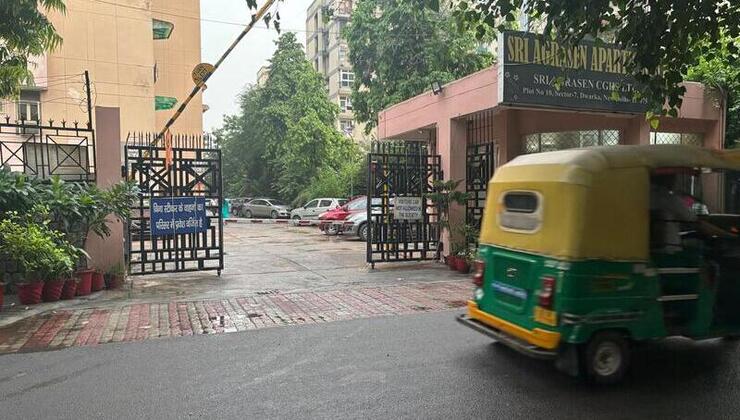
दिल्ली में द्वारका के श्री अग्रसेन अपार्टमेंट में हाउसिंग सोसायटी में अनुचित पैसे मांगने का मामला. हाउसिंग सोसायटी में लिफ्ट कैसे काम करती हैं. Housing Society Case of Demanding Undue Money at Sri Agrasen Apartments of Dwarka in Delhi. How Elevators or Lifts Work in Housing Societies. Photo Courtesy: Residents

दिल्ली में द्वारका के श्री अग्रसेन अपार्टमेंट में हाउसिंग सोसायटी में अनुचित पैसे मांगने का मामला

हाउसिंग सोसायटी में लिफ्ट कैसे काम करती हैं

यह वीडियो हमारी “क्लीन हाउस” सेवा का हिस्सा है जो दिल्ली की सहकारी समूह हाउसिंग सोसाइटियों (सीजीएचएस) में हो रहे अपराध और भ्रष्टाचार के बारे में रिपोर्ट करता है। इस वीडियो में, श्री अग्रसेन अपार्टमेंट (प्लॉट 10, सेक्टर 7, द्वारका, नई दिल्ली) की सुश्री दीपाली खन्ना और उनके पति बताते हैं कि कैसे श्री अग्रसेन सीजीएचएस की प्रबंधन समिति (एमसी) उनसे लिफ्टों के लिए अत्यधिक ब्याज की मांग कर रही है।

साथ ही, एमसी ने निवासियों को उन लिफ्टों का उपयोग करने की अनुमति दी है जो पूरी तरह से स्थापित नहीं की गई हैं। सोसायटी बिल्डिंग में ख़राब लिफ्टों के इस्तेमाल से जानलेवा दुर्घटना हो सकती है। यह वीडियो इसलिए प्रकाशित किया जा रहा है क्योंकि सुश्री दीपाली खन्ना का कहना है कि उन्हें एमसी से उनके अनुरोधों का जवाब नहीं मिला। जल्द ही मामले का अपडेट दिया जाएगा।संबंधित लिंक नीचे दिए गए हैं।

Housing Society Case of Demanding Undue Money at Sri Agrasen Apartments of Dwarka in Delhi

How Elevators or Lifts Work in Housing Societies

This video is part of our “Clean House” service which reports about crime and corruption happening in Delhi’s cooperative group housing societies (CGHS). In this video, Ms. Deepali Khanna and her husband of Sri Agrasen Apartments (Plot 10, Sector 7, Dwarka, New Delhi) explain how the management committee (MC) of Sri Agrasen CGHS is demanding excessive interest from them for the lifts which have not been installed. 

Also, the MC has allowed the residents to use the lifts which have not been fully installed. The use of defective lifts can cause fatal accidents in the Society building. This video is being published as Ms. Deepali Khanna says she did not get a response to her requests from the MC. The case will soon be updated. The related links are given below.

Clean House Service: https://www.ramanmedianetwork.com/report-corruption-in-delhi-housing-societies-to-clean-house/

Sri Agrasen CGHS Video: https://youtu.be/2NFkwyyAcCA

Complaint Process: https://www.rmnfoundation.org/process-for-residents-to-file-complaints-against-housing-societies-in-delhi/

Chinar CGHS Video: https://youtu.be/ZNVHll4gP90

हाउसिंग सोसायटी प्रवेश शुल्क: https://www.youtube.com/watch?v=Cwwd1yedZhA

Entry Fee Issue: https://www.ramanmedianetwork.com/delhi-housing-societies-cannot-take-entry-fee-from-new-members-and-tenants/

Most Corrupt MC: https://www.ramanmedianetwork.com/most-corrupt-management-committees-mcs-in-delhi-housing-societies/

Donate: https://pages.razorpay.com/pl_GNxYweVwTnCBet/view

#HousingSocieties #Delhi #SriAgrasenCGHS #Dwarka #DelhiPolice #YouTube #Video

India Judicial Research Report 2024. Decline of the Indian Judiciary. Photo: RMN News Service

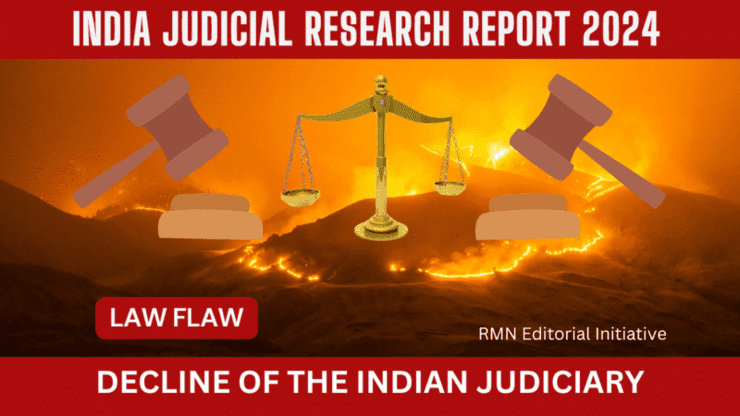
India Judicial Research Report 2024: Decline of the Indian Judiciary

India Judicial Research Report 2024. Decline of the Indian Judiciary. Photo: RMN News Service

India Judicial Research Report 2024: Decline of the Indian Judiciary

The report also analyzes the obsolete syllabuses in law colleges and universities which are not producing employable workforce for the Indian courts. 

The India Judicial Research Report 2024 discusses various factors that are responsible for the downfall of the Indian judiciary and the impact of this constant collapse on the litigants particularly who belong to the vulnerable sections of the society. 

With the help of some specific court cases, the report sheds light on the dwindling judicial processes in India, scarce use of technology, flawed application of law, judicial corruption, limited domain knowledge of lawyers and judges, and their lack of English communication skills.

The information for the report has been taken from primary as well as secondary sources. It also includes some of the editor’s personal experiences of dealing with the judiciary. The hyperlinks included in this digital document provide detailed information about the specific aspects of various assertions.

The report also analyzes the obsolete syllabuses in law colleges and universities which are not producing employable workforce for the Indian courts. As a result of its dismal performance, the Indian judiciary is treated with disdain in the global arena which is reflected in research reports that rank different countries of the world. 

Now, it appears that because of dishonest – and mostly naive – lawyers and judges, nearly 1.4 billion people of India have lost faith in the courts and their judgements. Thus, the judiciary has become one of the most redundant institutions in the country.

The report also makes some recommendations for the Supreme Court, the Indian government, and law institutes so that the entire judicial system in the country could be reformed and revamped.

The author / editor of this report Rakesh Raman is a national award-winning journalist and founder of the humanitarian organization RMN Foundation in New Delhi, India.

Donation: Indian donors can click here to donate online to RMN Foundation / RMN News Service and you can also click here to donate with PayPal.

Download: You can click here to download and read the India Judicial Research Report 2024 to support this editorial initiative.

Contact

Rakesh Raman
Editor, RMN News Service [ Website ]
Founder, RMN Foundation [ Website ]
463, DPS Apts., Plot No. 16, Sector 4
Dwarka, Phase I, New Delhi 110 078, India
WhatsApp / Mobile: 9810319059 | Contact by Email