By Rakesh Raman, who is a national award-winning journalist and social activist. He is the founder of the humanitarian organization RMN Foundation which is working in diverse areas to help the disadvantaged and distressed people in the society.
Beyond the Headlines: 5 Disruptive Realities Reshaping Our World in 2026
The disruptive realities of 2026 point toward a singular, terrifying theme: the collision of technological acceleration and systemic corruption.
By Rakesh Raman
New Delhi | April 17, 2026
The veneer of institutional stability is cracking. As we navigate the midpoint of 2026, the buzzing of a mosquito in a sweltering Delhi alleyway is no longer just a seasonal nuisance; it is as much a sign of state collapse as a rigged election or a manipulated stock market. The “unrest” we feel today is not merely background noise or a string of unfortunate events. It is an epistemological crisis—a fundamental shift in how power is wielded and how data is laundered to manufacture a reality that no longer exists. To understand our current moment, we must look past the superficial headlines and into the systemic rot and high-tech acceleration redefining our global existence.
1. The $122 Billion AI Arms Race
The race for artificial intelligence supremacy has officially decoupled from the reality of traditional markets. Investigative reporting from The Unrest has highlighted a staggering $122 billion funding round for OpenAI, catapulting the firm to a post-money valuation of $852 billion. To put this into perspective, this single entity is now worth more than the combined market capitalization of the world’s top five legacy automotive giants. This isn’t just growth; it is an aggressive displacement of the physical industrial age by the digital sovereign.
The release of GPT‑5.4‑Cyber signifies that the “arms race” is literal. This isn’t a tool for writing poetry or generating art; it is a specialized model built for defensive—and by extension, offensive—cyber warfare. We have entered an era where code is the primary weapon and the only shield, rendering traditional geographical borders increasingly irrelevant. When a private corporation holds more capital and “firepower” than many nation-states, the very definition of global security is rewritten.
2. The “Gleichschaltung” of Bollywood and the Box Office Data Crisis
In the Hindi film industry, we are witnessing a phenomenon that RMN News Magazine identifies as the “Bollywood Gleichschaltung.” The term is a chilling historical echo of the Nazi policy of Gleichschaltung, where independent creative voices were forcibly bundled into a state-controlled super-corporation known as UFA-Film GmbH (Ufi). Today, a similar pattern of “culture poisoning” is taking hold as the industry becomes a monolith of state-aligned narratives.
This ideological capture is supported by what the RMN Foundation’s forensic report calls “The Data Currency Fraud.” This investigative piece uncovers a systemic pattern of data fabrication and box office “data laundering.” In this economy, if the “currency”—the numbers—is faked, the entire market becomes a hallucination. When data integrity fails in entertainment, it serves as a laboratory for broader societal obfuscation. In response, RMN Stars has launched the forensic “Movie Anticipation Index,” attempting to restore investigative rigor and provide hype-free evaluations to a public drowning in manufactured enthusiasm.
3. When Insects Signify Systemic Failure: Delhi’s Mosquito Crisis
Urban failure in 2026 has a distinct sound: the hum of a rising mosquito population. What was once dismissed as a seasonal irritant in Delhi has been reclassified by investigators as a primary indicator of governance collapse.
“The current surge in mosquito density is far more than a seasonal nuisance; it is a systemic public health failure exacerbated by rapid environmental shifts.”
As noted in the plenary sessions of the Congress of Local and Regional Authorities, local governance is now the “front line” of a new kind of biological war. Local leaders are being abandoned to fight global environmental shifts with crumbling infrastructure and zero institutional support. This mosquito crisis is a visible symptom of a deeper institutional rot; it is the point where administrative apathy meets ecological catastrophe.
4. The Paradox of “Strategic Hibernation” in Modern Politics
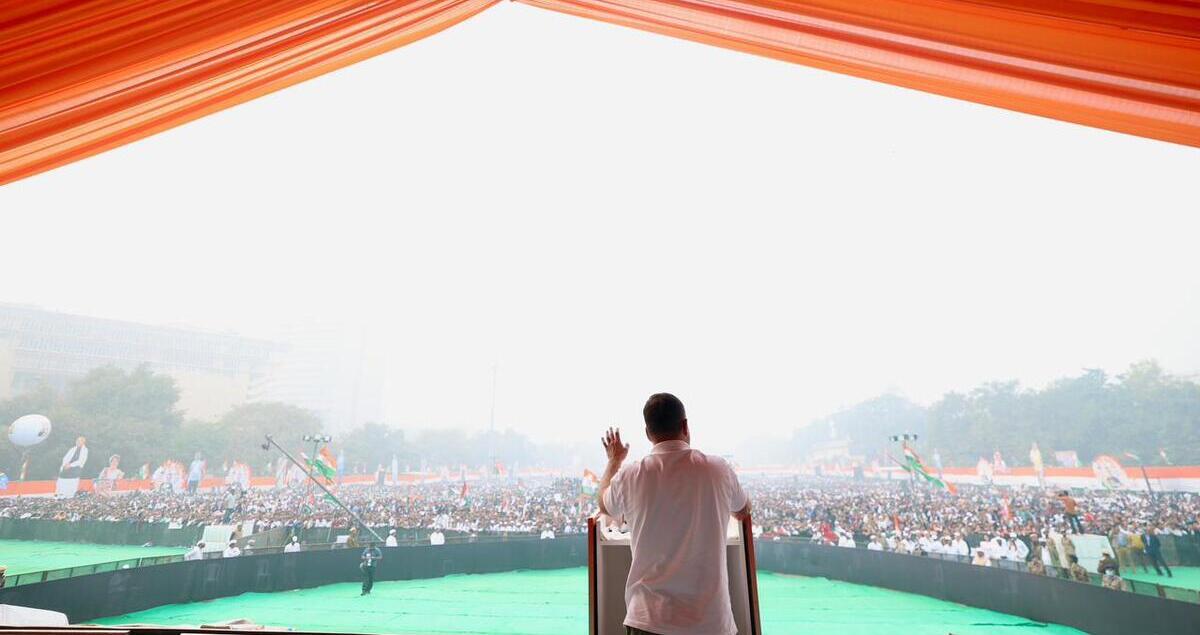
Digital dissent has reached a breaking point where it no longer threatens the status quo—it sustains it. A searing critique of Congress leader Rahul Gandhi’s political strategy describes a state of “strategic hibernation.” While the digital sphere is loud with opposition, this strategy fails to translate online “slacktivism” into mass civil resistance.
This paradox is a hallmark of 2026: digital platforms have become a trap that pacifies dissent, turning potential revolutionaries into passive scrollers. This hibernation isn’t just a leadership failure; it is a symptom of how modern democratic movements are being neutralized by the very technology they use to organize. Without a physical counterpart, online activism is merely an echo chamber that the established power structures have learned to ignore with impunity.
5. The “High-Tech Failure” of Democratic Credibility
Perhaps the most existential threat to the modern state is the crumbling credibility of the democratic process itself. Global concerns are mounting over the integrity of Electronic Voting Machines (EVMs) in India, where recent irregularities are being viewed not as clerical errors, but as a “systemic, high-tech failure.”
The fundamental problem is that the technology used to facilitate democracy has become its primary source of suspicion. While authorities point to the “mechanical limitations” of these systems as a defense, the public sees a black box of potential manipulation. When the mechanism of the vote becomes a source of epistemological crisis—where the truth of the count is impossible to verify independently—the social contract is effectively voided.
Conclusion: A Forward-Looking Summary
The disruptive realities of 2026 point toward a singular, terrifying theme: the collision of technological acceleration and systemic corruption. Whether we are looking at the $852 billion valuation of an AI firm, the “data laundering” of the box office, or the “biological wars” fought in the streets of Delhi, the struggle for institutional integrity is the defining battle of our time.
We must ask ourselves: are our current systems—from our cinematic cultures to our voting booths and urban planning departments—capable of surviving the “unrest” of this high-tech era? Or are we merely witnessing the final, flickering moments of institutions that have already been hollowed out from within?
Donation to RMN Foundation