Infrastructure of Indifference: How Delhi’s Sewer Mismanagement Endangers 30 Million Lives
The Delhi Jal Board’s reckless infrastructure projects have transformed residential neighborhoods into hazardous zones, stripping citizens of their fundamental right to a safe environment. This systematic neglect reflects a total abandonment of public duty, requiring urgent civic activism through the RMN Foundation to demand institutional accountability.
RMN Foundation Human Rights Desk
New Delhi | June 24, 2026
The Erosion of Safety: Delhi’s State-Sponsored Environmental Crisis
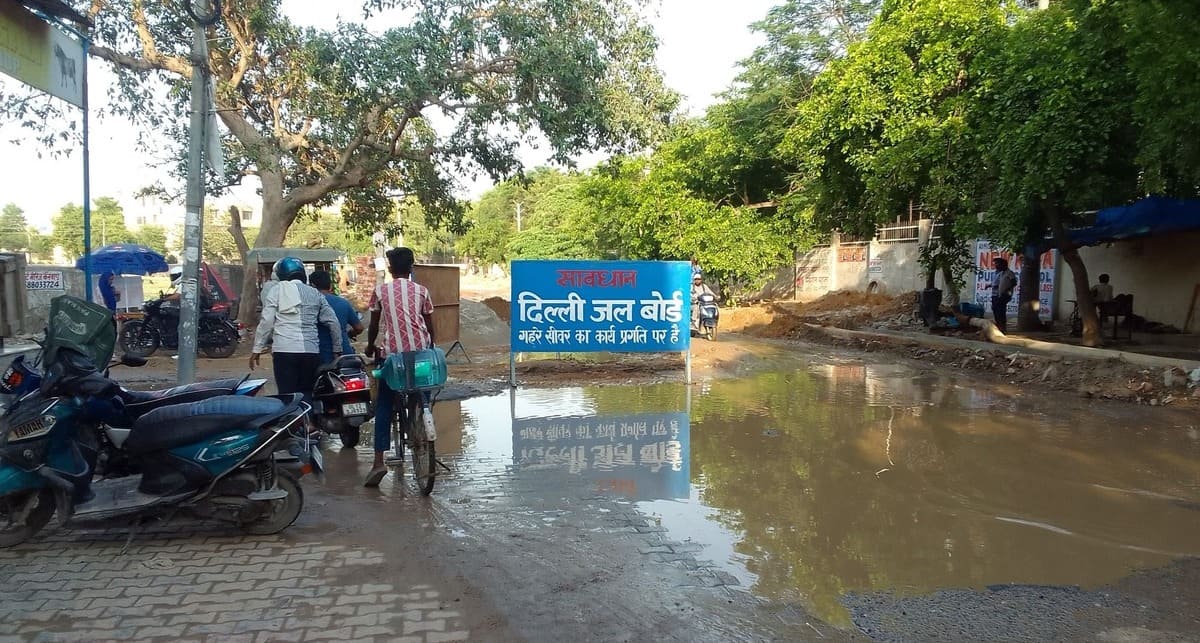
The current state of urban maintenance in the Dwarka sub-city serves as a grim testament to an administration that has lost its way. For months, residents have been forced to navigate a landscape defined by treacherous pits and pervasive sludge, which are the direct results of poorly managed sewer repairs. Rather than improving the lives of the city’s 30 million inhabitants, these government projects have effectively decommissioned public roads, creating an environment of constant physical peril.
When government ‘repairs’ become more dangerous than the problems they fix, the administration has failed its most basic duty to protect its people.
A Violation of Basic Dignity and Health: The failure to maintain basic safety standards is not merely a logistical oversight; it is a profound violation of the people’s right to live in a clean and healthy setting. Citizens are daily subjected to the humiliation of traversing contaminated mud and stagnant water simply to access their homes. Beyond the immediate threat of injury from hidden excavations, the accumulation of filth has created a biological hazard, providing a fertile environment for waterborne diseases to spread within the heart of the community.
[ वीडियो: दिल्ली नागरिक संकट: टूटी सड़कें, गंदा पानी और सोता प्रशासन! शिकायत कहाँ और कैसे करें? ]
Intentional Negligence vs. Simple Solutions: What makes this situation particularly egregious is that the Delhi Jal Board (DJB) has ignored straightforward, common-sense strategies that would mitigate public suffering. Safe urban maintenance dictates the use of segmented repairs to allow traffic flow, intelligent diversions to prevent chaos, and active drainage to keep residential pathways dry. The refusal to implement these standard measures suggests a calculated disregard for the welfare of the public.
A clean environment isn’t a luxury; it’s a fundamental right being buried under the mud of bureaucratic incompetence and political apathy.
Reclaiming Accountability Through Activism: With official channels often remaining silent or unresponsive to complaints, the burden of change has shifted to the citizenry. The RMN Foundation, led by journalist Rakesh Raman, offers a structured path for redress through its “Clean House” and Consumer Rights Network (CRN) platforms. By documenting these instances of bureaucratic rot and government carelessness, residents can move beyond individual frustration toward organized, strategic activism that forces the state to honor its social contract.
Donation to RMN Foundation