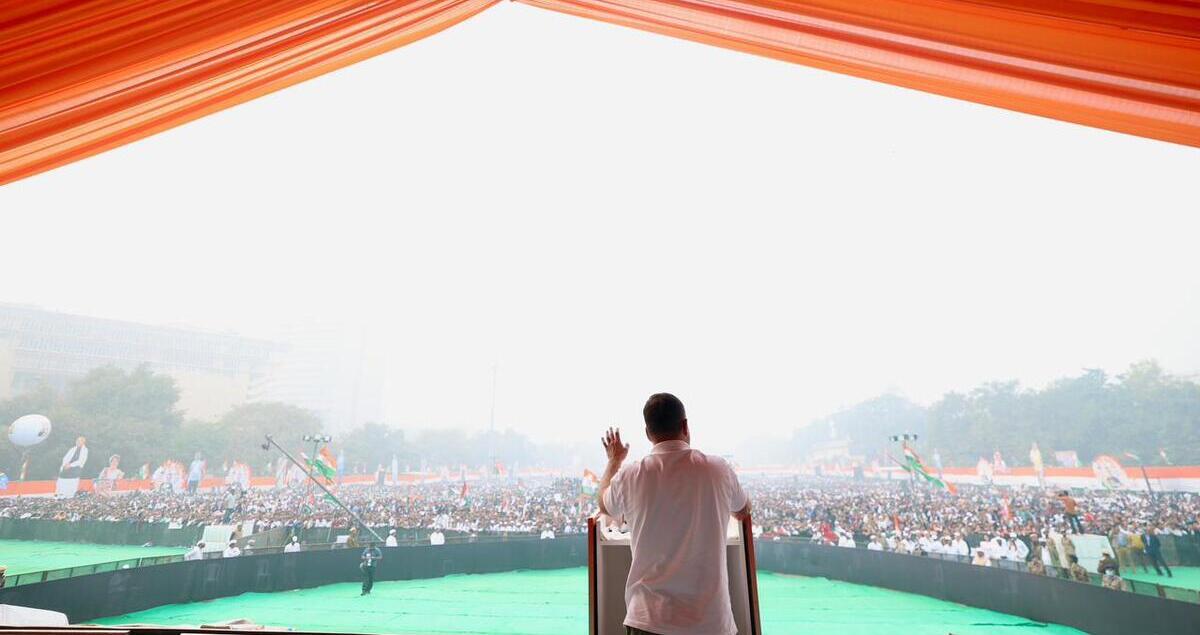
The Barking Dog Theory: How Rahul Gandhi’s Ineffective Opposition Fuels India’s Democratic Decline
Rahul Gandhi’s inability to transform high-profile allegations into sustained political movements has created a dangerous void in India’s opposition landscape. By failing to provide a formidable challenge to the ruling establishment, his leadership style inadvertently facilitates democratic backsliding and institutional capture.
RMN Foundation Democracy Desk
New Delhi | June 10, 2026
The Crisis of Opposition: Why Rahul Gandhi’s Strategy Fails India’s Democracy
For over a decade, Rahul Gandhi has served as the primary face of the Indian opposition, currently holding the pivotal role of Leader of the Opposition (LoP) in the Lok Sabha. While he is vocal about issues like corruption, crony capitalism, and democratic decline, there is a growing consensus that his political interventions are high on visibility but low on disruption.
This phenomenon, described as the “Barking Dog Theory,” suggests that Gandhi creates significant noise through social media and speeches but fails to sustain the mass mobilization required to impose political costs on the government.
A vibrant democracy requires an opposition that bites, not just barks; Rahul Gandhi’s cycle of abandoned campaigns leaves the ruling establishment largely unfazed.
The Cycle of Abandoned Campaigns
A disturbing pattern characterizes Gandhi’s leadership: he initiates a major allegation, gains temporary media traction, and then allows the issue to fade without building a national movement. This Allegation Cycle has been observed across numerous critical issues, including the Rafale deal, the Pegasus spyware controversy, and allegations of crony capitalism involving the Adani Group. Because these campaigns lack long-term organizational pressure, the ruling establishment remains largely unfazed and electorally dominant.
[  क्या राहुल गांधी एक असफल राजनेता हैं? ऑडियो विश्लेषण ]
The EVM Contradiction and Institutional Decline
Perhaps the most glaring example of this leadership failure is Gandhi’s stance on Electronic Voting Machines (EVMs). Despite declaring that the “soul of the King is in the EVM” and alleging that elections are being stolen, he has not launched a sustained nationwide movement for electoral reform. This contradiction—claiming the system is illegitimate while continuing to participate in it without a fight for reform—undermines the very democratic integrity he claims to protect.
The ‘EVM Contradiction’ perfectly illustrates Gandhi’s leadership failure: he labels the electoral system illegitimate yet refuses to lead a mass movement for its reform.
Commentator vs. Leader
Critics argue that Gandhi increasingly behaves like a political commentator or social media influencer rather than a leader capable of solving national problems. While his symbolic interactions with the public generate digital engagement, they rarely translate into the sustained organizational machinery needed to challenge the status quo.
In a healthy democracy, a strong opposition is the primary check on power. However, Gandhi’s “visibility without disruption” has allowed the balance of power to remain lopsided, leaving Indian democracy vulnerable to unchecked institutional capture. As long as the opposition remains toothless, the decline of democratic accountability in India is likely to continue.
This report is part of our ongoing research on Rahul Gandhi under the title: “Rahul Gandhi: The Barking Dog of Indian Politics?”
Donation to RMN Foundation