
Connecting the Dots: Key Themes from “The Unrest”
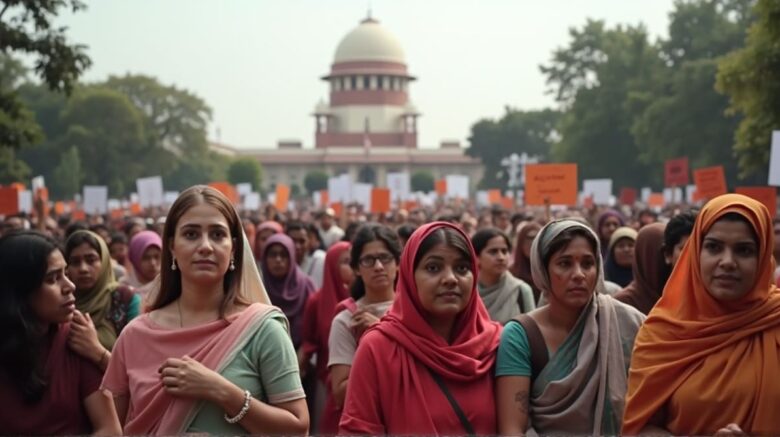
Unnao Rape Case Legal Reversal: The Supreme Court of India has stayed a Delhi High Court order that previously granted bail to former BJP MLA Kuldeep Singh Sengar.
1. Introduction: Understanding a World of “Unrest”
Welcome to a deeper analysis of the global landscape. This summary synthesizes the major news stories from the January 1-15, 2026 issue of the RMN news magazine, “The Unrest.” While individual headlines about protests, technological breakthroughs, and legal battles can seem disconnected, they often point to larger, underlying global currents. The goal of this document is to connect these seemingly separate events under three powerful themes that emerge from the magazine’s coverage: widespread political and social instability, the dual-edged nature of technology, and a growing fight for truth and justice. We begin by exploring the first and most prominent theme: a world in a state of upheaval.
2. Theme 1: A World in Upheaval – Political & Social Unrest
Across the globe, numerous societies are grappling with significant internal and external conflicts. The magazine’s coverage highlights a pattern of citizen-led protests, challenges to government authority, and escalating diplomatic tensions.
The following table summarizes the domestic challenges reported in three key nations:
| Country | Nature of Unrest | Key Detail |
| India | Challenges to ruling party and democratic integrity | Linked to a systemic corruption crisis and “democratic backsliding.” |
| Bangladesh | Massive national protests | Erupted after activist Sharif Osman Hadi died from injuries sustained in an assassination attempt. |
| Iran | Anti-government demonstrations | Fueled by skyrocketing inflation and the devaluation of the national currency. |
Beyond internal struggles, the magazine highlights how international conflicts are increasingly fought not with armies alone, but through narratives, accusations, and the strategic control of information. Truth itself has become a contested territory, as seen in two major diplomatic disputes. A major diplomatic rift has opened between Russia and Ukraine after Moscow alleged that Kyiv launched a drone attack on one of President Putin’s residences—a claim Kyiv dismisses as “Typical Lies.” This incident showcases how modern conflicts are fought not just on the battlefield but in the media, with truth itself becoming a casualty.
Similarly, a geopolitical firestorm has erupted between India and China over the film Battle of Galwan. Chinese state media accuses the film of distorting historical facts, while the Indian government defends it as an act of artistic freedom. Here, a cultural product becomes a proxy for a larger national and historical dispute, illustrating how media and art are increasingly weaponized in geopolitical confrontations.
This landscape of conflict, both domestic and international, is increasingly shaped and amplified by modern tools, leading us to the second major theme: the profound and often contradictory role of technology.
3. Theme 2: The Double-Edged Sword – Technology’s Impact on Society
The articles in “The Unrest” present technology as a powerful force with both immense potential for progress and a significant capacity for harm. It is simultaneously a tool for empowerment and a source of anxiety, creating a complex and often contradictory picture of our digital age.
The Promise of Technology
- Empowering Businesses and Citizens: Technology is showcased as a key driver of opportunity and education. A “Beginner’s Guide” explains how small businesses can leverage Artificial Intelligence (AI) for social media marketing. This democratizes powerful marketing capabilities, allowing small enterprises to compete with larger corporations on a more level playing field. In a similar vein, the partnership between the Council of Europe and Google to advance digital citizenship education aims to equip the next generation with the critical thinking skills needed to combat misinformation and participate constructively in a digital society.
- Driving Sustainable Change: Technology is also a crucial element in creating a more sustainable future. The BAFTA albert initiative, supported by industry giants like the BBC, Netflix, ITV, and Sky, is using technology to promote “Fossil Fuel-Free Production” in the film and TV industry, demonstrating its power to drive positive environmental change at a systemic level.
The Peril of Technology
Simultaneously, technology’s relentless push for automation fuels deep-seated anxieties, posing a dual threat to both economic security and personal autonomy. In the creative industries, Google’s new AI filmmaking tools spark fears of mass job displacement for roles from directors to writers. In consumer finance, ICICI Bank’s digital systems are shown to create “automated harassment,” demonstrating how the pursuit of efficiency can erode both professional livelihoods and personal dignity. This distrust culminates in the political arena, where calls in India for a mass movement to abolish Electronic Voting Machines (EVMs) reveal how technological systems, when perceived as opaque or insecure, can undermine faith in democracy itself.
The disruptive power of technology—its ability to create and destroy, to clarify and confuse—naturally leads to our final theme: a fundamental struggle over the very concepts of truth, freedom, and justice.
4. Theme 3: Under Siege – The Fight for Freedom, Truth, and Justice
Several articles highlight a growing crisis of confidence in foundational societal pillars. From the courts to the media, institutions responsible for upholding justice and disseminating truth are facing intense scrutiny and, in some cases, are perceived as failing.
- Eroding Justice Systems: The Unnao rape case in India serves as a powerful example of this crisis. The Delhi High Court’s decision to grant bail to the convicted former politician Kuldeep Singh Sengar was widely seen as a “profound failure to deliver substantive justice.” The ruling ignited “widespread fury” and was quickly reversed by the Supreme Court, but the incident exposed deep vulnerabilities in the justice system and its ability to protect the powerless.
- Declining Freedom of Expression: This is not just a localized issue but a global trend. A flagship report from UNESCO delivers a startling statistic: a “historic 10% decline in global freedom of expression between 2012 and 2024.” This erosion, depicted visually in the magazine with an image titled “ATTACK ON PRESS FREEDOM,” signals a worldwide threat to the ability of journalists and citizens to speak freely and hold power to account.
- A Crisis of Credibility: Trust in key institutions appears to be at an all-time low. The report on Bollywood reveals a “severe credibility crisis” where “paid reviews and manipulated media narratives” have become the industry norm, corroding public trust in cultural products. This is mirrored in the political sphere, where the India Corruption Research Report 2025 exposes a “systemic ecosystem” of corruption that is directly linked to “democratic backsliding.” This parallel decay—in both cultural and political institutions—reveals a comprehensive erosion of public trust, where neither entertainment nor governance can be taken at face value.
These interconnected struggles for justice, freedom, and truth paint a complex and challenging picture of the current global landscape.
5. Conclusion: Synthesizing “The Unrest”
The January 1-15, 2026 issue of “The Unrest” does more than report on isolated events; it chronicles a world defined by interconnected trends. The stories weave together to reveal three core themes: a global surge in political and social instability, from street protests to diplomatic standoffs; the disruptive, dual nature of technology, which acts as both a catalyst for progress and a source of societal anxiety; and a critical fight to defend foundational values like justice, freedom, and truth from erosion. These themes suggest we are living in an era where foundational pillars of society are being fractured, forcing a global contest over the future of truth, power, and technological control.
Top Image: AI-generated image of women protesting in front of the Supreme Court | Photo: RMN News Service
Donation to RMN Foundation