Tag: Corruption

Corruption in India. Photo: RMN News Service

Transparency Index Reveals Corruption Increasing in India
Corruption in India. Photo: RMN News Service

Transparency Index Reveals Corruption Increasing in India

The CPI rank of India has been constantly falling from 85 in 2022 to 93 in 2023 to 96 in 2024, which indicates that corruption has been increasing exponentially in the country.

By Rakesh Raman

Transparency International’s Corruption Perceptions Index (CPI) 2024 – released in February 2025 – shows that corruption has been increasing in India, as the country of 1.4 billion people saw a drop in its ranking to 96th position from 93rd last year.

With a score of 38 out of 100, India is among the world’s most corrupt countries while the CPI evaluates 180 countries and territories, assigning scores from 0 (highly corrupt) to 100 (very clean). 

The Transparency Index asserts that corruption is increasing in repressive authoritarian nations where elections are not fair and transparent and where democratic institutions are under a constant assault by the ruling regime.

Full democracies have a CPI average of 73, while flawed democracies average 47 and non-democratic regimes just 33. It shows that India with a score of 38 is a non-democratic nation. The Index also shows that corruption is more in India than China which has a CPI rank of 76.

The CPI rank of India has been constantly falling from 85 in 2022 to 93 in 2023 to 96 in 2024, which indicates that corruption has been increasing exponentially in the country – particularly under the regime of prime minister (PM) Narendra Modi

In order to stop corruption, the Supreme Court of India asked the government to set up the office of Lokpal, the top anti-corruption ombudsman in India. Although the Lokpal was established in March 2019, let alone resolving corruption cases, it could not formalize its processes in five years of its formation. Corruption is still increasing rapidly in different forms. 

While political, bureaucratic, and judicial corruption has become a pain in the neck for commoners in India, there is no effective agency which can give relief from corruption to the suffering citizens. The Lokayukta (anti-corruption ombudsman organization in the Indian States), vigilance departments of State governments, and India’s top anti-corruption organization Central Vigilance Commission (CVC) are all toothless outfits that tend to protect the corrupt officials and encourage corruption. 

They simply turn a blind eye to the corruption cases in which government politicians and working bureaucrats are involved. The procedures of anti-corruption agencies to accept public complaints on corruption are so slow and cumbersome that ordinary citizens feel scared to file their complaints against corrupt officials.

The public grievance monitoring systems of the State as well as Central governments are also totally ineffective. After receiving complaints from the citizens, these systems send them to some random departments in a mechanical way and abruptly close the cases without giving relief to the complainants. 

Government officials keep throwing public complaints from one desk to another without taking conclusive decisions on the complaints. Finally, the aggrieved citizens are left with no other option but to approach the courts. But if courts have to do everything, why do we need politicians and government officials? The administrative systems have totally collapsed in India. 

While corruption is happening openly, most corruption cases involving top bureaucrats and ruling politicians do not get reported. As most Indian journalists are corrupt, Indian media is under the tight control of the government. When some corruption cases appear in the non-traditional media (such as news sites), the government ignores them and makes false claims that no corruption is happening under the government. The truth, however, is that corruption – which has been persisting for decades under all governments – is happening and increasing at every step in the country.

Although a slew of anti-corruption laws exist in India, the rising corruption in the country indicates that these laws are not effective. The anti-corruption laws that are supposed to check corruption include Indian Penal Code, 1860; Prevention of Corruption Act, 1988; Benami Transactions (Prohibition) Act, 1988 to prohibit benami transactions; Prevention of Money Laundering Act, 2002; among others.

Since government politicians are mostly illiterate or inexperienced, they are heavily dependent on bureaucrats for all clerical work. While the unskilled bureaucrats are not able to complete their tasks effectively, on average almost 10 bureaucrats are paid for work that can be done by a single person.

Thus, salaries being given to bureaucrats with public money is a form of corruption to loot the government exchequer. It is estimated that a whopping 10% of India’s GDP is wasted on salaries of government employees while they do not deserve even a fraction of this money.

The India Corruption Research Report 2024 discusses various factors related to corruption in India. It also gives recommendations to stop corruption in the country. You can click here to download and study the report.

By Rakesh Raman, who is a national award-winning journalist and social activist. He is the founder of a humanitarian organization RMN Foundation which is working in diverse areas to help the disadvantaged and distressed people in the society.
India Corruption Research Report 2024 (ICRR 2024) Project by RMN Foundation / RMN News Service

Corruption in India Survey Reveals Criminal Nexus Between Oligarchs and Politicians

India Corruption Research Report 2024 (ICRR 2024) Project by RMN Foundation / RMN News Service

Corruption in India Survey Reveals Criminal Nexus Between Oligarchs and Politicians

India Corruption Research Report 2024

Corruption in India

These are the excerpts from the India Corruption Research Report 2024 which covers different aspects of corruption in the country. The findings of the perception survey – recorded up to September 2024 – are given below. 

A whopping 88% of people believe that India is a corrupt country.

Corruption has adversely affected 79% of the people in India. It can be inferred that the other 21% who are not affected are committing corruption crimes.

As India’s bureaucrats blatantly defy laws and commit financial crimes with impunity, 48% people say in the survey that bureaucrats are responsible for corruption while 43% believe that politicians are committing corruption crimes. A smaller number of people – 9% – say that private companies which bribe the government functionaries are responsible for corruption.

Twenty-four percent people believe that corruption has destroyed the democratic systems in India and 23% say corruption is causing unemployment in the country. Injustice, human rights violations, inflation, poverty, and hunger are the other adverse effects of corruption.

Almost all the respondents (86%) say that the anti-corruption agencies of India are not working honestly. All the anti-corruption agencies – such as the Lokpal, Central Vigilance Commission (CVC), Lokayuktas, Central Bureau of Investigation (CBI), Economic Offences Wings (EOWs) of Police, State police departments, and others – are working hand in glove with the corrupt government functionaries.

Since corrupt bureaucrats and politicians enjoy full impunity and the judicial systems are quite dysfunctional in India, 87% people said in the survey that the corrupt officials and political leaders are not being punished suitably. As a result, corruption is increasing rapidly in India.

When asked if there is a criminal nexus between business oligarchs and top politicians in India, almost all – 79% – respondents said that there is a criminal nexus between business oligarchs and top politicians. 

Similarly, 71% people believe that Indian courts are not handling corruption cases effectively, as most court judges are either ignorant or involved in corruption crimes.

As many as 75% respondents said in the survey that Indian corruption crimes should be prosecuted in international courts because the Indian courts are complicit in crimes and tend to grant bail to the jailed criminals who are accused of serious financial crimes.

Moreover, 61% people said that imprisonment is not a sufficient punishment for corruption crimes because the affluent criminals – including politicians, bureaucrats, and businessmen – are secretly provided luxurious facilities in Indian jails and courts often release them without any punishment.

You can click here to know more about India Corruption Research Report 2024.

Contact

Rakesh Raman
Editor, RMN News Service [ Website ]
Founder, RMN Foundation [ Website ]
463, DPS Apts., Plot No. 16, Sector 4
Dwarka, Phase I, New Delhi 110 078, India
WhatsApp / Mobile: 9810319059 | Contact by Email

Donation: Indian donors can click here to donate online to RMN Foundation / RMN News Service and you can also click here to donate with PayPal.

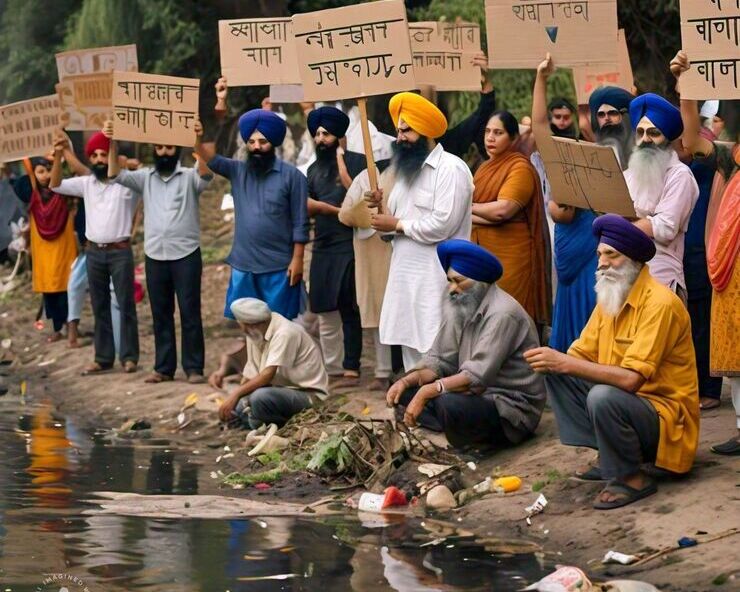
‘Kala Pani Morcha’ Protest Held in Punjab Against Polluted Budha Nala. Representational Image of a Protest Created with Meta AI Image Generator.

‘Kala Pani Morcha’ Protest in Punjab Against Polluted Budha Nala

‘Kala Pani Morcha’ Protest Held in Punjab Against Polluted Budha Nala. Representational Image of a Protest Created with Meta AI Image Generator.
‘Kala Pani Morcha’ Protest Held in Punjab Against Polluted Budha Nala. Representational Image of a Protest Created with Meta AI Image Generator. By RMN Foundation

‘Kala Pani Morcha’ Protest in Punjab Against Polluted Budha Nala

Since people have no other option but to consume poisonous water, they are suffering and dying with incurable diseases. 

By Rakesh Raman

Environmental activists have given a call to the local residents in Punjab to join their ‘Kala Pani Morcha’ protest in Ludhiana on December 3 against the dyeing units which are dumping poisonous waste into the Budha Nala.

The activists claim that the judicial forums such as the National Green Tribunal (NGT) have declared that the polluting factories are adding toxic effluents into the water stream and which must be stopped. 

However, the Punjab Dyers’ Association (PDA) approached the NGT which has asked the Punjab Pollution Control Board (PPCB) not to take any “coercive action” against the polluting industries until the next date of hearing on December 2. 

[ Video: ‘ਕਾਲਾ ਪਾਣੀ ਮੋਰਚਾ’ ਵੱਲੋਂ ਪੰਜਾਬ ‘ਚ ਦੂਸ਼ਿਤ ਬੁੱਢੇ ਨਾਲੇ ਖਿਲਾਫ 3 December ਨੂੰ Budha Nala ਪ੍ਰਦਰਸ਼ਨ ]

[ Video: दिल्ली की सांसद Swati Maliwal ने दिखाया घरों में जहरीला पानी ]

[ ‘ਕਾਲਾ ਪਾਣੀ ਮੋਰਚਾ’ ਵੱਲੋਂ ਪੰਜਾਬ ‘ਚ ਦੂਸ਼ਿਤ ਬੁੱਢੇ ਨਾਲੇ ਖਿਲਾਫ ਰੋਸ ਪ੍ਰਦਰਸ਼ਨ ]

It is not only the water which is polluted in the region, but the air quality has also crossed the lethal limits. As a result, deadly diseases are spreading in a large area of Punjab and parts of adjoining Rajasthan. 

While pollution-free air and clean drinking water are human rights, by not stopping air and water pollution, the Punjab Government headed by chief minister (CM) Bhagwant Mann is committing a serious human rights violation.

Previous Report of August 25, 2024

Local residents and environmental activists in Punjab held a big demonstration and organized a protest march on August 24 to get the Budha Nala (old water stream) cleaned and polluted factories removed.

Protesters assert that Budha Nala is a major source of toxic water which is spreading deadly diseases – including cancer – among the people in and around Ludhiana and beyond.

Held under the banner ‘Kala Pani Morcha’ or ‘Black Water Protest’, the agitation is expected to intensify as the protesters claim that the Punjab Government of chief minister (CM) Bhagwant Mann is not taking any action to save the lives of people.

It is stated that the drinking water continues to be contaminated because the industrial units are dumping poisonous waste in the Budha Nala. 

The protesters also raised concerns over the sewage treatment plants (STP) and common effluent treatment plants (CETP) which are not working effectively and said the government has even ignored the directives from the National Green Tribunal (NGT) to address the water pollution issue.

The protesters also allege that the local pollution-control agencies – such as the Punjab Pollution Control Board – are not taking corrective steps because there is rampant corruption in the Punjab Government and the owners of factories that spread pollution bribe the officials to avoid any action.

While Article 21 of the Indian Constitution guarantees the fundamental right to clean and healthy living, with its inaction and negligence, the Punjab Government is abusing the basic rights of citizens.

As the Punjab Government has turned a blind eye to the persisting pollution problem, the rivers and groundwater in the state is getting polluted with toxic waste. Since people have no other option but to consume poisonous water, they are suffering and dying with incurable diseases. 

The protesters warned that if the government does not shut down the polluting factories and take concrete steps to stop the pollution of the Sutlej and other rivers within the next two weeks, they will intensify their agitation after September 15. The protest is being supported by different farm unions also.

By Rakesh Raman, who is a national award-winning journalist and social activist. He is the founder of the humanitarian organization RMN Foundation which is working in diverse areas to help the disadvantaged and distressed people in the society.
India Judicial Research Report 2024. Decline of the Indian Judiciary. Photo: RMN News Service

India Judicial Research Report 2024: Decline of the Indian Judiciary

India Judicial Research Report 2024. Decline of the Indian Judiciary. Photo: RMN News Service

India Judicial Research Report 2024: Decline of the Indian Judiciary

The report also analyzes the obsolete syllabuses in law colleges and universities which are not producing employable workforce for the Indian courts. 

The India Judicial Research Report 2024 discusses various factors that are responsible for the downfall of the Indian judiciary and the impact of this constant collapse on the litigants particularly who belong to the vulnerable sections of the society. 

With the help of some specific court cases, the report sheds light on the dwindling judicial processes in India, scarce use of technology, flawed application of law, judicial corruption, limited domain knowledge of lawyers and judges, and their lack of English communication skills.

The information for the report has been taken from primary as well as secondary sources. It also includes some of the editor’s personal experiences of dealing with the judiciary. The hyperlinks included in this digital document provide detailed information about the specific aspects of various assertions.

The report also analyzes the obsolete syllabuses in law colleges and universities which are not producing employable workforce for the Indian courts. As a result of its dismal performance, the Indian judiciary is treated with disdain in the global arena which is reflected in research reports that rank different countries of the world. 

Now, it appears that because of dishonest – and mostly naive – lawyers and judges, nearly 1.4 billion people of India have lost faith in the courts and their judgements. Thus, the judiciary has become one of the most redundant institutions in the country.

The report also makes some recommendations for the Supreme Court, the Indian government, and law institutes so that the entire judicial system in the country could be reformed and revamped.

The author / editor of this report Rakesh Raman is a national award-winning journalist and founder of the humanitarian organization RMN Foundation in New Delhi, India.

Donation: Indian donors can click here to donate online to RMN Foundation / RMN News Service and you can also click here to donate with PayPal.

Download: You can click here to download and read the India Judicial Research Report 2024 to support this editorial initiative.

Contact

Rakesh Raman
Editor, RMN News Service [ Website ]
Founder, RMN Foundation [ Website ]
463, DPS Apts., Plot No. 16, Sector 4
Dwarka, Phase I, New Delhi 110 078, India
WhatsApp / Mobile: 9810319059 | Contact by Email

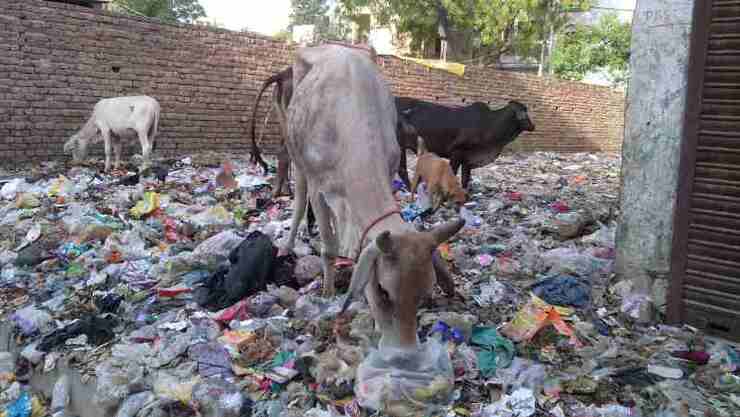
Starved cows eating household hazardous waste near a housing colony of Delhi. Dirty scenes like this are common in the national capital. Photo: Rakesh Raman / RMN News Service (Representational Image)

Ongoing Corruption Cases of Delhi IAS Officers

Starved cows eating household hazardous waste near a housing colony of Delhi. Dirty scenes like this are common in the national capital. Photo: Rakesh Raman / RMN News Service (Representational Image)

Ongoing Corruption Cases of Delhi IAS Officers

I sent the following complaint to various authorities.

To                                                                                                                      July 21, 2024

Dr. Jitendra Singh
Minister of State, Ministry of Personnel, Public Grievances and Pensions
Department of Personnel and Training (DoPT) / Prime Minister Office (PMO)
Government of India, North Block, New Delhi 110 001

Copy for Urgent Action to: Cabinet Secretariat, Central Vigilance Commission (CVC), Lokpal of India, Central Bureau of Investigation (CBI), Lt. Governor of Delhi

Subject: Ongoing Corruption Cases of Delhi IAS Officers

Dear Anti-Corruption Officers,

I am a government’s national award winning journalist and founder of the humanitarian organization RMN Foundation in New Delhi. Along with my editorial responsibilities and other social activities, I run various anti-corruption campaigns and publish a comprehensive anti-corruption magazine and research reports to cover local and international corruption issues.

In response to the complaints filed by me, the DoPT has been repeatedly directing the Cabinet Secretariat to hold investigations against 10 IAS officers who are apparently involved in a massive citywide corruption scandal in Delhi. I have also approached different other authorities to get these IAS officers prosecuted and punished. [ Details and documents related to my complaints are reproduced below for your reference. ]

In this case, the DoPT and the Cabinet Secretariat (in response to my RTI applications) have been informing me that the case is under progress. However, no punitive action has been taken against the IAS officers accused by me in my complaints.  

Therefore, I once again urge you to hold a formal investigation against these IAS officers and let me participate in the prosecution process as the petitioner. I hope that now instead of writing the perfunctory letters to me or the Cabinet Secretariat, you will take concrete action in this case.  

The other anti-corruption authorities mentioned above can also begin investigation in this case if it falls under their jurisdiction. [ The other details are given in the attached file. ]

Note: You can click here to study the complete document (including case details, exhibits, and hyperlinks) to take action as described in this document. [ As the investigation in this case is underway, this document has been protected with a password. The document can be provided to investigating agencies and other stakeholders on demand. Moreover, as the case is under investigation, some references and links have been removed / changed in the above report. ]

Thanking You

Contact

Rakesh Raman
Editor, RMN News Service [ Website ]
Founder, RMN Foundation [ Website ]
463, DPS Apts., Plot No. 16, Sector 4
Dwarka, Phase I, New Delhi 110 078, India
WhatsApp / Mobile: 9810319059 | Contact by Email

India Corruption Research Report 2024 (ICRR 2024) Project by RMN Foundation / RMN News Service

Collaboration for Research Project on Corruption in India

India Corruption Research Report 2024 (ICRR 2024) Project by RMN Foundation / RMN News Service

Collaboration for Research Project on Corruption in India

As I am in the process of seeking partners from India and other countries for the ICRR 2024 project, you are invited to support this anti-corruption initiative as a collaborator. 

India Corruption Research Report 2024 (ICRR 2024) Project by RMN Foundation / RMN News Service

Dear Leader,

I am a national award-winning journalist and founder of the humanitarian organization RMN Foundation in New Delhi, India. I run various anti-corruption campaigns and have been publishing since 2018 an international news magazine The Integrity Bulletin that covers corruption-related news and issues to engage with different stakeholders who are trying to combat corruption. 

For the past six years, I have been running a community-driven anti-corruption social service “Clean House” to report about crime and corruption in Delhi’s group housing societies where millions of people suffer because of extreme corruption and lawlessness. 

Nowadays, for the past more than 12 years, I have been running my own global news services on multiple news sites and publishing a range of research reports and digital magazines, including The Unrest news magazine that I have been publishing since 2020 to cover economic and political upheavals in the world. 

At present, I am also associated with the Varieties of Democracy (V-Dem) Project as a Country Expert for India to provide expert research inputs on multiple topics pertaining to democracy and governance. The topics include Regimes, Political Parties, Media, Judiciary, Executive, Elections, and Digital Society. The V-Dem Project is managed by V-Dem Institute under the University of Gothenburg, Sweden.

In my anti-corruption activities, I participated in a global petition led by Germany-based international organization Transparency International to call for the UN General Assembly Special Session against Corruption, UNGASS 2021, to direct all countries to set up central, public registers of beneficial ownership. 

Among other senior editorial positions, I was writing an exclusive edit-page column regularly for The Financial Express, which is a daily business newspaper of The Indian Express Group. I was also associated with the United Nations (UN) through the United Nations Industrial Development Organization (UNIDO) as a digital media expert to help businesses use technology for brand marketing and business development particularly in the export markets.

INDIA CORRUPTION RESEARCH REPORT

In order to inform the Indian citizens and the global community about the extent of corruption in India, I compiled and released in October 2023 a comprehensive research report “India Corruption Research Report 2023 (ICRR 2023)”. It is the second annual report on corruption in India while the first report ICRR 2022 was released in October 2022. Currently, I am working on the new project for 2024 to compile the “India Corruption Research Report 2024 (ICRR 2024)”. 

You can click here to know about the ICRR 2024 project.

COLLABORATION FOR ICRR 2024

As I am in the process of seeking partners from India and other countries for the ICRR 2024 project, you are invited to support this anti-corruption initiative as a collaborator. The name and / or logo of your organization along with a weblink will be published in the ICRR 2024, which is scheduled to be released in October 2024. 

The collaborators will also have an opportunity to get featured in the report through an email interview with one of the top executives of the organization or a contributed article of about 800 words written by a senior executive of the collaborator. 

CONCEPT NOTE

You can click here to download the concept note on the ICRR 2024 project. It is also given below.

Contact

Rakesh Raman
Editor, RMN News Service [ Website ]
Founder, RMN Foundation [ Website ]
463, DPS Apts., Plot No. 16, Sector 4
Dwarka, Phase I, New Delhi 110 078, India
WhatsApp / Mobile: 9810319059 | Contact by Email