Tag: Research

Students of a School in New Delhi. Photo by Rakesh Raman / RMN News Service (file photo)

Job with Education: School Education Report 2025 to Make Students Employable Released
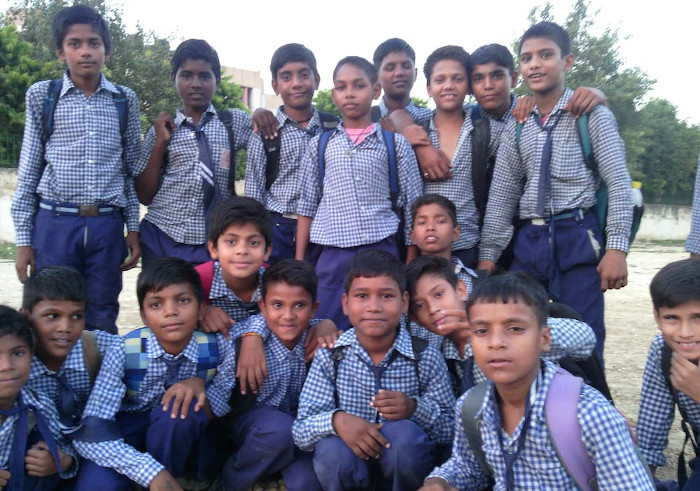
Students of a School in New Delhi. Photo by Rakesh Raman / RMN News Service (file photo)

Job with Education: School Education Report 2025 to Make Students Employable Released

With emphasis on self-learning methodologies, the report advises parents, teachers, students, and policy-makers to revamp the current education system in schools and replace it with the job-oriented education models.

RMN Foundation – which is the humanitarian initiative of the RMN (Raman Media Network) News Service – has released the JobED (Job with Education) report, which is a school education report to make students employable.

It is a research and consultative report which provides an alternative model of school education. The report proposes to impart modern fundamental education and contemporary skills to school students so that they could be made employable in the current information-driven job market.

With emphasis on self-learning methodologies, the report advises parents, teachers, students, and policy-makers to revamp the current education system in schools and replace it with the job-oriented education models. It describes the irrelevance of the ongoing education with a number of examples which depict that even the top degree holders are not able to get jobs.
The report also gives some examples of redundant syllabuses in schools and finds that the education is equally flawed in government as well as private schools of India.

[ Google AI Review: You can click here to access the Google AI review of the report on YouTube. ]

The report proposes an alternative model of school education based on a dynamic Constructive Education Framework (CEF). This alternative model works on the principle of “Learning for Earning” to make students employable and meet the larger objective of building a prosperous society in the country.

The report author Rakesh Raman is the government’s national award winning journalist and founder of the humanitarian organization RMN Foundation in New Delhi. Among his editorial and social services, he runs multiple education awareness campaigns and writes academic and supplementary education books for children. He was also running a free school for deserving children to provide them modern education so that they could compete in the evolving job market.

People and organizations are urged to support this academic initiative aimed to provide better education and career opportunities to all students in India.

Donation: Indian donors can click here to donate online to RMN Foundation / RMN News Service and you can also click here to donate with PayPal.

You can click here to download and study the report which is also given below.

Contact

Rakesh Raman
Editor, RMN News Service [ Website ]
Founder, RMN Foundation [ Website ]
463, DPS Apts., Plot No. 16, Sector 4
Dwarka, Phase I, New Delhi 110 078, India
WhatsApp / Mobile: 9810319059 | Contact by Email

Corruption in India. Photo: RMN News Service

Transparency Index Reveals Corruption Increasing in India

Corruption in India. Photo: RMN News Service

Transparency Index Reveals Corruption Increasing in India

The CPI rank of India has been constantly falling from 85 in 2022 to 93 in 2023 to 96 in 2024, which indicates that corruption has been increasing exponentially in the country.

By Rakesh Raman

Transparency International’s Corruption Perceptions Index (CPI) 2024 – released in February 2025 – shows that corruption has been increasing in India, as the country of 1.4 billion people saw a drop in its ranking to 96th position from 93rd last year.

With a score of 38 out of 100, India is among the world’s most corrupt countries while the CPI evaluates 180 countries and territories, assigning scores from 0 (highly corrupt) to 100 (very clean). 

The Transparency Index asserts that corruption is increasing in repressive authoritarian nations where elections are not fair and transparent and where democratic institutions are under a constant assault by the ruling regime.

Full democracies have a CPI average of 73, while flawed democracies average 47 and non-democratic regimes just 33. It shows that India with a score of 38 is a non-democratic nation. The Index also shows that corruption is more in India than China which has a CPI rank of 76.

The CPI rank of India has been constantly falling from 85 in 2022 to 93 in 2023 to 96 in 2024, which indicates that corruption has been increasing exponentially in the country – particularly under the regime of prime minister (PM) Narendra Modi

In order to stop corruption, the Supreme Court of India asked the government to set up the office of Lokpal, the top anti-corruption ombudsman in India. Although the Lokpal was established in March 2019, let alone resolving corruption cases, it could not formalize its processes in five years of its formation. Corruption is still increasing rapidly in different forms. 

While political, bureaucratic, and judicial corruption has become a pain in the neck for commoners in India, there is no effective agency which can give relief from corruption to the suffering citizens. The Lokayukta (anti-corruption ombudsman organization in the Indian States), vigilance departments of State governments, and India’s top anti-corruption organization Central Vigilance Commission (CVC) are all toothless outfits that tend to protect the corrupt officials and encourage corruption. 

They simply turn a blind eye to the corruption cases in which government politicians and working bureaucrats are involved. The procedures of anti-corruption agencies to accept public complaints on corruption are so slow and cumbersome that ordinary citizens feel scared to file their complaints against corrupt officials.

The public grievance monitoring systems of the State as well as Central governments are also totally ineffective. After receiving complaints from the citizens, these systems send them to some random departments in a mechanical way and abruptly close the cases without giving relief to the complainants. 

Government officials keep throwing public complaints from one desk to another without taking conclusive decisions on the complaints. Finally, the aggrieved citizens are left with no other option but to approach the courts. But if courts have to do everything, why do we need politicians and government officials? The administrative systems have totally collapsed in India. 

While corruption is happening openly, most corruption cases involving top bureaucrats and ruling politicians do not get reported. As most Indian journalists are corrupt, Indian media is under the tight control of the government. When some corruption cases appear in the non-traditional media (such as news sites), the government ignores them and makes false claims that no corruption is happening under the government. The truth, however, is that corruption – which has been persisting for decades under all governments – is happening and increasing at every step in the country.

Although a slew of anti-corruption laws exist in India, the rising corruption in the country indicates that these laws are not effective. The anti-corruption laws that are supposed to check corruption include Indian Penal Code, 1860; Prevention of Corruption Act, 1988; Benami Transactions (Prohibition) Act, 1988 to prohibit benami transactions; Prevention of Money Laundering Act, 2002; among others.

Since government politicians are mostly illiterate or inexperienced, they are heavily dependent on bureaucrats for all clerical work. While the unskilled bureaucrats are not able to complete their tasks effectively, on average almost 10 bureaucrats are paid for work that can be done by a single person.

Thus, salaries being given to bureaucrats with public money is a form of corruption to loot the government exchequer. It is estimated that a whopping 10% of India’s GDP is wasted on salaries of government employees while they do not deserve even a fraction of this money.

The India Corruption Research Report 2024 discusses various factors related to corruption in India. It also gives recommendations to stop corruption in the country. You can click here to download and study the report.

By Rakesh Raman, who is a national award-winning journalist and social activist. He is the founder of a humanitarian organization RMN Foundation which is working in diverse areas to help the disadvantaged and distressed people in the society.

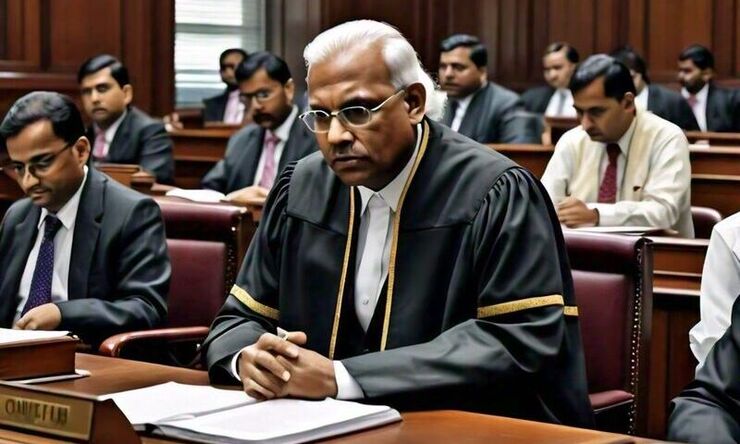
Representational Image of a Courtroom Created with Meta AI Image Generator

Recommendations to Restore the Credibility of the Indian Judiciary

Representational Image of a Courtroom Created with Meta AI Image Generator

Recommendations to Restore the Credibility of the Indian Judiciary

The excerpts from the “India Judicial Research Report 2024: Decline of the Indian Judiciary” are given below.

In order to restore the credibility of the Indian judiciary, some of the recommendations are given below.

Screening of Judges: The judges should not be appointed without proper live-streamed interviews with them by select committees of honest judges and reputed citizens after making the profiles and records of candidates public on a dedicated website. The open interviews with candidates should be on the lines of congressional hearings in the United States. This method should be applied to the existing judges also. Only those judges should be appointed in high courts and the Supreme Court who would not take government jobs or any other undue benefit after retirement.

Qualification of Lawyers: Only those people should be allowed to operate as advocates in courts who have obtained their law degrees from top colleges or universities. They should first clear a proper test comprising English, communications, law, technology, etc. before allocating a court to them. Their record and the fee they charge should be publicly available on a government-monitored website.

Lateral Entry: The courts can provide lateral entry to qualified professionals and domain experts to work as lawyers. Such lateral entry is already being provided in Indian civil services where professionals from the private sector are allowed to work as Indian Administrative Service (IAS), Indian Police Service (IPS), and Indian Revenue Service (IRS) officers.

Academic Courses: The law colleges and universities should revamp their courses and pedagogical methodologies to produce professionals who can work in the evolving legal ecosystem driven by new technologies and communication systems.

Formation of Juries: Since at present, the judges and lawyers are not fully qualified, there should be a mandatory provision to form independent juries to deliver the final verdict in certain types of cases. A jury is a group of qualified people who participate in a court trial to decide if a person is guilty or not guilty, or to decide a claim.

Technology for Judgments: In order to minimize the human intervention in the process of court decisions, artificial intelligence (AI)-based technology expert systems should be deployed in each court to evaluate the correctness of judgments. The litigants should be given the option to use the AI expert systems to get the court decisions vetted. Action should be taken against judges whose judgments fail the AI test repeatedly.

Legal Aid: It should be made compulsory for fully qualified advocates to provide free legal aid in all types of courts. These advocates must be selected after properly testing their communication skills, language skills, technology skills, and knowledge of law. There should be a proper mechanism for clients to complain against the dishonest or unskilled advocates.

Online Court Cases: At present, the e-filing systems are almost extinct. The digital interfaces to accept and manage court cases must be simplified so that more litigants can use them without hiring the services of advocates. Since the free email services such as Gmail, Hotmail, and Yahoo Mail are behaving erratically, the litigants should be given the option to simply upload their documents on all court websites with acknowledgement sent back to the litigant. 

Courage of Judges: All judges should work courageously without any fear of the criminal politicians. They should get inspired from judge Loya who died in mysterious circumstances, but many believe that he was murdered because he did not succumb to threats from certain politicians who were facing criminal cases.

Committee of Domain Experts: Instead of forming committees of traditional bureaucrats or court staff to supervise various legal processes, the Supreme Court and the government should form a top-level committee of domain experts who understand law, technology, communications, and public relations. This group of experts should redevelop and revamp the court processes.

You can click here to know more about the “India Judicial Research Report 2024: Decline of the Indian Judiciary”.

Contact

Rakesh Raman
Editor, RMN News Service [ Website ]
Founder, RMN Foundation [ Website ]
463, DPS Apts., Plot No. 16, Sector 4
Dwarka, Phase I, New Delhi 110 078, India
WhatsApp / Mobile: 9810319059 | Contact by Email

Donation: Indian donors can click here to donate online to RMN Foundation / RMN News Service and you can also click here to donate with PayPal.

India Judicial Research Report 2024. Decline of the Indian Judiciary. Photo: RMN News Service

India Judicial Research Report 2024: Decline of the Indian Judiciary

India Judicial Research Report 2024. Decline of the Indian Judiciary. Photo: RMN News Service

India Judicial Research Report 2024: Decline of the Indian Judiciary

The report also analyzes the obsolete syllabuses in law colleges and universities which are not producing employable workforce for the Indian courts. 

The India Judicial Research Report 2024 discusses various factors that are responsible for the downfall of the Indian judiciary and the impact of this constant collapse on the litigants particularly who belong to the vulnerable sections of the society. 

With the help of some specific court cases, the report sheds light on the dwindling judicial processes in India, scarce use of technology, flawed application of law, judicial corruption, limited domain knowledge of lawyers and judges, and their lack of English communication skills.

The information for the report has been taken from primary as well as secondary sources. It also includes some of the editor’s personal experiences of dealing with the judiciary. The hyperlinks included in this digital document provide detailed information about the specific aspects of various assertions.

The report also analyzes the obsolete syllabuses in law colleges and universities which are not producing employable workforce for the Indian courts. As a result of its dismal performance, the Indian judiciary is treated with disdain in the global arena which is reflected in research reports that rank different countries of the world. 

Now, it appears that because of dishonest – and mostly naive – lawyers and judges, nearly 1.4 billion people of India have lost faith in the courts and their judgements. Thus, the judiciary has become one of the most redundant institutions in the country.

The report also makes some recommendations for the Supreme Court, the Indian government, and law institutes so that the entire judicial system in the country could be reformed and revamped.

The author / editor of this report Rakesh Raman is a national award-winning journalist and founder of the humanitarian organization RMN Foundation in New Delhi, India.

Donation: Indian donors can click here to donate online to RMN Foundation / RMN News Service and you can also click here to donate with PayPal.

Download: You can click here to download and read the India Judicial Research Report 2024 to support this editorial initiative.

Contact

Rakesh Raman
Editor, RMN News Service [ Website ]
Founder, RMN Foundation [ Website ]
463, DPS Apts., Plot No. 16, Sector 4
Dwarka, Phase I, New Delhi 110 078, India
WhatsApp / Mobile: 9810319059 | Contact by Email

Poor children who live and sleep on the open pavements in India’s capital New Delhi. Photo: Rakesh Raman / RMN News Service (Representational Image)

New Research Report Reveals Massive Corruption in India

Poor children who live and sleep on the open pavements in India’s capital New Delhi. Photo: Rakesh Raman / RMN News Service

New Research Report Reveals Massive Corruption in India

India Corruption Research Report 2023 – Corruption in India Research

The India Corruption Research Report 2023 (ICRR 2023) is the second annual report on corruption in India. Released in October 2023, the 86-page report covers diverse aspects of corruption in India. Some of the key facts are given below.

ICRR 2023: Key Facts

Corruption in India is increasing exponentially.

Corruption cases of the ruling regime never get investigated.

Bureaucrats enjoy full impunity in their acts of corruption.

Judicial corruption is increasing rapidly.

Courts are mostly complicit in corruption crimes.

Oligarchs close to the government politicians commit financial crimes blatantly.

Investigation agencies are negligent and unskilled to handle corruption cases.

Anti-corruption laws are not followed.

Courts easily grant bail to corrupt politicians.

Corruption is equally rampant in the Central and State governments.

With opaque corporate funding through electoral bonds, political corruption by the ruling regime has increased manifold.

In return to illicit corporate funds, the government does not take back loans given to corporates. Banks have written off bad loans worth Rs. 14.56 lakh crore (~ US$ 175 billion) in the last nine financial years starting 2014-15. This is the most dreaded form of organized corruption.

As the leaders of opposition political parties are equally corrupt, they do not oppose government corruption. 

Since politicians, bureaucrats, police, and judges have formed a criminal gang in India, there is no forum for citizens where they could complain and get rid of corruption.

You can click here to download and read the report.

Donation Online and PayPal: Individual donors can click here to donate online and click here to pay with PayPal.

Contact

Rakesh Raman
Editor, RMN News Service [ Website ]
Founder, RMN Foundation [ Website ]
463, DPS Apts., Plot No. 16, Sector 4
Dwarka, Phase I, New Delhi 110 078, India
WhatsApp / Mobile: 9810319059 | Contact by Email

Research Project: India Corruption Research Report 2023

Collaboration and Sponsorship for Research Project on Corruption in India

Research Project: India Corruption Research Report 2023

The India Corruption Research Report 2023 (ICRR 2023) was released on October 3, 2023. You can click the following link to read the report.

[ India Corruption Research Report 2023 Released ]


Collaboration and Sponsorship for Research Project on Corruption in India

Dear Leader,

I am a national award-winning journalist and founder of the humanitarian organization RMN Foundation in New Delhi, India. I run various anti-corruption campaigns and have been publishing since 2018 an international news magazine The Integrity Bulletin that covers corruption-related news and issues to engage with different stakeholders who are trying to combat corruption. For the past six years, I have been running a community-driven anti-corruption social service “Clean House” to report about crime and corruption in Delhi’s group housing societies where millions of people suffer because of extreme corruption and lawlessness. 

Nowadays, for the past more than 12 years, I have been running my own global news services on multiple news sites and publishing a range of research reports and digital magazines, including The Unrest news magazine that I have been publishing since 2020 to cover economic and political upheavals in the world. 

At present, I am also associated with the Varieties of Democracy (V-Dem) Project as a Country Expert for India to provide expert research inputs on multiple topics pertaining to democracy and governance. The topics include Regimes, Political Parties, Media, Judiciary, Executive, Elections, and Digital Society. The V-Dem Project is managed by V-Dem Institute under the University of Gothenburg, Sweden.

Among other senior editorial positions, I was writing an exclusive edit-page column regularly for The Financial Express, which is a daily business newspaper of The Indian Express Group. I was also associated with the United Nations (UN) through the United Nations Industrial Development Organization (UNIDO) as a digital media expert to help businesses use technology for brand marketing and business development particularly in the export markets.

INDIA CORRUPTION RESEARCH REPORT

In order to inform the Indian citizens and the global community about the extent of corruption in India, I compiled and released in October 2022 a comprehensive report on corruption in the country. Under the title “India Corruption Research Report 2022 (ICRR 2022),” the research report covers diverse aspects of corruption in India. 

You can click here to download ICRR 2022.

Currently, I am working on the new project for 2023 to compile the India Corruption Research Report 2023 (ICRR 2023). You can click here to know about the project.

COLLABORATION AND SPONSORSHIP

As I am in the process of seeking partners from India and other countries for the ICRR 2023 project, you are invited to support this anti-corruption initiative as a collaborator and sponsor. The name and / or logo of your organization along with a weblink will be published in the ICRR 2023, which is scheduled to be released in October 2023. 

The sponsors will also have an opportunity to get featured in the report through an email interview with one of the top executives of the organization or a contributed article of about 800 words written by a senior executive of the sponsor. 

Fee: The sponsorship fee is US$1,200 or Indian Rs. 100,000 per sponsor. 

Online and PayPal: Individual donors can click here to donate online and click here to pay with PayPal. You can click here to monitor the progress of the ICRR 2023 project.

CONCEPT NOTE

A concept note on the project is given below for your reference.

Contact

Rakesh Raman
Editor, RMN News Service [ Website ]
Founder, RMN Foundation [ Website ]
463, DPS Apts., Plot No. 16, Sector 4
Dwarka, Phase I, New Delhi 110 078, India
WhatsApp / Mobile: 9810319059 | Contact by Email