Tag: India

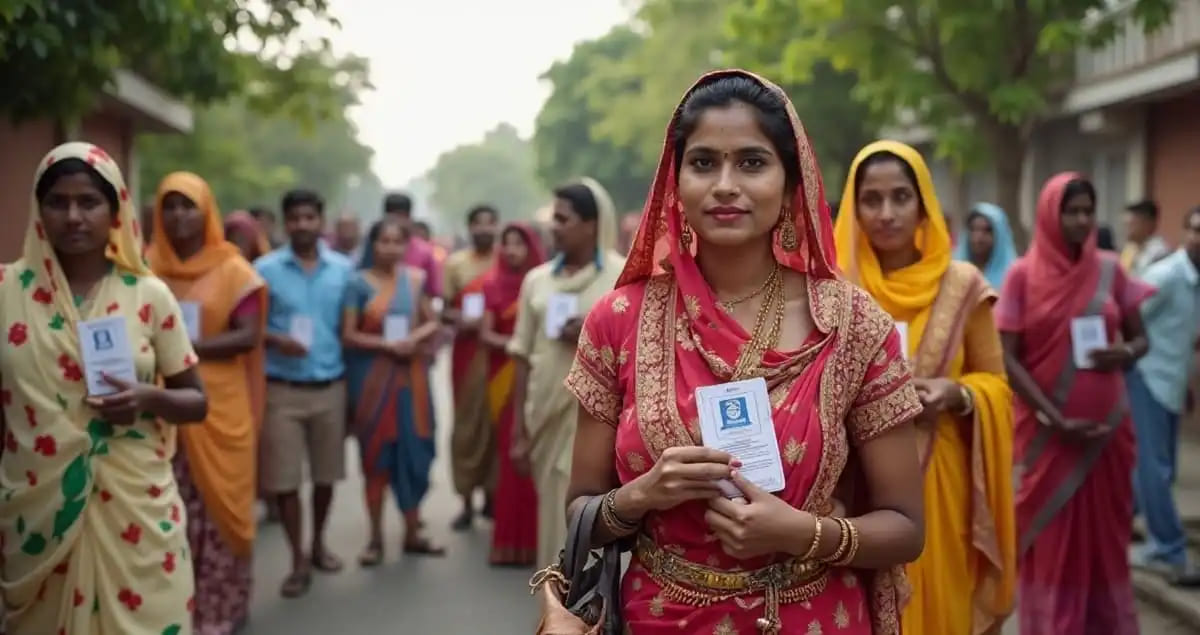
AI-generated representational image of men and women standing outside a polling booth to vote in an Indian election. Photo: RMN News Service

A Strategic Analysis of Systemic Instability in India

AI-generated representational image of men and women standing outside a polling booth to vote in an Indian election. Photo: RMN News Service

A Strategic Analysis of Systemic Instability in India

The dangerous combination of rising public anger and an apparent leadership vacuum poses a significant and growing threat to national stability.

1.0 Introduction: A Convergence of Crises

India is confronting a cascade of institutional failures that pose a direct threat to its internal stability and strategic trajectory. The foundations of governance are eroding under the dangerous convergence of systemic corruption, failing public institutions, and rising social discontent, creating an environment of profound uncertainty. This strategic analysis examines these compounding challenges—from the pervasive corruption that has shattered public trust to the critical decay of the nation’s judicial system and the resulting manifestations of civic unrest. By dissecting these issues and their interplay, this report assesses their collective impact on the nation’s governance, political landscape, and future stability.

2.0 The Pervasiveness of Corruption: An Erosion of Public Trust

Endemic corruption serves as a foundational challenge that corrodes public trust in state institutions at every level, from local civic administration to the highest echelons of national politics. It is not merely a transactional crime but a systemic condition that undermines the rule of law and the state’s legitimacy. This section dissects the profound public perception of corruption in India and its tangible manifestations.

The core finding of a recent survey reveals a profound crisis of faith in the nation’s integrity, a sentiment that is nearly universal among the populace.

An overwhelming 88% of survey respondents believe India is a corrupt country.

This figure is not merely a reflection of public dissatisfaction; it is a leading indicator of a potential collapse in state legitimacy, which carries significant risk for domestic policy execution and foreign investor confidence. This perception fuels cynicism and disengagement, creating fertile ground for instability. The specific manifestations of this corruption are visible at both the elite and grassroots levels.

  • High-Level Political Nepotism: A prominent example cited as evidence of high-level influence is the charge leveled by opposition figure Rahul Gandhi concerning the rise of Jay Shah, the son of the Home Minister, to the leadership of international cricket. This case is held up as a clear illustration of how political connections are perceived to supersede merit, reinforcing the public narrative that power and family ties are the primary currencies for advancement.
  • Grassroots Civic Corruption: At the local level, corruption directly impacts citizen life and safety through schemes like the “citywide construction-cum-corruption racket.” This system is reportedly orchestrated by criminals operating within the management committees of housing societies. This devolution of corruption to the community level shatters the last vestiges of safe civic space, turning neighbors into potential threats and proving that no aspect of daily life is insulated from systemic rot.

This normalization of graft at every level creates an environment where judicial integrity is no longer assumed but is itself seen as a commodity, making the judiciary not a bulwark against corruption but its next logical victim.

3.0 The Compromised Judiciary and Administrative Collapse

The judiciary is intended to be the ultimate guarantor of the rule of law, a bulwark against executive overreach and a forum for impartial justice. However, evidence suggests a severe degradation of the Indian judicial system, which is suffering from both internal decay and overwhelming external pressures. This section assesses the “Systemic Rot” that has compromised this vital institution.

According to analysis, the confluence of political influence and corruption has created what is described as a “marketplace of judgments,” where judicial outcomes are potentially for sale. This perception strikes at the very heart of judicial legitimacy. The failure is not isolated but is driven by a dual crisis of institutional capacity and external overload.

  1. Crippling Institutional Failures: The judiciary is plagued by deep-seated internal problems, including “crippling case backlogs” and “interminable delays” that deny timely justice to citizens. These long-standing issues are compounded by the persistent breakdown of essential infrastructure, exemplified by an urgent complaint filed with the Union Ministry of Law and Justice over the failure of the Delhi High Court’s e-Filing system. Furthermore, specific judicial actions, such as the Supreme Court’s refusal to entertain a plea from an incarcerated Member of Parliament, Amritpal Singh, challenging his detention, contribute to public concerns about access to legal recourse.
  2. Overload from Collapsed Grievance Systems: The crisis within the courts is directly exacerbated by the collapse of parallel administrative systems. The “India Judicial Research Report 2025” reveals that the failure of government-run citizen grievance mechanisms is forcing millions of ordinary administrative disputes into an already collapsing court system. Instead of being resolved at the administrative level, these cases flood the judiciary, magnifying its backlogs and rendering it incapable of performing its core constitutional functions effectively.

The cumulative breakdown of legal and administrative recourse has predictably led to a sharp rise in public frustration, pushing citizens toward more direct forms of protest and political expression.

4.0 Manifestations of Social Unrest and Political Vacuum

When formal systems of governance and justice fail to provide citizens with adequate recourse, public discontent inevitably manifests in more direct, and often disruptive, ways. The erosion of formal recourse has predictably ignited a series of low-grade, high-visibility social fires, each exposing a different facet of state incapacity.

Mounting social and civic distress is evident in a series of recent events, each serving as a clear indicator of a fracturing social contract:

  • Public Protests: A clash between demonstrators and police at Panjab University over the demand for senate elections signifies a failure of the democratic process, forcing citizens into direct confrontation with the state to demand basic institutional functions.
  • Severe Public Safety Failures: A deadly explosion near the Red Fort, which resulted in at least eight fatalities, represents a catastrophic failure of the state’s primary duty to provide basic security, eroding public confidence in the heart of the nation’s capital.
  • Environmental Governance Crisis: The confirmation that air pollution has become the leading cause of death in Delhi is a stark indictment of failed public welfare administration and a fundamental failure to protect the citizens’ right to life.

Compounding this climate of public anger is the ineffectiveness of the political opposition, which has created a dangerous leadership vacuum. The opposition’s failure is twofold: a failure of on-the-ground activism and a failure of constitutional responsibility, making it a vacuum, not an alternative. Key figures like Rahul Gandhi are portrayed as a “social media influencer” who is “not prepared to protest on the streets.” This critique suggests he is failing to lead effective field campaigns or protect the fundamental rights of citizens, leaving widespread discontent without a credible political channel.

The dangerous combination of rising public anger and an apparent leadership vacuum poses a significant and growing threat to national stability.

5.0 Conclusion: Assessing the Collective Impact on National Stability

The evidence presents a deeply concerning picture of systemic instability in India, driven by the mutually reinforcing failures of its core institutions. The analysis reveals a clear causal chain: pervasive corruption has fostered widespread public distrust, which is further entrenched by a compromised judiciary incapable of delivering justice. This collapse of formal grievance mechanisms has pushed public discontent onto the streets, yet this energy finds no constructive outlet in an opposition movement criticized for its detachment and ineffectiveness.

The compounding nature of these crises—political, judicial, and social—presents the primary risk to India’s domestic stability. For the international community, these developments must recalibrate assessments of India’s long-term trajectory. The nation’s credibility as a stable democratic anchor in Asia can no longer be assumed; it is now an open question, contingent on its ability to reverse this systemic decay.

Photo: AI-generated representational image of men and women standing outside a polling booth to vote in an Indian election. Photo: RMN News Service

Rakesh Raman  |  LinkedIn  |  Facebook  Twitter (X)

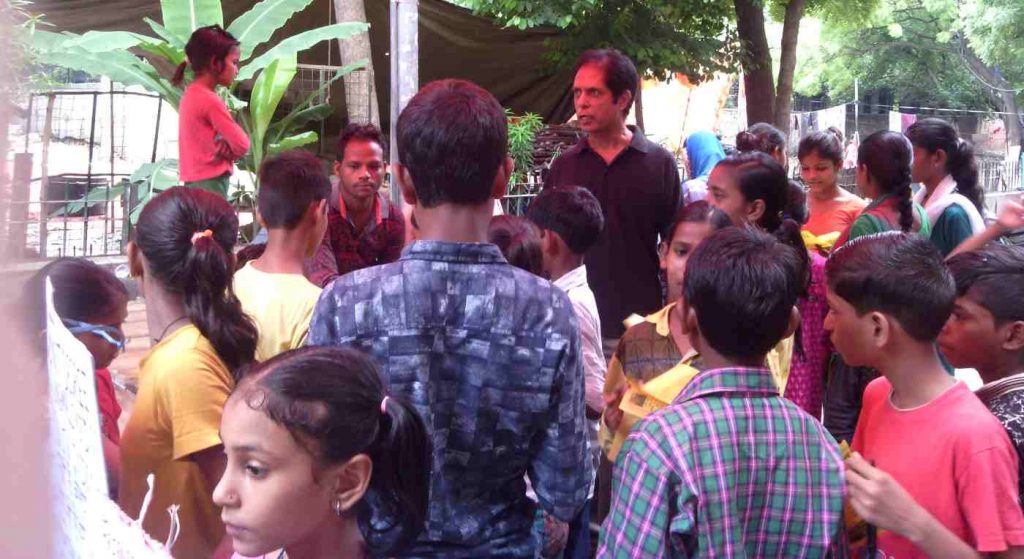
RMN Foundation founder Rakesh Raman running an education campaign with the help of student volunteers in New Delhi, India. Photo: RMN News Service

Join the Campaign to Introduce Social Democracy in India

RMN Foundation founder Rakesh Raman running an education campaign with the help of student volunteers in New Delhi, India. Photo: RMN News Service

Join the Campaign to Introduce Social Democracy in India

MAKE INDIA DEVELOPED AGAIN
Join the MIDA Campaign

A country will remain underdeveloped if its prime minister is so illiterate that he cannot speak even a single word without a teleprompter. He also tarnishes the country’s image in all parts of the world when he uses teleprompter even to address a rare press conference.

MAKE INDIA DEVELOPED AGAIN. By RMN Foundation. Click the photo for details.

MAKE INDIA DEVELOPED AGAIN
Join the MIDA Campaign
Issued in public interest by RMN Foundation.

MAKE INDIA DEVELOPED AGAIN. By RMN Foundation. Click the photo for details.

A man, whose degree is Artificial and who has no Intelligence, is going everywhere to discuss Artificial Intelligence. Sad but true.

MAKE INDIA DEVELOPED AGAIN. By RMN Foundation. Click the photo for details.

Food for Thought: Choose Your Leader

His Twitter wall displays ghost-written tweets on every random subject.

He frequently calls the winning sportspersons on the phone.

He delivers at the end of every month a boring monologue that nobody listens to.

He uses a teleprompter to say even a few words on any subject.

He keeps roaming aimlessly in India and abroad.

He surrounds himself with naive toadies who behave as his slaves.

He delivers only vulgar speeches against his opponents.

He hates certain communities of his own country.

He began his career with hate and crime some 20 years ago.

His tongue starts spinning in his mouth when he tries to speak English.

He giggles hysterically without understanding a word when a foreign leader speaks in English.

He hardly smiles in India but keeps laughing uncontrollably in front of world leaders and their wives.

He keeps changing costumes throughout the day.

He feeds peacocks and cows even when they are not hungry.

He prostrates in temples and squats in remote caves.

He calls failed actors to tell his techniques of eating mangoes.

He wants to get photographed for every trick he plays.

Friends, you can see that even a donkey or a monkey can do all that he is doing.

But if you want to come out of the hell that India has become under this ongoing buffoonery, you need an educated and intelligent leader without any political background at the top.

Issued in public interest by RMN Foundation. www.rmnfoundation.org ]

This initiative is part of RMN Foundations’s nationwide campaign to introduce social democracy in India in order to build an egalitarian society in which all citizens could enjoy equal rights, opportunities, freedoms, and access to justice.

Campaign Components

[ भारत की जहरीली राजनीतिक व्यवस्था तथा सुधार अभियान ]

[ भारतीय जनतांत्रिक क्रांति: आओ मिल कर करें एक नये और समृद्ध भारत का निर्माण ]

JOIN THE CAMPAIGN: You can click here to join the campaign as a member or volunteer.

Donation: Indian donors can click here to donate online to RMN Foundation / RMN News Service and you can also click here to donate with PayPal.

Contact

Rakesh Raman
Editor, RMN News Service [ Website ]
Founder, RMN Foundation [ Website ]
463, DPS Apts., Plot No. 16, Sector 4
Dwarka, Phase I, New Delhi 110 078, India
WhatsApp / Mobile: 9810319059

The digital pamphlet for the campaign is given below.

Join the Campaign to Introduce Social Democracy in India. Food for Thought: Choose Your Leader. Issued in public interest by RMN Foundation. [ www.rmnfoundation.org ]
Representational Image of a Courtroom Created with Meta AI Image Generator

Why Most Court Judgments in India Are Flawed

Why Most Court Judgments in India Are Flawed. Representational Image of a Courtroom Created with Meta AI Image Generator.

Why Most Court Judgments in India Are Flawed

The excerpts from the “India Judicial Research Report 2024: Decline of the Indian Judiciary” are given below.

While the members of the judiciary are not quite qualified, the government is blindly increasing the number of courts and judges. 

A large number of lawyers and judges are not comfortable in the use of English in courts. While most judges are not quite educated, there are numerous flaws in their written judgements as well as spoken pronouncements. 

Similarly, most lawyers are so ignorant that they cannot write even a few sentences correctly in English language, which is commonly used in Indian courts. According to the Department of Justice, Government of India, Article 348(1) of the Constitution of India provides that “all proceedings in the Supreme Court and in every high court shall be in English language until Parliament by law otherwise provides.”

But there is scarce use of proper English in courts. As India ranks 134 out of 193 countries and territories on the 2023/24 Human Development Index (HDI), the performance of workers in all the professional fields is bad. The same is visible in the judicial profession where judges as well as lawyers lack skills to work effectively and deliver proper justice to the citizens.

RELATED REPORTS

[ India Judicial Research Report 2024 Released ]

[ India Judicial Research Report 2024: Decline of the Indian Judiciary ]

[ Negligible Use of Technology in Indian Courts: Research Report on Indian Judiciary ]

[ How Indian Judiciary Is Condemned in the World ]

[ Indian Judiciary Research Report: Professional Incompetence of Lawyers and Judges ]

The members of the Indian judiciary are not able to work properly because they do not understand English which propels the modern information-driven world. Therefore, they keep working as manual workers because of which litigants suffer as they cannot challenge wrong court decisions.

It is being observed that almost all the court judgements and other documents which are used as part of the judicial work in India are flawed. Some of the examples of these wrong judgements and incorrect use of language are included in the research report, “Risks of English Language Limitations in Indian Judiciary: Pitfalls and Solutions”. [ You can click here to download and read the full research report. ]

While the members of the judiciary are not quite qualified, the government is blindly increasing the number of courts and judges. The 2023 data shared in the Rajya Sabha by the Department of Justice, Ministry of Law & Justice, Government of India, reveals that in the 686 districts of India, there are 3,466 district court complexes which accommodate over 2 million advocates. In addition, 25 high courts and the Supreme Court are supposed to handle millions of court cases filed every year.

For the year 2023, for example, nearly 2.6 crore (26 million) new cases were instituted across various levels of courts. These include civil, criminal, and other types of cases at the Supreme Court, high courts, and subordinate courts. Since the number of judges in courts is pathetically low, they are not able to deliver proper justice to litigants.

Download: You can click here to download and read the India Judicial Research Report 2024 to support this editorial initiative.

India Judicial Research Report 2024. Decline of the Indian Judiciary. Photo: RMN News Service

India Judicial Research Report 2024: Decline of the Indian Judiciary

India Judicial Research Report 2024. Decline of the Indian Judiciary. Photo: RMN News Service

India Judicial Research Report 2024: Decline of the Indian Judiciary

The report also analyzes the obsolete syllabuses in law colleges and universities which are not producing employable workforce for the Indian courts. 

The India Judicial Research Report 2024 discusses various factors that are responsible for the downfall of the Indian judiciary and the impact of this constant collapse on the litigants particularly who belong to the vulnerable sections of the society. 

With the help of some specific court cases, the report sheds light on the dwindling judicial processes in India, scarce use of technology, flawed application of law, judicial corruption, limited domain knowledge of lawyers and judges, and their lack of English communication skills.

The information for the report has been taken from primary as well as secondary sources. It also includes some of the editor’s personal experiences of dealing with the judiciary. The hyperlinks included in this digital document provide detailed information about the specific aspects of various assertions.

The report also analyzes the obsolete syllabuses in law colleges and universities which are not producing employable workforce for the Indian courts. As a result of its dismal performance, the Indian judiciary is treated with disdain in the global arena which is reflected in research reports that rank different countries of the world. 

Now, it appears that because of dishonest – and mostly naive – lawyers and judges, nearly 1.4 billion people of India have lost faith in the courts and their judgements. Thus, the judiciary has become one of the most redundant institutions in the country.

The report also makes some recommendations for the Supreme Court, the Indian government, and law institutes so that the entire judicial system in the country could be reformed and revamped.

The author / editor of this report Rakesh Raman is a national award-winning journalist and founder of the humanitarian organization RMN Foundation in New Delhi, India.

Donation: Indian donors can click here to donate online to RMN Foundation / RMN News Service and you can also click here to donate with PayPal.

Download: You can click here to download and read the India Judicial Research Report 2024 to support this editorial initiative.

Contact

Rakesh Raman
Editor, RMN News Service [ Website ]
Founder, RMN Foundation [ Website ]
463, DPS Apts., Plot No. 16, Sector 4
Dwarka, Phase I, New Delhi 110 078, India
WhatsApp / Mobile: 9810319059 | Contact by Email

E-Filing Module of the Supreme Court of India

Why E-Filing Systems and E-Courts Fail to Deliver Justice in India

E-Filing Module of the Supreme Court of India

Why E-Filing Systems and E-Courts Fail to Deliver Justice in India

The excerpts from the Research Report: Defective E-Filing Systems of Indian Courts are given below. You can also download and read the full report.

One of the reasons for chaotic e-filing platforms is the inconsistent use of GUIs. The interfaces provided by the Supreme Court, high courts, and lower courts are totally different while they are supposed to serve the same objective of accepting legal documents online and presenting them in the courts.

The purpose of digital interfaces is supposed to provide an easy way to the advocates and particularly litigants who have little knowledge of technology and who are not quite familiar with the judicial processes. 

They should be able to convey their case in simple language and present it digitally in the court either through a PDF file or a hyperlinked webpage or even presentation slides including exhibits, photographs, video links, and so on. But the inconsistent web interfaces and complex filing mechanisms for different courts confuse the litigants completely.

The defective e-filling systems also show random errors written in confusing language. Therefore, the users are not able to file their cases smoothly in courts.

The e-filing platforms show random and wrongly written error messages, even when the user – litigant or advocate – has entered their details correctly. On the High Court of Delhi site, for example, the error message says, “Your Login ID could not be generated due to some technical reason. Please try again.”

Since the backend system and the error messaging database have not been properly configured, the user gets a confusing message of “some technical reason.” The user can keep trying repeatedly, but this error message will persist and thus the user will not be able to file the case online.

It is the height of stupidity that the e-filing system of the High Court of Delhi is asking users to file their cases on A4-size paper, while the digital courts are supposed to be paperless. Although this research report is giving examples of the High Court of Delhi, the e-filing systems of high courts in other states are expected to be equally defective.

It appears that the people who are handling backend systems and frontend interfaces are clueless about the purpose of e-filing and virtual courts. They are also not aware of the software implementation process which includes dry run, parallel run, and live run. The e-filing systems have been carelessly thrown out for public use without testing them properly.

The Supreme Court e-filing system interface is totally different from the interfaces of high courts and lower courts. The ignorant court officials are deliberately confusing the users who want to file their cases online and enjoy the facility of digital / e-courts. As a result, the e-filing and e-courts are not working despite false claims made by the top judicial officers including the Chief Justice. 

You can click here to download and read the research report which is also given below.

Contact

Rakesh Raman
Editor, RMN News Service [ Website ]
Founder, RMN Foundation [ Website ]
463, DPS Apts., Plot No. 16, Sector 4
Dwarka, Phase I, New Delhi 110 078, India
WhatsApp / Mobile: 9810319059 | Contact by Email

India Corruption Research Report 2024 (ICRR 2024) Project by RMN Foundation / RMN News Service

Collaboration for Research Project on Corruption in India

India Corruption Research Report 2024 (ICRR 2024) Project by RMN Foundation / RMN News Service

Collaboration for Research Project on Corruption in India

As I am in the process of seeking partners from India and other countries for the ICRR 2024 project, you are invited to support this anti-corruption initiative as a collaborator. 

India Corruption Research Report 2024 (ICRR 2024) Project by RMN Foundation / RMN News Service

Dear Leader,

I am a national award-winning journalist and founder of the humanitarian organization RMN Foundation in New Delhi, India. I run various anti-corruption campaigns and have been publishing since 2018 an international news magazine The Integrity Bulletin that covers corruption-related news and issues to engage with different stakeholders who are trying to combat corruption. 

For the past six years, I have been running a community-driven anti-corruption social service “Clean House” to report about crime and corruption in Delhi’s group housing societies where millions of people suffer because of extreme corruption and lawlessness. 

Nowadays, for the past more than 12 years, I have been running my own global news services on multiple news sites and publishing a range of research reports and digital magazines, including The Unrest news magazine that I have been publishing since 2020 to cover economic and political upheavals in the world. 

At present, I am also associated with the Varieties of Democracy (V-Dem) Project as a Country Expert for India to provide expert research inputs on multiple topics pertaining to democracy and governance. The topics include Regimes, Political Parties, Media, Judiciary, Executive, Elections, and Digital Society. The V-Dem Project is managed by V-Dem Institute under the University of Gothenburg, Sweden.

In my anti-corruption activities, I participated in a global petition led by Germany-based international organization Transparency International to call for the UN General Assembly Special Session against Corruption, UNGASS 2021, to direct all countries to set up central, public registers of beneficial ownership. 

Among other senior editorial positions, I was writing an exclusive edit-page column regularly for The Financial Express, which is a daily business newspaper of The Indian Express Group. I was also associated with the United Nations (UN) through the United Nations Industrial Development Organization (UNIDO) as a digital media expert to help businesses use technology for brand marketing and business development particularly in the export markets.

INDIA CORRUPTION RESEARCH REPORT

In order to inform the Indian citizens and the global community about the extent of corruption in India, I compiled and released in October 2023 a comprehensive research report “India Corruption Research Report 2023 (ICRR 2023)”. It is the second annual report on corruption in India while the first report ICRR 2022 was released in October 2022. Currently, I am working on the new project for 2024 to compile the “India Corruption Research Report 2024 (ICRR 2024)”. 

You can click here to know about the ICRR 2024 project.

COLLABORATION FOR ICRR 2024

As I am in the process of seeking partners from India and other countries for the ICRR 2024 project, you are invited to support this anti-corruption initiative as a collaborator. The name and / or logo of your organization along with a weblink will be published in the ICRR 2024, which is scheduled to be released in October 2024. 

The collaborators will also have an opportunity to get featured in the report through an email interview with one of the top executives of the organization or a contributed article of about 800 words written by a senior executive of the collaborator. 

CONCEPT NOTE

You can click here to download the concept note on the ICRR 2024 project. It is also given below.

Contact

Rakesh Raman
Editor, RMN News Service [ Website ]
Founder, RMN Foundation [ Website ]
463, DPS Apts., Plot No. 16, Sector 4
Dwarka, Phase I, New Delhi 110 078, India
WhatsApp / Mobile: 9810319059 | Contact by Email