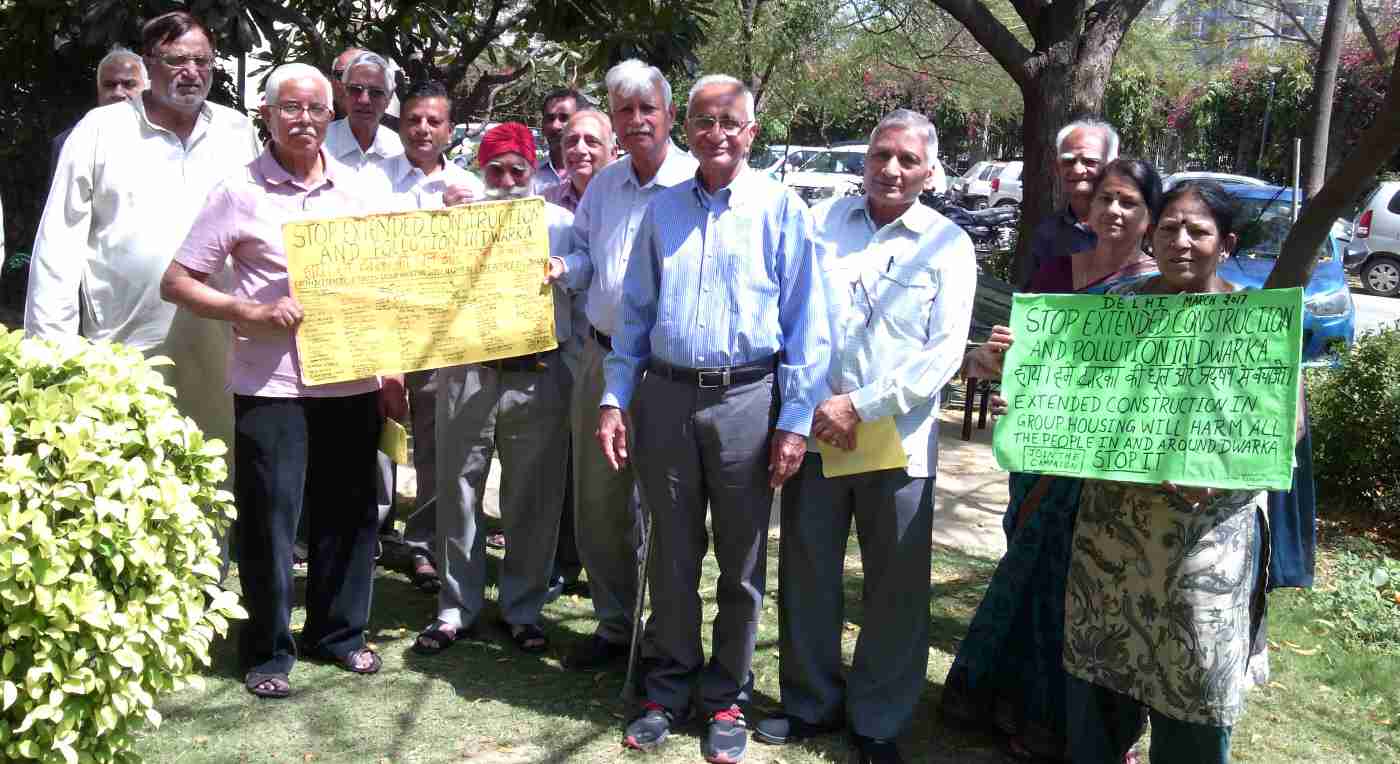
Senior citizens in a group housing society of Dwarka in New Delhi urge the government to save them from dust pollution, noise pollution, and air pollution of extended FAR construction activity. Photo and Campaign by Rakesh Raman / RMN Foundation
Stop Lethal FAR Construction, Corruption, and Pollution in Delhi
Illegal floor area ratio (FAR) construction in Delhi housing societies
🏠 Delhi residents: Take action on civic problems like stray cattle and garbage in your residential colonies by registering your complaint at the “Clean House” community-driven free online service.
Launched in 2017 by journalist Rakesh Raman, Clean House is a free editorial and advisory public service that empowers residents of Delhi to report corruption and government carelessness affecting their housing and civic life.
Rakesh Raman
Floor Area Ratio (FAR) Construction
These days, a harmful floor area ratio (FAR) construction is happening in India’s capital New Delhi. The FAR scheme of the government allows Delhi’s cooperative group housing societies (CGHS) to carry out massive construction in occupied housing societies.
Since the FAR construction which runs for years spreads lethal dust pollution, noise pollution, and air pollution in housing complexes, hundreds or thousands of children, men, women – including senior citizens – who live in these houses have been suffering for the past few years.
The citywide construction-cum-corruption racket – termed as Widehouse Corruption Scandal – is being run by local criminals who operate as management committee (MC) members of housing societies.
The MC members collude with crooked politicians, corrupt bureaucrats, complicit police officials, dishonest members of judiciary, and builders’ mafia to carry out FAR construction.
“After the criminal enterprise of Nazi Germany during the Holocaust for the genocide of millions of European Jews, the Widehouse Corruption Scandal is believed to be the largest organized massacre not only in India but also in the world,” said Rakesh Raman, founder, RMN Foundation.
In this criminal attack, millions of people are victims of a single crime which is being brazenly supported by the Indian government to harm its own citizens. If not stopped, the harmful construction will continue in Delhi for many years – even until 2030.
This scandal has been given the name Widehouse, because it is being run under the garb of widening the occupied houses where men, women (including senior citizens), and children are living. The expansion of existing houses is being imposed on residents to extort massive money from them.
Although a number of departments and officials are involved in this scandal, the criminal MC members mainly collude with the corrupt officials of Delhi Development Authority (DDA), Registrar Cooperative Societies (RCS) office of Delhi Government, Delhi Fire Service (DFS), Central Pollution Control Board (CPCB), Delhi Pollution Control Committee (DPCC), and Delhi Police.
RMN Foundation urges the law-enforcement agencies in India and abroad to intervene and get this genocidal crime stopped so that people of Delhi could live in a clean environment.
[ You can click here to watch the following video on RMN YouTube Channel and subscribe to the Channel to watch more informative videos. ]
About RMN Foundation
RMN Foundation is the humanitarian initiative of Raman Media Network (RMN) News Service. It runs various projects and campaigns in the areas of human rights, environment protection, school education, and corruption prevention.
Currently, all the activities of RMN Foundation are being managed single-handedly (without any support) by its founder Rakesh Raman who is a national award-winning journalist.
Earlier, he had been associated with the United Nations (UN) through the United Nations Industrial Development Organization (UNIDO) as a digital media expert to help businesses use technology for brand marketing and business development.
People and organizations from all over the world are invited to join hands with RMN Foundation as donors, volunteers, and partners to carry out humanitarian activities for diverse communities.
Donation: You may please click here to donate online.
Contact
Rakesh Raman Editor, RMN News Service [ Website ] Founder, RMN Foundation [ Website ] 463, DPS Apts., Plot No. 16, Sector 4 Dwarka, Phase I, New Delhi 110 078, India WhatsApp / Mobile: 9810319059 | Contact by Email
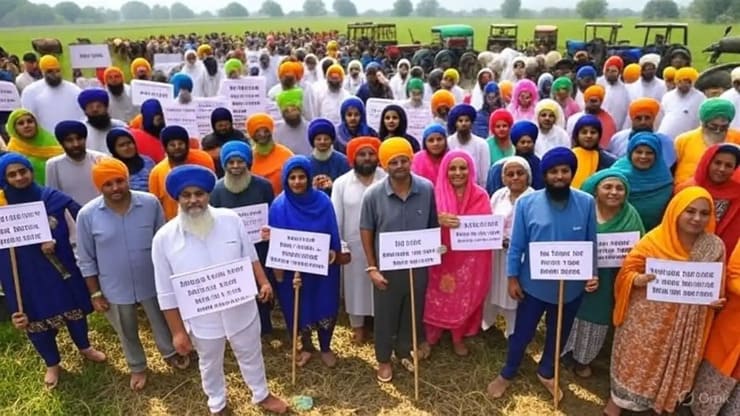
Representational image of protesters protesting in Punjab against the Land Pooling Policy of Punjab Government. Image Created with Grok AI by RMN News Service.
Punjab’s Land Pooling Policy: A Cruel Land Grab Violating Indian and International Laws
The RMN Foundation, in its report, labels the policy as a “land-grabbing scheme” that disproportionately harms small and marginal farmers, landless laborers, and rural communities.
The Punjab government’s Land Pooling Policy, 2025, has sparked widespread outrage among farmers, activists, and opposition parties for its perceived assault on agricultural communities and fertile lands.
Marketed as a voluntary scheme to promote planned urban development, the policy has been criticized as a coercive land-grabbing mechanism that threatens the livelihoods of farmers and landless laborers while bypassing critical legal safeguards.
The policy’s implementation, targeting over 65,000 acres of prime agricultural land across 27 cities, has raised serious concerns about transparency, fairness, and compliance with both Indian and international laws.
This report explores the policy’s implications and the legal violations it allegedly perpetrates, drawing on insights from the RMN Foundation’s call to action against this unjust policy.
The Policy: A Facade of Voluntarism
Introduced in June 2025 under the leadership of Chief Minister Bhagwant Mann, the Land Pooling Policy aims to acquire vast tracts of farmland for residential and industrial development in cities like Ludhiana, Mohali, Amritsar, and Jalandhar.
The government claims the policy is voluntary, offering landowners 1,000 square yards of residential plots and 200 square yards of commercial plots per acre of pooled land, with additional amendments providing annual compensation of ₹50,000 per acre until development begins.
However, critics argue that the policy’s promises are deceptive, and its implementation lacks genuine consent, threatening to displace entire villages and undermine Punjab’s agrarian economy, which is vital to India’s food security.
The RMN Foundation, in its report, labels the policy as a “land-grabbing scheme” that disproportionately harms small and marginal farmers, landless laborers, and rural communities. It accuses the Aam Aadmi Party (AAP) government of prioritizing corporate interests and political funding over the welfare of Punjab’s people, alleging that the policy facilitates the transfer of fertile land to private developers and land mafias.
The backlash has been fierce, with protests erupting across the state, including in Chief Minister Mann’s own constituency of Dhuri, and legal challenges mounting in the Punjab and Haryana High Court.
Violations of Indian Laws
The Land Pooling Policy has been challenged for circumventing key provisions of the Right to Fair Compensation and Transparency in Land Acquisition, Rehabilitation and Resettlement Act, 2013 (LARR Act), a cornerstone of India’s land acquisition framework. The following sections of the LARR Act are allegedly violated:
1.Section 4: Social Impact Assessment (SIA)
The LARR Act mandates a comprehensive SIA to evaluate the social consequences of land acquisition, including its impact on livelihoods, food security, and marginalized communities.
The Punjab and Haryana High Court has explicitly criticized the policy for failing to conduct an SIA, a mandatory requirement before notifying land acquisition. This omission disregards the potential displacement of landless laborers and the disruption of rural economies, rendering the policy legally questionable.
Section 8: Determination of Public Purpose
The LARR Act requires that land acquisition serve a clearly defined public purpose, with assessments to ensure that the benefits outweigh the social and economic costs.
Critics argue that the Punjab government has not justified the policy’s public purpose, especially given the state’s existing surplus of residential and commercial projects. The policy’s focus on urban development at the expense of fertile agricultural land raises doubts about its alignment with public welfare.
Section 10: Restrictions on Acquisition of Fertile Agricultural Land
The LARR Act prohibits the acquisition of multi-crop irrigated agricultural land except in exceptional circumstances. Punjab, known as India’s granary, relies heavily on its fertile lands for food production.
The policy’s targeting of over 65,000 acres of such land, particularly in Ludhiana (24,311 acres) and Mohali (6,000 acres), violates this provision by prioritizing urban expansion over food security without demonstrating exceptional need.
Lack of Transparency and Legal Redress
The policy, based on the Punjab Regional and Town Planning and Development Act, 1995, lacks a legal framework for transparency or grievance redressal, unlike the LARR Act, which provides mechanisms for affected parties to challenge acquisitions.
The RMN Foundation highlights that farmers and landowners are left without avenues to contest unfair terms, rendering the policy arbitrary and unconstitutional.
Beyond Indian law, the Punjab Land Pooling Policyraises concerns under international legal frameworks that protect human rights and sustainable development. The following instruments are relevant:
United Nations Declaration on the Rights of Peasants and Other People Working in Rural Areas (UNDROP), 2018
UNDROP, adopted by India, recognizes the rights of peasants to land, livelihoods, and food security. Article 17 emphasizes the right to land and protection against arbitrary dispossession.
The policy’s failure to ensure genuine consent and its potential to displace farmers and landless laborers violate these principles, undermining the economic security and cultural identity of Punjab’s rural communities.
International Covenant on Economic, Social and Cultural Rights (ICESCR), 1966
India, as a signatory to the ICESCR, is obligated to protect the right to an adequate standard of living, including food and housing (Article 11). The policy’s threat to Punjab’s agrarian economy, which supports millions of livelihoods and contributes to national food security, contravenes this obligation. The lack of rehabilitation provisions for landless laborers further violates their right to work and sustenance.
UN Guiding Principles on Business and Human Rights, 2011
These principles require states to protect against human rights abuses by businesses, including in land acquisition processes. The RMN News report suggests that the policy facilitates land transfers to private developers, potentially enabling corporate exploitation without adequate safeguards. This raises concerns about compliance with the principles’ emphasis on due diligence and accountability.
The Human Cost and Resistance
The policy’s impact extends beyond legal violations, threatening the very fabric of Punjab’s rural society. Farmers, who view their land as a source of identity and economic stability, have drawn parallels between this policy and the repealed 2020 farm laws, which sparked nationwide protests.
The RMN Foundation underscores that the policy could wipe out over 50 villages, displacing countless families and exacerbating food insecurity. Farmer unions, such as the Samyukta Kisan Morcha and Bharatiya Kisan Union, have organized rallies, including a planned protest on August 16, 2025, in Baba Bakala, Amritsar, to demand the policy’s withdrawal.
Meanwhile, the Punjab and Haryana High Court’s interim stay on August 7, 2025 has provided temporary relief, but farmers remain vigilant, insisting on the policy’s complete scrapping.
A Call to Action
The RMN Foundation urges citizens to report grievances against the Land Pooling Policy through its news platform, emphasizing the need for collective action to protect Punjab’s farmers and preserve its agricultural heritage.
The policy’s legal and ethical shortcomings—its circumvention of the LARR Act, neglect of international human rights standards, and disregard for transparency—demand urgent scrutiny.
As Punjab approaches its 2027 Assembly elections, the government must prioritize dialogue with farmers, conduct mandatory impact assessments, and ensure that development does not come at the cost of justice and sustainability.
By standing with Punjab’s farmers, we can challenge this cruel policy and uphold the principles of fairness and equity enshrined in both Indian and international law. Join the fight to safeguard Punjab’s land and livelihoods—report now at rmnnews.com.
ByRakesh Raman, who is a national award-winning journalist and social activist. He is the founder of a humanitarian organizationRMN Foundation which is working in diverse areas to help the disadvantaged and distressed people in the society.
YouTube’s Intrusive Ads Violate Your Right to Information! Demand Fair Access. Join RMN Foundation’s Fight for Consumer Rights! Photo: RMN News / RMN Foundation
YouTube’s Intrusive Ads Spark Consumer Rights Concerns Over Information Access
The research highlights growing user frustration, with many viewers feeling bombarded by YouTube ads that disrupt their ability to engage with educational, cultural, or entertainment content.
The RMN Foundation, dedicated to protecting consumer rights, has raised alarms about YouTube’s excessive advertising practices, which are increasingly infringing on consumers’ rights to access information freely and without undue disruption.
A recent study by RMN Researchreveals that YouTube’s intrusive ads—frequent, unskippable, and mid-roll placements—are creating significant barriers to seamless information consumption, violating fundamental consumer protections.
The research highlights growing user frustration, with many viewers feeling bombarded by ads that disrupt their ability to engage with educational, cultural, or entertainment content. This ad-heavy approach is seen as a violation of consumers’ right to access information, a principle enshrined in laws like the United Nations Guidelines for Consumer Protection (UNGCP), which emphasize fair treatment and access to essential services, including digital platforms. The UNGCP calls for businesses to avoid practices that harm consumers’ ability to make informed choices, and YouTube’s aggressive ad model arguably undermines this by prioritizing monetization over user experience.
In the United States, the Federal Trade Commission Act (Section 5) prohibits unfair or deceptive business practices. YouTube’s ad practices, which often interrupt content without clear user consent or adequate transparency about frequency, could be seen as unfair, particularly when users are coerced into disabling ad-blockers or paying for YouTube Premium to regain uninterrupted access. Similarly, the European Union’s General Data Protection Regulation (GDPR) protects consumers’ control over their digital experiences, requiring clear consent for data-driven ads. Yet, YouTube’s ad delivery often feels inescapable, raising questions about compliance with such regulations.
The RMN Foundation’s findings indicate that many users, particularly younger audiences, are turning to ad-blockers to reclaim their right to uninterrupted content consumption. However, YouTube’s countermeasures, such as restricting access for ad-blocker users, further alienate consumers, creating a coercive environment that undermines choice. The study also notes that the high cost of YouTube Premium places an unfair financial burden on users seeking an ad-free experience, disproportionately affecting low-income consumers.
“Consumers have a right to access information without being bombarded by intrusive ads,” said Rakesh Raman, founder of the RMN Foundation. “YouTube’s practices are not just annoying—they infringe on basic consumer protections under global and national laws.”
As competitors like TikTok offer lighter ad loads, YouTube risks losing users who feel their rights are being sidelined. The RMN Foundation urges YouTube to align its practices with consumer protection laws and adopt a more balanced approach to advertising. Without reform, the platform may face growing scrutiny from regulators and consumer advocates, potentially threatening its dominance in the digital space.
The RMN Foundation calls on consumers to report their experiences with intrusive ads and supports advocacy for stronger digital consumer rights. For more information or to share your story, you can contact RMN Foundation.
ByRakesh Raman, who is a national award-winning journalist and social activist. He is the founder of the humanitarian organizationRMN Foundation which is working in diverse areas to help the disadvantaged and distressed people in the society.
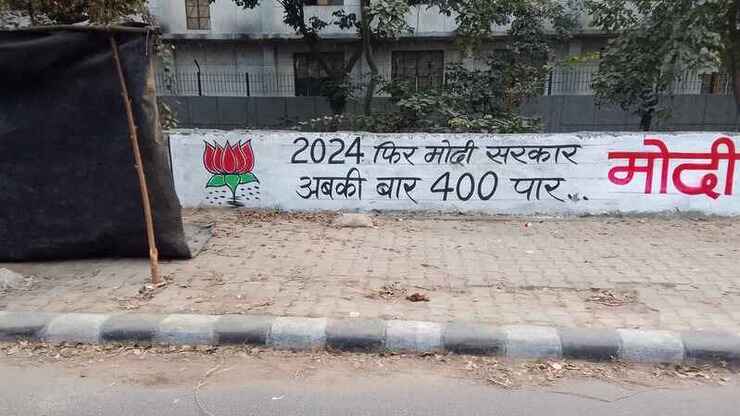
Election on EVMs. A wall painting in New Delhi shows Modi’s party BJP will win more than 400 seats in the 2024 Lok Sabha election. Photo by Rakesh Raman / RMN News Service
India Risks Losing Democratic Status Amid Widespread Election Fraud Allegations
By RMN Foundation News Team August 2, 2025 | New Delhi
Mounting allegations of electoral fraud and political interference have raised serious concerns about the future of democracy in India. The August 1–15, 2025 issue of The Unrest magazine, published by RMN News, highlights these troubling developments, warning that the country’s democratic framework may be in jeopardy if transparency and accountability continue to erode.
The lead story examines intensified claims of election manipulation, with opposition leaders accusing the ruling regime and the Election Commission of undermining free and fair elections. The publication notes a growing chorus of voices — both domestic and international — questioning the integrity of India’s electoral processes, which are increasingly viewed as compromised by systemic bias and lack of institutional independence.
The magazine also provides in-depth coverage of political, social, and global developments. A notable feature discusses growing calls for former U.S. President Donald Trump to receive the Nobel Peace Prize for his role in facilitating the India-Pakistan ceasefire, even as his past associations with Jeffrey Epstein resurface in public discourse.
At the national level, a major corruption case involving senior IAS officers has prompted renewed demands for an investigation by the Cabinet Secretariat. In Punjab, the government’s controversial Land Pooling Policy has sparked widespread protests among farmers and opposition parties.
Another focal point is the escalating crisis of judicial integrity. Union Minister Kiren Rijiju’s comments about corruption in India’s judiciary, especially regarding the Justice Yashwant Varma case, have added to public distrust in the legal system. The magazine documents the prevalence of a disturbing “bribe-for-bail” culture that further undermines judicial credibility.
Elsewhere in India, demolition drives targeting slum settlements in Delhi have drawn criticism. Opposition leaders have accused the government of displacing vulnerable communities without providing viable alternatives, while also calling out perceived political opportunism in response visits by opposition figures.
International coverage includes Canada’s plan to officially recognize the State of Palestine in September 2025, a development expected to influence global diplomatic dynamics. A new U.S.-EU trade agreement, announced by Donald Trump and Ursula von der Leyen, signals a shift in economic alignments. Simultaneously, Trump has imposed a 25% tariff and an unspecified penalty on Indian exports, further straining bilateral relations.
On the domestic front, the Association for Democratic Reforms (ADR) has urged the Supreme Court to intervene in Bihar’s voter roll revision process, warning that thousands of citizens risk being unlawfully excluded from the electoral rolls. Meanwhile, Congress leaders have challenged the Modi government’s narrative on the Pahalgam terror attack, demanding transparency and accountability.
The magazine also features Sonia Gandhi’s condemnation of the Modi administration’s silence on the Gaza crisis, describing it as a “shameful abdication” of moral responsibility in the face of human rights violations.
From a societal perspective, student writer Imrana offers a thoughtful critique of India’s rigid school education system in a special podcast segment titled Imrana’s Insight, proposing reforms to better prepare students for future employment.
To complement its print reporting, RMN News has launched RMN News Audio Reports, a multilingual series (English, Hindi, and Punjabi) designed to offer deeper analysis of current events. Additional services featured in the issue include the Pressed Reporter initiative, supporting persecuted journalists globally, and the Clean House service, empowering Delhi residents to report corruption in housing and civic systems.
The issue also includes findings from RMN Research, revealing that excessive and often misleading YouTube advertisements are alienating viewers and harming brand reputations. The research further highlights the prevalence of fake engagement metrics on the platform.
Finally, the magazine reports on the expansion of Delhi’s Health Information Management System (HIMS), introduced by Chief Minister Rekha Gupta to modernize public healthcare delivery in the capital.