As press freedom is constantly under attack, the Pressed Reporter service aims to help the persecuted journalists in all parts of the world to defend their fundamental right to report. The word ‘pressed’ in the title Pressed Reporter is a pun used for pressurized or persecuted.
This service is being run by Rakesh Raman who is a national award-winning journalist and founder of the humanitarian organization RMN Foundation in New Delhi, India. He himself has been facing various threats – including death threats – for his editorial and human rights work.
In order to protect the editorial rights of Rakesh, the Paris-based international organization Reporters Without Borders (RSF) that defends freedom of journalists has urged the Indian government to save him from threats and persecution.
Christophe Deloire, Secretary-General of RSF, has written letters to the Indian authorities, asking them to take action against the culprits. In an article written on its website, RSF explains that Rakesh has received multiple threats for his reporting. Although the National Human Rights Commission (NHRC) of India had issued notice to Delhi Police in his case so that he could work and move freely, the police did not take any action to protect him from threats. As a result of police inaction, severe threats to Rakesh persist.
In fact, today there is no organization in the world that is working effectively to protect journalists from state excesses and police brutality. Although UNESCO and other UN agencies keep releasing loose statements and random reports about media freedom, they too have failed miserably to protect journalists in different countries.
Similarly, the NGOs such as RSF, Amnesty International, Human Rights Watch, and various journalists’ associations – that claim to be working for press freedom and protection of journalists – run ineffective operations which do not protect journalists.
Therefore, the Pressed Reporter service has been launched. It will take proactive steps and publicly report different cases of press freedom attacks or threats to journalists in different countries, including India.
The persecuted or harassed journalists can fill out an online form to submit their basic case details. Subsequently, depending on the case, an online / video meeting will be held with them to understand the case. If required, they will be asked to provide more details and / or documents.
If for some reason, the affected journalist is not able to complain to this service, his / her friends, family members, or colleagues can fill out the online form as proxy complainants.
The Pressed Reporter service will publish the video interaction and other case details on its news site(s) and proactively approach the authorities or legal forums with specific notices, representations, or petitions to get help for the aggrieved journalists. [ You can click here to read some of the petitions filed in other cases of human rights. ]
As a journalist and social activist, Rakesh Raman has been running a similar “Clean House” social service for the past 7 years for millions of persecuted residents in Delhi.
In order to run the Pressed Reporter service effectively, I urge social activists, pro bono lawyers, journalists, journalism students, professionals in other fields, concerned citizens, and international press freedom organizations to support me.
While I am running this service independently without any financial or other support, you can help me with your donations or as volunteers for different activities under the Pressed Reporter service.
Donation: Indian donors can click here to donate online to RMN Foundation / RMN News Service and you can also click here to donate with PayPal.
Pressed Reporter Online Form: You can click here to fill out the online form as an affected journalist or as a proxy complainant for an affected journalist.
ByRakesh Raman, who is a national award-winning journalist and social activist. He is the founder of a humanitarian organizationRMN Foundation which is working in diverse areas to help the disadvantaged and distressed people in the society.
AI-generated representational image of men and women standing outside a polling booth to vote in an Indian election. Photo: RMN News Service
Strategic Analysis of Democratic and Economic Challenges in India
An October 2025 Snapshot
This web of interconnected issues risks creating systemic paralysis, where the state’s capacity to address any single major challenge is crippled by compounding failures in other essential domains.
1.0 The Crisis in Governance and Democratic Institutions
Robust democratic institutions and effective governance are the bedrock of national stability and long-term progress. They provide the framework for fair elections, accountable leadership, and the delivery of essential public services. However, recent events in India raise significant questions about the integrity and efficacy of the nation’s political and administrative systems. This section analyzes key incidents that highlight a growing crisis in electoral processes, high-level political conduct, and municipal administration.
1.1 Electoral Integrity Under Scrutiny
The foundation of any democracy is the trust citizens place in their electoral process. In India, this trust is being severely tested. While the Election Commission of India (ECI) defends its voter list revision process and announces new reforms for the upcoming Bihar Assembly election, scheduled for November 6 and November 11, critics allege these measures are a distraction from deeper issues of potential electoral manipulation.
This climate of distrust is fueled by a volatile cycle of accusations between the country’s main political forces. In Telangana, the Congress party faces accusations of “Vote Chori” (vote theft). Simultaneously, Congress continues to level serious allegations against Prime Minister Modi’s BJP, accusing it of systemic election theft through manipulation of electoral rolls and tampering with Electronic Voting Machines (EVMs). This perpetual state of mutual accusation does more than simply erode public confidence; it creates a crisis of legitimacy for India’s entire democratic framework, making effective governance and policy implementation exponentially more difficult regardless of which party is in power.
1.2 High-Profile Corruption Allegations
The persistence of high-level corruption charges against senior political figures remains a critical challenge to clean governance. A prominent case study is the legal action against former Union Railway Minister Lalu Prasad Yadav, against whom a Delhi court has officially framed charges of corruption, criminal conspiracy, and cheating. The case extends to his wife, former Bihar Chief Minister Rabri Devi, and his son, former Deputy Chief Minister Tejashwi Yadav, illustrating how allegations of corruption can permeate the highest echelons of political families. Such high-profile cases do more than damage public perception; they signal a significant political risk factor, indicating that key nodes of power may be compromised by corruption, with potential impacts on policy stability and the rule of law.
1.3 Municipal Governance Collapse: A Case Study
Failures in governance are not confined to the national political stage; they manifest starkly at the municipal level, directly impacting citizens’ daily lives. A recent report from Delhiprovides a visceral example of this breakdown. A “massive, sprawling pile of filth” has completely overtaken a significant stretch of a public road, transforming it into a hazardous dump. This is not merely an issue of poor sanitation but stands as a “testament to the absence of effective administration.” When a capital city’s basic infrastructure fails so visibly, it signals a deeper collapse in the administrative machinery responsible for delivering essential services.
These pervasive failures in the political and administrative spheres put immense pressure on the judiciary, the one institution constitutionally mandated to act as a final check on executive and legislative power. However, as the next section explores, that institution is facing its own crisis of capacity.
2.0 The Eroding Authority of the Judiciary
The judiciary serves as a cornerstone of democracy, tasked with interpreting the law, safeguarding fundamental rights, and holding the executive and legislative branches accountable. Its authority rests on public trust in its integrity, impartiality, and efficiency. However, recent assessments and functional breakdowns suggest a systemic decline within this vital institution, threatening its capacity to fulfill its constitutional obligations.
2.1 Systemic Decline and Inefficiency
The India Judicial Research Report 2025 presents a sobering diagnosis of the country’s legal system, unveiling “alarming findings” that point to widespread and deep-seated problems. It identifies three core areas of decay: corruption, inefficiency, and moral decline. These are not isolated issues but symptoms of a systemic malaise affecting the judicial system across the board. Such a fundamental decline compromises the judiciary’s ability to deliver timely justice and act as an effective bulwark against executive overreach and administrative apathy.
2.2 Technological Breakdown and Procedural Opacity
The judiciary’s struggle with basic modernization further exemplifies its inefficiency. The implementation of the Delhi High Court’s E-Filing Portal, a critical tool for improving access to justice, has been a notable failure. The system has been “marred by frequent crashes, procedural opacity, and inaccessible interfaces.” This technological breakdown is more than a simple inconvenience; it is a concrete manifestation of the systemic inefficiency highlighted in the broader judicial report, creating significant barriers for legal professionals and citizens attempting to navigate the justice system.
A judiciary weakened by internal decay and operational failure creates a vacuum of accountability, a condition that emboldens malfeasance not only in government but also within the powerful corporate sector, where issues of transparency and governance are becoming increasingly acute.
3.0 Corporate Accountability and Systemic Economic Failures
A nation’s economic health and its attractiveness as an investment destination depend heavily on strong corporate governance, reliable infrastructure, and a high degree of consumer trust. Recent cases in India, however, highlight significant deficiencies in corporate accountability and systemic failures in service delivery, which stand in contrast to major developments in the global technology economy.
3.1 Global Scrutiny and Enforcement Challenges
The challenges of enforcing international corporate accountability are starkly illustrated by the case involving the Adani Group. The U.S. Securities and Exchange Commission (SEC) is reportedly struggling to serve summons to the group’s executives in relation to allegations of securities fraud and bribery. This difficulty in executing a basic legal procedure against a major Indian conglomerate on the global stage underscores the complexities and potential obstacles in holding powerful corporations accountable to international legal and regulatory standards.
3.2 Erosion of Consumer Trust and Corporate Transparency
Domestically, a lack of transparency and repeated service failures are eroding consumer trust in major corporations. Two recent examples highlight this trend:
The Bisleri Case: The bottled water giant Bisleri “continues to evade public accountability” by persistently refusing to disclose the methods it employs to verify and ensure the purity of its water. This lack of transparency on a fundamental public health issue undermines consumer confidence.
The Airtel Case: Recurring broadband outages experienced by Airtel customers in New Delhi are not “isolated technical glitches but symptoms of a deep-rooted systemic problem.” This indicates a critical infrastructural deficit and operational risk within a key sector, undermining the digital backbone required for a modern economy.
3.3 The AI Boom: A Contrasting Economic Narrative
While India grapples with these domestic systemic failures, the global technology landscape is undergoing a dramatic transformation. OpenAI, the creator of ChatGPT, has seen its valuation soar to an astonishing $500 billion following a secondary share sale of $6.6 billion. As commentator Imrana explains, it is crucial to understand that such a valuation is more about “belief than balance sheets.” It represents the market’s profound confidence in the company’s future potential, not the cash it currently possesses. This highlights a global economic narrative driven by forward-looking technological potential, which contrasts sharply with the on-the-ground reality of infrastructural and corporate challenges in India.
The ability to address these corporate and infrastructural challenges and participate more fully in future economic trends depends on a nation’s foundational asset: its human capital, which is directly shaped by the national education system.
4.0 The Education-Employability Disconnect
The quality of a country’s education system is directly linked to its long-term economic trajectory, innovation capacity, and global competitiveness. A system that effectively prepares its youth for the demands of the modern economy is essential for national development. However, a critical new report suggests that India’s school system is fundamentally failing in this primary objective.
4.1 The Core Crisis: A System Failing to Make Students Employable
The report, titled ”Job with Education: School Education Report 2025 to Make Students Employable”, delivers a stark verdict on the state of Indian schooling. Its central argument is that there is an “undeniable line from the failing education system to its severe negative outcomes.” These consequences impact both individual students and the nation’s overall economic health. The report identifies a fundamental failure in human capital development, a core lagging indicator that threatens India’s future economic competitiveness and its ability to innovate.
4.2 A Call for Systemic Reform
This assessment is echoed by sharp commentary on the need for a paradigm shift in educational philosophy. Imrana argues that it is past time “to stop teaching yesterday’s lessons for tomorrow’s jobs.” The core mission of schools, according to this view, must be fundamentally reoriented to prepare students “to live, work, and succeed in the world” as it exists today and as it will exist in the future. This requires a systemic overhaul of what is taught and how it is taught.
The crisis in education forms the final piece of a complex puzzle, setting the stage for a broader understanding of the interconnected challenges facing the nation.
5.0 An Interconnected Web of Strategic Challenges
This analysis reveals a landscape of significant and deeply rooted challenges across India’s most critical sectors. The integrity of the democratic process is threatened by a crisis of legitimacy. Governance is faltering, evidenced by high-profile corruption cases and the visible collapse of municipal services. The judiciary, the institution meant to act as a check on such failures, is itself compromised by systemic inefficiency and decline. Simultaneously, the corporate and economic spheres are marked by issues of accountability and failing infrastructure, while the education system is failing to produce a workforce capable of meeting modern demands.
Crucially, these are not isolated problems but an interconnected web of mutually reinforcing challenges. A weakened judiciary is ill-equipped to hold powerful political actors accountable or to enforce transparency on major corporations. Systemic failures in governance lead directly to the degradation of public infrastructure, which in turn stifles economic activity. At the base of it all, an outdated education system fails to cultivate the human capital required to address this complex matrix of issues. This web of interconnected issues risks creating systemic paralysis, where the state’s capacity to address any single major challenge is crippled by compounding failures in other essential domains.
ByRakesh Raman, who is a national award-winning journalist and social activist. He is the founder of a humanitarian organizationRMN Foundation which is working in diverse areas to help the disadvantaged and distressed people in the society.
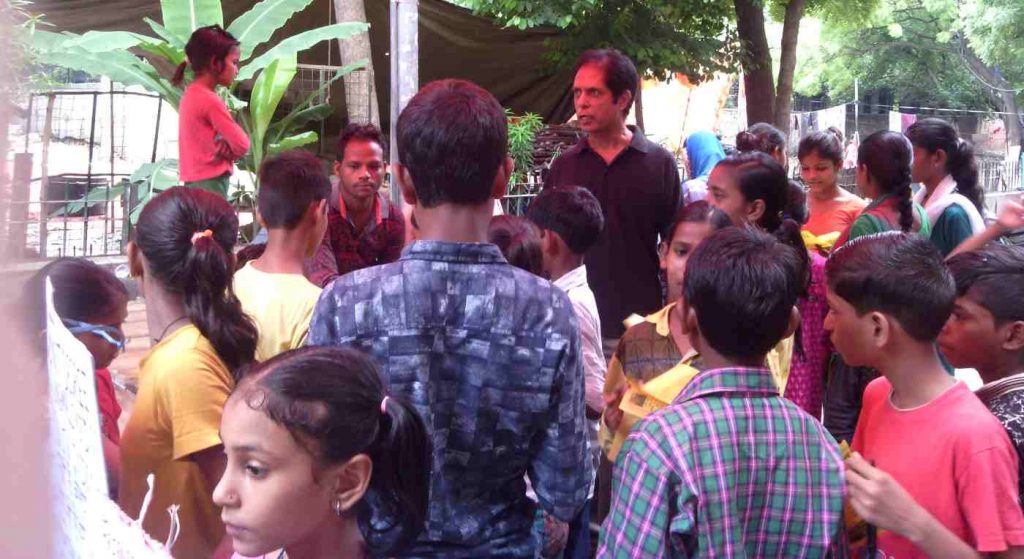
RMN Foundation founder Rakesh Raman running an education campaign with the help of student volunteers in New Delhi, India. Photo: RMN News Service
RMN Foundation Publishes Three Landmark Research Reports on Democracy, Judiciary, and Education
Each report is archived on Zenodo, developed under the European OpenAIRE program and operated by CERN, providing a permanent DOI-based citation. They are also available on Academia.edu for broader global access and research collaboration.
🗓️ RMN Foundation Reseach Desk New Delhi, October 15, 2025
RMN Foundation has released three comprehensive research reports authored by Rakesh Raman, a national award-winning journalist and founder of the organization. These studies provide a data-driven and evidence-based assessment of India’s governance, justice, and education systems, highlighting the urgent need for structural reform.
1. India Judicial Research Report 2025: Decline of the Indian Judiciary
The India Judicial Research Report 2025 exposes deep-rooted corruption, administrative inefficiency, and institutional bias in the Indian judiciary. It includes case studies, data analysis, and 20 actionable recommendations for reform.
The report also examines global judicial indices, e-court technology failures, and the future of AI-driven justice systems, framing a roadmap for restoring accountability and transparency in Indian courts.
2. Unveiling the Smokescreen of Indian Democracy: Fabricated Factors Masking Electoral Manipulation
This political research report reveals that the electoral dominance of the Narendra Modi-led Bharatiya Janata Party (BJP) in India is not solely based on popular support.
Instead, it is driven by a multi-layered strategy involving manufactured narratives and widespread electoral manipulation, described as a national “smokescreen.”
The report deconstructs India’s electoral machinery, the influence of digital propaganda, and the structural weakening of democratic institutions.
3. Job with Education: School Education Report 2025 to Make Students Employable
The School Education Report 2025 asserts that India’s educational crisis is directly linked to the country’s rising unemployment. Key findings reveal that school students are taught “obsolete subjects with archaic pedagogical methods”, textbooks are “written haphazardly”, and education quality remains “equally poor in both public and private schools.”
The report proposes a new “Job with Education” model, integrating employability skills with school learning.
Each report is archived on Zenodo, developed under the European OpenAIRE program and operated by CERN, providing a permanent DOI-based citation. They are also available on Academia.edu for broader global access and research collaboration.
“These reports are part of RMN Foundation’s ongoing effort to promote informed citizen participation, transparency, and institutional accountability through independent, evidence-based research,” said Rakesh Raman.
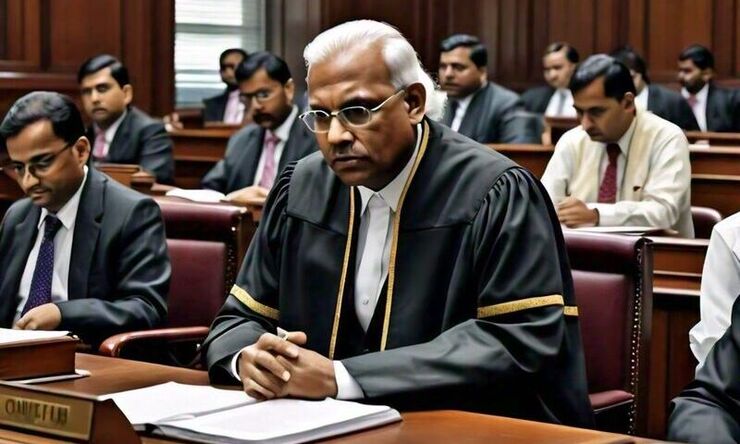
Representational Image of a Courtroom Created with Meta AI Image Generator
India Judicial Research Report 2025 Highlights Denial of Access to Justice and Institutional Corruption
To ensure open access and academic traceability, the India Judicial Research Report 2025 has been archived on Zenodo, a global research repository developed under the European OpenAIRE program and operated by CERN.
New Delhi, October 11, 2025 — The latest India Judicial Research Report 2025 (IJRR 2025), released by Rakesh Raman, founder of the humanitarian organization RMN Foundation, has exposed the deep-rooted corruption, bias, and inefficiency plaguing India’s judicial system. The comprehensive 89-page report reveals how the courts have increasingly failed to provide citizens with fair and timely access to justice — a constitutional promise that now stands largely unfulfilled.
The study, which examines key issues such as judicial bias, pendency of cases, corruption in appointments, political interference, and digital dysfunctions, warns that India’s justice system is rapidly losing public trust. Ordinary citizens, activists, and marginalized groups often face systemic discrimination, prolonged delays, and arbitrary rulings, while politically connected individuals enjoy impunity through easy bail and procedural manipulation.
“Access to justice in India has become a privilege for the powerful rather than a right for every citizen,” said Rakesh Raman. “The denial of bail to activists and the routine protection of corrupt politicians demonstrate that the judiciary has abandoned both constitutional morality and public accountability.”
Research Scope and Methodology
Drawing from official data (National Judicial Data Grid), global indices (World Justice Project, Transparency International), and field investigations, the IJRR 2025 offers a detailed, evidence-based account of how corruption and administrative inertia have crippled India’s courts. The report also incorporates AI-assisted research and analytics to evaluate trends in case pendency, e-court implementation, and judicial appointments.
Key Findings
Case pendency exceeds 50 million, with little progress in disposal rates.
Judicial bias in bail cases overwhelmingly favors politicians and the affluent.
Digital initiatives such as e-filing remain dysfunctional due to lack of training and accountability.
India’s global ranking on the World Justice Project’s Rule of Law Index remains stagnant at 79th out of 142 countries.
Structural corruption has converted the judiciary into a political tool, with post-retirement “sinecures” influencing verdicts.
Zenodo Archival and Academic Citation
To ensure open access and academic traceability, the India Judicial Research Report 2025 has been archived on Zenodo, a global research repository developed under the European OpenAIRE program and operated by CERN. The report can be freely accessed, downloaded, and cited through its permanent Digital Object Identifier (DOI) on Zenodo.
This international archiving makes the IJRR 2025 accessible to researchers, policy analysts, and institutions worldwide, providing a verifiable reference for studies on judicial reform, corruption, and human rights in India.
About RMN Foundation
RMN Foundation is a humanitarian organization that works in the areas of human rights, anti-corruption, environment protection, and education for underprivileged communities. Through its research and advocacy initiatives, it aims to strengthen transparency, accountability, and rule of law in governance systems.
Representational Image of a Courtroom Created with Adobe Firefly Generative AI. By Rakesh Raman / RMN News Service
From $100K Visas to Secret AI: Four Stories Hiding in Plain Sight
These four stories reveal a troubling trend: the systems we rely on—for immigration, information, international justice, and civil services—are being reshaped by opaque forces, whether through exorbitant fees, secret algorithms, or the chasm between technological promise and reality.
In an age of constant information, the daily flood of headlines can be overwhelming. It’s a genuine challenge to separate the transient noise from the signals that indicate significant, lasting change. While major events dominate the news cycle, other equally impactful stories often unfold just beneath the surface, missed by many but shaping our world in profound ways.
The purpose of this article is to cut through that noise and highlight four surprising, counter-intuitive developments you might have missed. These aren’t just minor updates; they are fundamental shifts with real-world consequences in immigration, technology, international law, and public infrastructure. Individually, they are surprising. Together, they paint a picture of foundational systems being strained by new forms of political, technological, and legal pressure.
Takeaway 1: The American Dream Now Costs $100,000
A $100,000 Fee Was Just Added to a U.S. Work Visa
In a significant overhaul of its skilled foreign worker program, the administration of US President Donald Trump has introduced a new $100,000 annual fee for H-1B visa applications. The stated purpose of this dramatic change is to “protect domestic employment.”
This move weaponizes economic policy to redraw the landscape of skilled immigration. The fee transforms the H-1B from a skills-based visa into a capital-based one, creating a de facto pay-to-play system for accessing American talent markets. It raises questions not just of fairness, but of economic competitiveness, potentially walling off the U.S. from innovative minds who lack corporate sponsorship of this magnitude.
Takeaway 2: Your Online Videos Are Being Secretly Manipulated
YouTube is Using Secret AI to Alter Videos Without Consent
While YouTube is publicly promotingits new suite of artificial intelligence tools for creators, it is simultaneously facing mounting scrutiny over a far more covert practice. Behind the scenes, the platform’s use of AI is raising alarms about transparency and control.
The company is engaged in the “secret use of AI to subtly alter videos without user consent,” a revelation that comes as it also weathers criticism for its “aggressive advertising practices.” This context is crucial. The undisclosed alterations could be happening to make content more “advertiser-friendly” or to moderate it at scale without human oversight. This isn’t just a matter of digital authenticity; it points to a larger crisis in platform transparency, where the line between user-generated content and platform-manipulated media is silently being erased.
Takeaway 3: A Sitting Prime Minister is Now a Wanted Man
The International Criminal Court Issued an Arrest Warrant for Israel’s Prime Minister
In an unprecedented move, the International Criminal Court (ICC) has issued an arrest warrant for Israeli Prime Minister Benjamin Netanyahu. The specific charges cited are “war crimes and crimes against humanity.”
The gravity of the situation was underscored when his recent flight to the US had to take an “unusual detour to avoid European airspace.” This action by the ICC represents a direct challenge to the long-standing norms of state sovereignty. It marks a significant and historic moment where an international legal body is attempting to hold the serving leader of a major nation-state accountable, testing the very limits and reach of global justice.
Takeaway 4: A Nation’s High-Tech Justice System is Failing
India’s ‘Paperless’ Court System is a Broken Promise
Despite a massive investment of public funds, India’s ambitious push for a modern, digital judiciary is falling short. While “public money worth thousands of crores of rupees has been spent on digitization and e-courts projects,” the reality on the ground is starkly different from the vision sold to the public.
The “promise of a paperless and accessible judiciary through online filing systems in India remains far from reality.” Instead of efficiency, “litigants face endless roadblocks,” with clear examples like the “Delhi High Court E-Filing Portal Still Broken” highlighting systemic failure. This is a stark illustration of the implementation deficit that often plagues ambitious public technology initiatives, serving as a powerful case study in the chasm between technological promise and real-world execution.
Looking Beyond the Headlines
These four stories reveal a troubling trend: the systems we rely on—for immigration, information, international justice, and civil services—are being reshaped by opaque forces, whether through exorbitant fees, secret algorithms, or the chasm between technological promise and reality. From a six-figure visa fee, to a tech giant secretly modifying content, to an international court challenging a world leader, and a nation’s high-tech justice system failing its citizens, these are the signals in the noise. They reveal deeper truths about the immense pressures straining the architecture of our modern world.
In a world saturated with information, how do we ensure the stories that truly matter don’t slip through the cracks?