Tag: Justice

Starved cows eating household hazardous waste near a housing colony of Delhi. Dirty scenes like this are common in the national capital. Photo: Rakesh Raman / RMN News Service (Representational Image)

Systemic Decay and Political Privilege: 5 Warnings
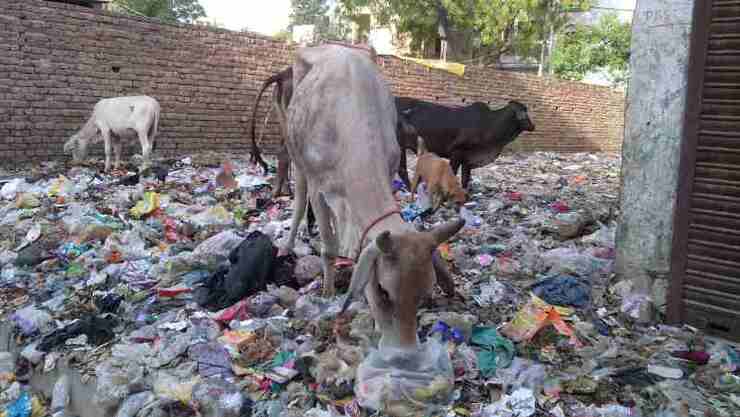
Starved cows eating household hazardous waste near a housing colony of Delhi. Dirty scenes like this are common in the national capital. Photo: Rakesh Raman / RMN News Service (Representational Image)

Systemic Decay and Political Privilege: 5 Warnings

The constitutional guarantee of personal liberty, enshrined most visibly in India’s bail jurisprudence, has been transformed into a political privilege.

RMN Foundation Report
December 3, 2025

Introduction: A Glimpse Into the Unrest

In a world saturated with information, it’s easy to miss the signals for the noise. But sometimes, a single snapshot can reveal the tectonic shifts happening just beneath the surface. This article cuts through the chaos to distill five developments highlighted in a single, stark issue of the news magazine ‘The Unrest‘ from December 1-15, 2025, which covers global economic and political upheavals. The magazine’s cover story, the “India Corruption Research Report 2025,” sets a grim tone for the dispatches that follow.

1. In India, Corruption Isn’t Just an Action—It’s the System

The cover story from ‘The Unrest,’ the “India Corruption Research Report 2025,” delivers a stark conclusion: corruption in India is no longer a series of isolated acts but has become systemic, deeply embedded within the country’s governance frameworks. This finding points to a far more profound issue than individual bribery, suggesting a “systemic decay” where the very structures meant to serve the public are fundamentally compromised. This erosion of institutional integrity is a key feature of democratic backsliding, where the rules that govern a society begin to decay from within.

2. A Constitutional Right Has Morphed into a Political Privilege

‘The Unrest’ further explores this democratic backsliding with a report on India’s justice system. The principle of bail is intended to uphold the constitutional guarantee of personal liberty, one of the most fundamental rights in a democracy. However, the magazine makes a startling claim in a single sentence, suggesting this core tenet has been distorted:

The constitutional guarantee of personal liberty, enshrined most visibly in India’s bail jurisprudence, has been transformed into a political privilege.

This reported transformation is a chilling example of how foundational rights can be re-framed as conditional favors. When a right accessible to all citizens becomes a privilege awarded selectively, it undermines the very essence of the rule of law.

3. Delhi’s Biggest Killer Isn’t What You Think

Each winter, Delhi’s severe air quality crisis makes headlines. But the December 2025 issue of ‘The Unrest’ highlights a devastating and often understated fact: toxic air is the leading cause of death in the city. The reality that an environmental issue has become the primary public health threat for millions in a major global capital is a staggering indictment of policy failure. It raises a critical question about governance: what does it mean when a predictable, annual environmental crisis becomes the single largest cause of death in a nation’s capital?

4. A Former Prime Minister Is Sentenced to Death

In a politically charged development with significant regional implications, ‘The Unrest’ reports that Bangladesh’s International Crimes Tribunal has sentenced former Prime Minister Sheikh Hasina to death. The tribunal found her guilty of “alleged crimes against humanity.” A death sentence for a former head of government is a rare and momentous event, sending shockwaves through the international community and underscoring the immense political stakes involved.

5. You Could Be Targeted by International Copyright Enforcers

The magazine also sheds light on a surprising threat emerging for ordinary internet users. A growing number of individuals from around the world report being targeted by a Germany-based company called Copytrack. While the company claims to enforce copyright protections, the report in ‘The Unrest’ characterizes its activity as an “intimidation campaign.” This development is a concerning sign of how digital spaces are becoming increasingly policed, suggesting that everyday online activities could attract aggressive international enforcement.

Conclusion: The Stories Beneath the Surface

These dispatches from late 2025 paint a stark picture: a world where foundational rights become political tools, environmental neglect becomes the leading killer in a metropolis, and former leaders face the ultimate penalty. They reveal that the most significant global shifts often happen away from the main headlines, exposing deeper truths about the state of our world. As the structures of democracy, law, and even the environment show signs of systemic decay, the critical question isn’t just what we’re missing in the headlines, but whether the systems we rely on are breaking down from within.

Photo: Starved cows eating household hazardous waste near a housing colony of Delhi. Dirty scenes like this are common in the national capital. Photo: Rakesh Raman / RMN News Service (Representational Image)

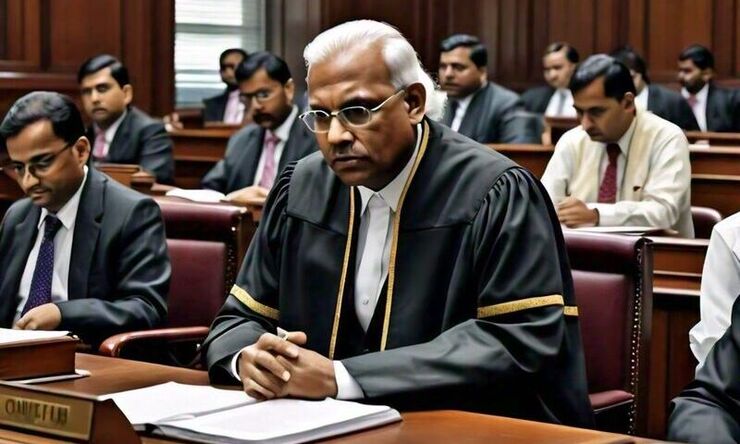
Representational Image of a Courtroom Created with Meta AI Image Generator

India Judicial Research Report 2025 Highlights Denial of Access to Justice and Institutional Corruption

Representational Image of a Courtroom Created with Meta AI Image Generator

India Judicial Research Report 2025 Highlights Denial of Access to Justice and Institutional Corruption

To ensure open access and academic traceability, the India Judicial Research Report 2025 has been archived on Zenodo, a global research repository developed under the European OpenAIRE program and operated by CERN.

New Delhi, October 11, 2025 — The latest India Judicial Research Report 2025 (IJRR 2025), released by Rakesh Raman, founder of the humanitarian organization RMN Foundation, has exposed the deep-rooted corruption, bias, and inefficiency plaguing India’s judicial system. The comprehensive 89-page report reveals how the courts have increasingly failed to provide citizens with fair and timely access to justice — a constitutional promise that now stands largely unfulfilled.

The study, which examines key issues such as judicial bias, pendency of cases, corruption in appointments, political interference, and digital dysfunctions, warns that India’s justice system is rapidly losing public trust. Ordinary citizens, activists, and marginalized groups often face systemic discrimination, prolonged delays, and arbitrary rulings, while politically connected individuals enjoy impunity through easy bail and procedural manipulation.

“Access to justice in India has become a privilege for the powerful rather than a right for every citizen,” said Rakesh Raman. “The denial of bail to activists and the routine protection of corrupt politicians demonstrate that the judiciary has abandoned both constitutional morality and public accountability.”

Research Scope and Methodology

Drawing from official data (National Judicial Data Grid), global indices (World Justice Project, Transparency International), and field investigations, the IJRR 2025 offers a detailed, evidence-based account of how corruption and administrative inertia have crippled India’s courts. The report also incorporates AI-assisted research and analytics to evaluate trends in case pendency, e-court implementation, and judicial appointments.

Key Findings

Case pendency exceeds 50 million, with little progress in disposal rates.

Judicial bias in bail cases overwhelmingly favors politicians and the affluent.

Digital initiatives such as e-filing remain dysfunctional due to lack of training and accountability.

India’s global ranking on the World Justice Project’s Rule of Law Index remains stagnant at 79th out of 142 countries.

Structural corruption has converted the judiciary into a political tool, with post-retirement “sinecures” influencing verdicts.

Zenodo Archival and Academic Citation

To ensure open access and academic traceability, the India Judicial Research Report 2025 has been archived on Zenodo, a global research repository developed under the European OpenAIRE program and operated by CERN. The report can be freely accessed, downloaded, and cited through its permanent Digital Object Identifier (DOI) on Zenodo.

This international archiving makes the IJRR 2025 accessible to researchers, policy analysts, and institutions worldwide, providing a verifiable reference for studies on judicial reform, corruption, and human rights in India.

About RMN Foundation

RMN Foundation is a humanitarian organization that works in the areas of human rights, anti-corruption, environment protection, and education for underprivileged communities. Through its research and advocacy initiatives, it aims to strengthen transparency, accountability, and rule of law in governance systems.

Read the full report here:
👉 India Judicial Research Report 2025 – RMN News Service

Archived for citation:
📘 Zenodo DOI (OpenAIRE / CERN Archive)

Rakesh Raman  |  LinkedIn  |  Facebook  Twitter (X)

E-Filing Module of the Supreme Court of India

Why E-Filing Systems and E-Courts Fail to Deliver Justice in India

E-Filing Module of the Supreme Court of India

Why E-Filing Systems and E-Courts Fail to Deliver Justice in India

The excerpts from the Research Report: Defective E-Filing Systems of Indian Courts are given below. You can also download and read the full report.

One of the reasons for chaotic e-filing platforms is the inconsistent use of GUIs. The interfaces provided by the Supreme Court, high courts, and lower courts are totally different while they are supposed to serve the same objective of accepting legal documents online and presenting them in the courts.

The purpose of digital interfaces is supposed to provide an easy way to the advocates and particularly litigants who have little knowledge of technology and who are not quite familiar with the judicial processes. 

They should be able to convey their case in simple language and present it digitally in the court either through a PDF file or a hyperlinked webpage or even presentation slides including exhibits, photographs, video links, and so on. But the inconsistent web interfaces and complex filing mechanisms for different courts confuse the litigants completely.

The defective e-filling systems also show random errors written in confusing language. Therefore, the users are not able to file their cases smoothly in courts.

The e-filing platforms show random and wrongly written error messages, even when the user – litigant or advocate – has entered their details correctly. On the High Court of Delhi site, for example, the error message says, “Your Login ID could not be generated due to some technical reason. Please try again.”

Since the backend system and the error messaging database have not been properly configured, the user gets a confusing message of “some technical reason.” The user can keep trying repeatedly, but this error message will persist and thus the user will not be able to file the case online.

It is the height of stupidity that the e-filing system of the High Court of Delhi is asking users to file their cases on A4-size paper, while the digital courts are supposed to be paperless. Although this research report is giving examples of the High Court of Delhi, the e-filing systems of high courts in other states are expected to be equally defective.

It appears that the people who are handling backend systems and frontend interfaces are clueless about the purpose of e-filing and virtual courts. They are also not aware of the software implementation process which includes dry run, parallel run, and live run. The e-filing systems have been carelessly thrown out for public use without testing them properly.

The Supreme Court e-filing system interface is totally different from the interfaces of high courts and lower courts. The ignorant court officials are deliberately confusing the users who want to file their cases online and enjoy the facility of digital / e-courts. As a result, the e-filing and e-courts are not working despite false claims made by the top judicial officers including the Chief Justice. 

You can click here to download and read the research report which is also given below.

Contact

Rakesh Raman
Editor, RMN News Service [ Website ]
Founder, RMN Foundation [ Website ]
463, DPS Apts., Plot No. 16, Sector 4
Dwarka, Phase I, New Delhi 110 078, India
WhatsApp / Mobile: 9810319059 | Contact by Email