Archive: December 27, 2025

ICICI Bank. Photo: Rakesh Raman | RMN News Service

Digital Banking or Digital Rights Abuse?

ICICI Bank. Photo: Rakesh Raman | RMN News Service

Digital Banking or Digital Rights Abuse?
How ICICI Bank’s KYC Harassment Violates the Fundamental Right to Privacy

By Rakesh Raman
New Delhi | December 27, 2025

The relentless barrage of KYC emails, SMS alerts, and automated warnings sent by ICICI Bank is not a minor service lapse—it is a direct assault on the fundamental right to privacy guaranteed under the Indian Constitution. What is being passed off as “regulatory compliance” has, in practice, become a form of institutionalised digital harassment that thrives in the absence of accountability, regulatory courage, and respect for citizens’ rights.

In its landmark 2017 judgment in Justice K.S. Puttaswamy (Retd.) vs Union of India, the Supreme Court of India unequivocally held that privacy is a fundamental right intrinsic to life and personal liberty under Article 21. This ruling placed a constitutional obligation on both the State and private entities to respect individual autonomy, dignity, and informational self-determination. Yet, years later, banks like ICICI operate as though this judgment does not exist.

ICICI Bank continues to bombard customers with repetitive KYC messages despite having unchanged customer records and despite acknowledging, in its own communications, that customers may “ignore” these messages if KYC is already updated. This contradictory, careless, and intrusive conduct exposes a deeper malaise: the misuse of digital systems without consent, proportionality, or necessity—core principles laid down by constitutional jurisprudence.

As Rakesh Raman, founder of RMN Foundation and a national award-winning journalist, has stated:

“I am myself a victim of ICICI Bank’s digital excesses. Despite no change in my KYC details, I am repeatedly disturbed through emails and mobile alerts that serve no legitimate purpose. This is not compliance; it is coercion. When a bank violates my digital privacy with impunity, it exposes how hollow our so-called digital governance has become.”

KYC norms were designed to prevent financial crime, not to terrorise ordinary citizens through automated intimidation. Constitutional law is clear: any intrusion into privacy must satisfy legality, necessity, and proportionality. ICICI Bank’s conduct satisfies none of these tests. There is no legal necessity to repeatedly disturb a low-risk customer whose data has not changed. There is no proportionality in sending daily warnings without verification. And there is certainly no dignity in forcing citizens to either endure harassment or physically visit branches in an era that claims to be “digital-first.”

ICICI Bank continues to bombard customers with repetitive KYC messages. Screenshot of the ICICI Bank's KYC message on email.
ICICI Bank continues to bombard customers with repetitive KYC messages. Screenshot of the ICICI Bank’s KYC message on email.

The problem is not technology; it is corporate lawlessness enabled by regulatory silence. Automated systems are being weaponised against consumers while banks evade responsibility by hiding behind algorithms, templates, and call-centre scripts. When customers complain, the system responds with more automation, not accountability. This is the antithesis of ethical digital banking.

Equally alarming is the absence of effective data protection enforcement in India. Without a strong, independent, and enforceable privacy regime, corporations face no consequences for spamming, profiling, or psychologically pressuring customers. The result is a digital ecosystem where citizens are treated as data points, not rights-bearing individuals.

ICICI Bank’s KYC harassment is therefore not an isolated grievance—it is a human-rights concern. The right to privacy is inseparable from mental peace, dignity, and freedom from arbitrary interference. When a powerful financial institution repeatedly invades this space without justification, it violates not only consumer trust but constitutional values.

The RMN Foundation views this case as emblematic of a larger crisis: the collapse of governance in the digital age. When corporations operate above the law and regulators look away, fundamental rights exist only on paper. Digital systems must serve people, not subjugate them. Compliance cannot be an excuse for cruelty, and automation cannot override constitutional morality.

Until banks are compelled to respect privacy, adopt minimal-intrusion practices, and face penalties for digital harassment, India’s digital transformation will remain deeply unjust—technologically advanced but democratically hollow.

By Rakesh Raman, who is a national award-winning journalist and social activist. He is the founder of a humanitarian organization RMN Foundation which is working in diverse areas to help the disadvantaged and distressed people in the society.

As a technology and AI expert, his professional focus is on applying emerging AI and digital technologies to enhance decision-making, operational efficiency, transparency, and democratic participation in governance, media, and business systems. You can click here to view his full profile.

Top Image: ICICI Bank (Photo by Rakesh Raman | RMN News Service)
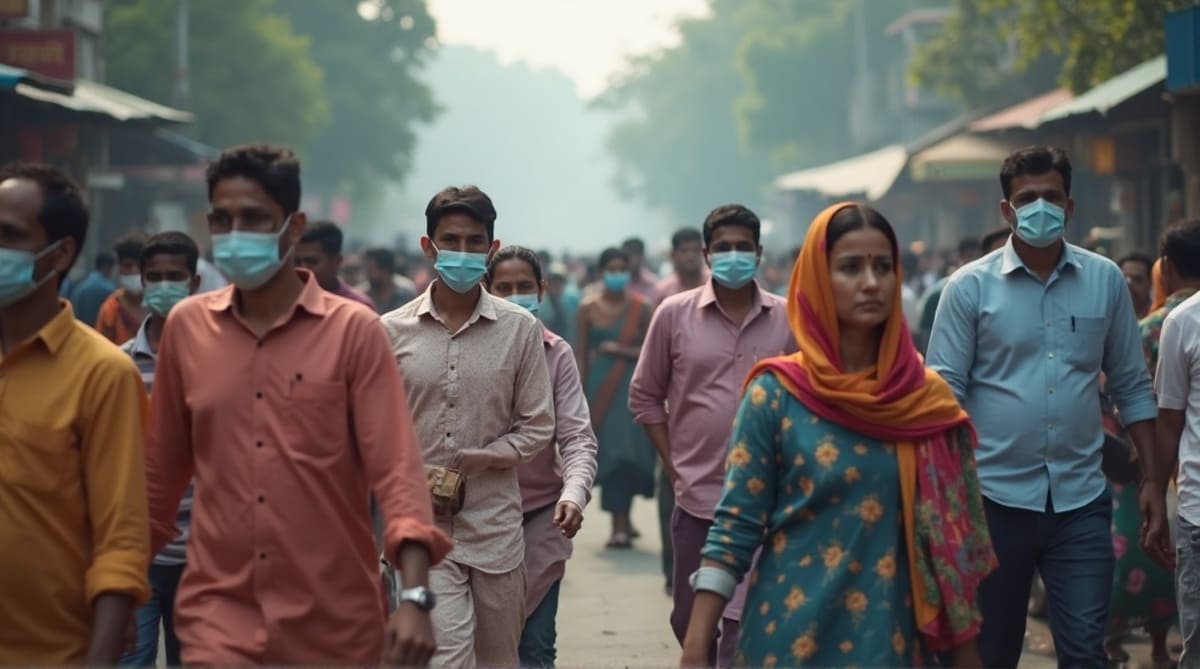
Representational AI-generated image of people walking through increasing levels of air pollution in New Delhi. Photo: RMN News Service

Forensic AI: New Metric Aims to Prove Pollution’s Exact Link to Hospital Admissions Amid Severe Air Crisis

Representational AI-generated image of people walking through increasing levels of air pollution in New Delhi. Photo: RMN News Service

Forensic AI: New Metric Aims to Prove Pollution’s Exact Link to Hospital Admissions Amid Severe Air Crisis

To successfully validate the model, Aether 360 is seeking institutional partnerships with organizations such as the WHO, UNEP, or AIIMS, using real-world, anonymized patient data.

By Rakesh Raman
New Delhi | December 18, 2025

The air quality crisis faced by national capitals like Delhi, where the sky darkens into a grey sheet during the winter, has been recognized as an annual emergency. During this “pollution season,” the air, especially in Delhi, becomes poisonous. The region frequently records Air Quality Index (AQI) levels crossing the “Severe” category (401–500) on many winter days, far exceeding the safe AQI level of below 50.

The primary hazard is fine particulate matter (PM2.5), which is extremely small, highly toxic, and can travel deep into the lungs or mix with the bloodstream. These toxic particles stem from various combined sources, including vehicular exhaust, industrial emissions, construction dust, and stubble burning.

This contamination has resulted in a critical public health crisis, leading to continuous exposure that causes severe health problems such as asthma, heart attacks, strokes, lung infections, and premature death. Hospitals consistently report higher admissions during peak pollution months. While government bodies track pollution levels and propose action plans, the issue often remains unsolved due to a lack of consistent action and enforcement of existing rules.

To bridge the gap between environmental data and these direct health consequences, researchers are developing a new AI model called Aether 360. The goal of this project is to develop the world’s first AI model capable of calculating the precise probability that a specific patient’s acute cardiac or respiratory hospital admission was directly caused by a recent spike in air pollution.

Aether 360 establishes this crucial causal connection using Explainable AI (XAI). The tool utilizes granular air quality readings alongside de-identified patient data to generate a “Pollution Probability Link” (PPL). From this data, the model calculates the core metric: the “Attribution Rate” (A-Rate), which is designed specifically to quantify this causal probability.

The developers anticipate that providing this quantifiable, localized evidence will force a profound change in policy and justify robust public health interventions, thereby breaking the current policy stalemate. The project aims to function as a high-tech forensic detective, using AI to identify and precisely measure the link between pollution spikes (the “assailant”) and specific hospital admissions (the “victims”).

To successfully validate the model, Aether 360 is seeking institutional partnerships with organizations such as the WHO, UNEP, or AIIMS, using real-world, anonymized patient data. This tool could provide the clear, undeniable evidence needed to treat toxic air as the slow-moving public health emergency it is.

By Rakesh Raman, who is a national award-winning journalist and social activist. He is the founder of a humanitarian organization RMN Foundation which is working in diverse areas to help the disadvantaged and distressed people in the society.

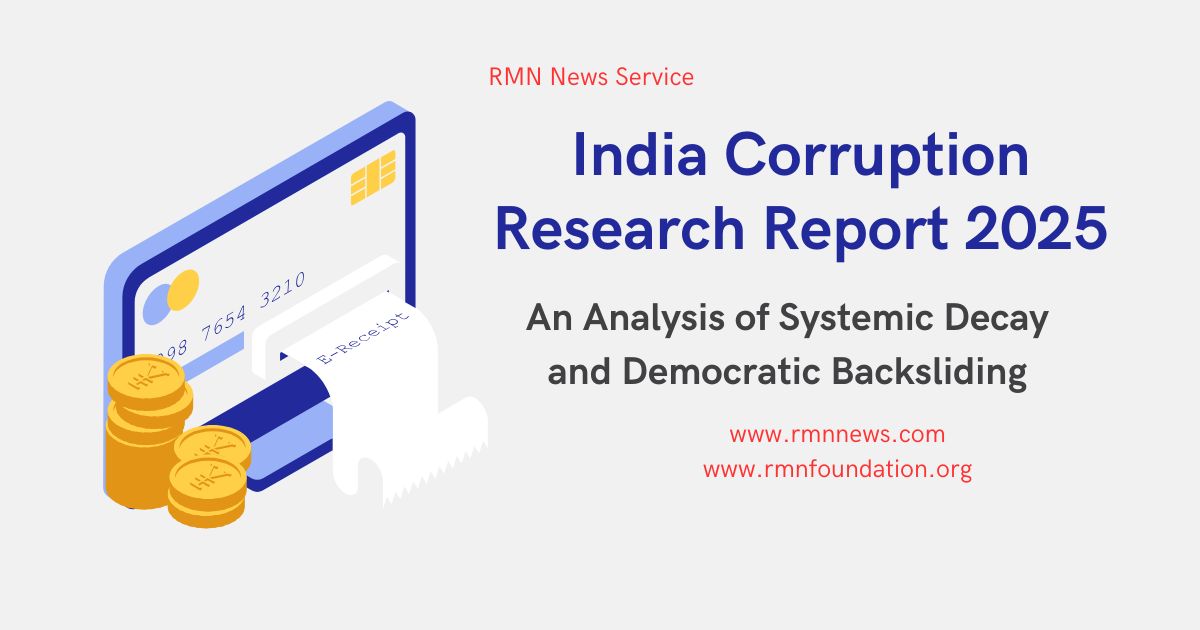
India Corruption Research Report 2025

India’s Corruption Crisis: A Systemic Ecosystem of Decay and Democratic Backsliding

India Corruption Research Report 2025

India’s Corruption Crisis: A Systemic Ecosystem of Decay and Democratic Backsliding

The core objective of ICRR remains unchanged: to reveal the structures that enable corruption, describe how they harm public welfare, and highlight the urgent need for systemic reforms.

By Rakesh Raman
New Delhi | December 17, 2025

The India Corruption Research Report 2025 (ICRR 2025) is released at a moment when governance, constitutionalism, and public accountability in India stand at a defining crossroads. Over the past four years of producing this report, RMN News Service and RMN Foundation have observed an unmistakable pattern: corruption in India has not only deepened but has become more structurally entrenched, more technologically sophisticated, and more politically protected.

Corruption today is no longer limited to illicit payments, procurement fraud, or bureaucratic manipulation. Instead, it has evolved into a systemic ecosystem where political power, administrative machinery, corporate interests, and weak oversight institutions intersect to produce outcomes that erode democratic values and deny citizens their fundamental rights. Evidence gathered through news analysis, policy reviews, field observations, and case studies demonstrates that corruption now often manifests as democratic backsliding—the weakening of institutions that are constitutionally obligated to check the arbitrary exercise of power.

Over the past year, India’s governance landscape has witnessed a troubling convergence of political centralization, shrinking institutional autonomy, and opacity in public decision-making. Judicial delays, selective enforcement of laws, breakdown of investigative independence, and unchecked political-financial networks have collectively created an environment where corruption thrives beneath the surface of electoral spectacle and administrative rhetoric. Citizens increasingly confront a reality where transparency mechanisms exist on paper but remain ineffective in practice.

[ Also Read: India Judicial Research Report 2025 – Decline of the Indian Judiciary ]

This year’s report introduces a more rigorous methodological approach. Alongside traditional research techniques—including policy document analysis, review of Comptroller and Auditor General (CAG) findings, examination of court orders, and monitoring of media investigations—the author has also incorporated responsible Artificial Intelligence (AI) tools to support textual analysis and information synthesis. This hybrid approach reflects RMN News Service’s commitment to evolving research standards and leveraging new technologies in line with international ethical frameworks.

The core objective of ICRR remains unchanged: to reveal the structures that enable corruption, describe how they harm public welfare, and highlight the urgent need for systemic reforms. This report does not seek to sensationalize individual scandals. Instead, it attempts to show that the corruption challenge confronting India is fundamentally institutional, not episodic. It is rooted in policy distortions, governance breakdowns, electoral malpractice, bureaucratic rent-seeking, corporate-political collusion, and the steady erosion of rule-of-law guarantees.

The India Corruption Research Report 2025 is therefore not a compilation of stories, but a documentation of systems—systems that must be reformed if India is to safeguard its democratic future. RMN News Service and RMN Foundation present this report with a sense of duty to the public, to the principles of constitutional governance, and to the belief that a transparent and accountable state is essential for the dignity and progress of every citizen.

Archiving on Zenodo

The India Corruption Research Report 2025 (ICRR 2025) has been officially archived on Zenodo—a globally recognized research repository developed by the European OpenAIRE initiative and managed by CERN. This ensures worldwide visibility and academic traceability of its findings.

The report is freely available for access, download, and citation via its permanent Digital Object Identifier (DOI). By securing international archiving, the report offers a credible reference point for global research on judicial reform, corruption, and human rights in India.

By Rakesh Raman, who is a national award-winning journalist and social activist. He is the founder of a humanitarian organization RMN Foundation which is working in diverse areas to help the disadvantaged and distressed people in the society.

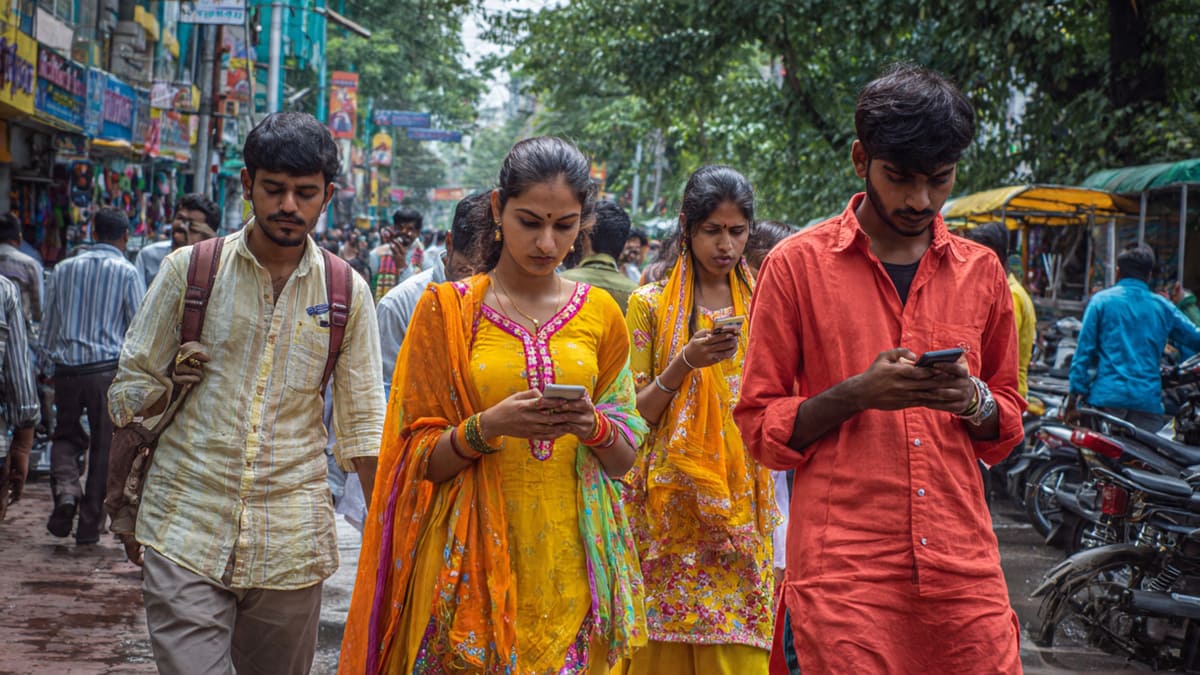
Representational AI-generated image of mobile phone users in India. Photo: RMN News Service

From AI Treaties to Social Media Bans: 5 Shocking Global Shifts from Late 2025

Representational AI-generated image of mobile phone users in India. Photo: RMN News Service

From AI Treaties to Social Media Bans: 5 Shocking Global Shifts from Late 2025

These five dispatches from late 2025 reveal a clear trend: governments globally are escalating their efforts to control technology and assert authority in novel ways.

By Rakesh Raman
New Delhi | December 17, 2025

Introduction: The Stories Beneath the Noise

In an era of non-stop information, it’s easy for the daily flood of headlines to obscure the signals of profound global change. The news cycle churns relentlessly, but beneath the surface of the major stories, under-the-radar developments are signaling tectonic shifts with far greater long-term consequences. These developments often go unnoticed, yet they offer a clear glimpse into the future of governance, technology, and individual rights.

This article cuts through the noise to highlight five pivotal developments from December 2025. From a nation banning social media for its youth to the world’s first legally binding treaty on artificial intelligence, these stories reveal significant shifts in how governments are confronting the challenges of the modern world. Here, we unpack what makes each of these events so significant and what they signal for the year to come.

1. Australia’s World-First Ban: Social Media Goes Dark for Under-16s

In a move with global ramifications, Australia is proceeding with a “world-first” ban that prevents individuals under the age of 16 from accessing social media. This controversial legislation, which directly affects major digital platforms, is designed to safeguard children from a growing list of online dangers.

The initiative represents one of the most aggressive government interventions into the digital lives of young people to date. While the stated goal is child protection, the policy ignites a critical debate. It pits the responsibility of the state to protect its most vulnerable citizens against fundamental questions of digital freedom, parental rights, and the immense technical challenges of enforcing such a widespread ban. The world is watching to see if this bold experiment in digital regulation becomes a new global standard or a cautionary tale.

2. A Legal First: Europe Creates a Binding Treaty for AI and Human Rights

The Council of Europe has established a landmark legal precedent with its new Framework Convention on AI. This is not another set of ethical guidelines or recommendations; it is the “first-ever international legally binding agreement” designed to govern the development and use of artificial intelligence.

The convention’s core purpose is to serve as a crucial link between human rights-based governance and technical AI standardization. For the first time, there is an international legal instrument ensuring that the design and deployment of AI systems must align with established principles of human rights, democracy, and the rule of law. This move marks a critical turning point, attempting to impose order and accountability on a technology that is advancing at an exponential rate.

3. An Unexpected Path to Citizenship: The ‘Trump Gold Card’

In a policy move that stunned observers, President Trump has launched the “Trump Gold Card,” a new initiative offering a “direct path to citizenship for qualified individuals.” The announcement is deeply counter-intuitive, coming from a political figure whose brand has been defined by a hardline stance on immigration, epitomized by promises of mass deportations and a border wall.

So, what explains this unexpected pivot? The motivations are likely a pragmatic blend of economic and political strategy. Economically, the program could be a targeted effort to attract high-skilled talent, entrepreneurs, and wealthy investors, creating a streamlined “brain gain” to boost American innovation and tax revenues. Politically, it may be a calculated move to appeal to business communities and moderate voters by showcasing a more nuanced approach to immigration, countering the narrative that his policies are purely restrictive. This selective, merit-based channel for citizenship represents a significant, and surprising, evolution in his administration’s strategy.

4. In India, a Cybersecurity App Comes Pre-Installed on Every New Phone

The Indian government has issued a mandate requiring all new smartphones manufactured or sold in the country to come pre-loaded with “Sanchar Saathi,” a state-run cybersecurity application. The official aim of the policy is to bolster the digital security of millions of citizens in a rapidly expanding mobile market.

This directive places India at the center of a global conversation about the relationship between state security and personal privacy. On one hand, the government presents the move as a necessary step to protect users from cyber threats. On the other, the mandatory installation of a government-run app on every personal device raises critical questions about potential state surveillance, data privacy, and the erosion of user choice in a democratic society.

5. A Stark Message: China’s Extreme Anti-Corruption Measure

China sent a powerful and unambiguous message about its stance on financial crimes with the execution of Bai Tianhui, the former general manager of China Huarong International Holdings (CHIH). Bai was found guilty of corruption, and the state responded with the most severe penalty possible.

This event is a stark illustration of the intensity of China’s ongoing anti-corruption campaign. The use of capital punishment in a high-profile case of white-collar crime underscores the state’s absolute authority and its zero-tolerance approach to what it deems critical threats to its economic and political stability. It serves as a chilling warning to officials and executives operating within its system.

Conclusion: What Do These Signals Mean for Our Future?

These five dispatches from late 2025 reveal a clear trend: governments globally are escalating their efforts to control technology and assert authority in novel ways. From Canberra to New Delhi, governments are asserting greater control over the digital sphere. In Europe, new legal frontiers are being established to rein in artificial intelligence, while in the United States and China, political and legal authority is being wielded in surprising and definitive ways. The common thread is an increasingly interventionist state, grappling with the complexities of technology, security, and economic integrity.

These trends push us toward a fundamental question as we head into 2026. As governments worldwide take unprecedented steps to regulate our digital and public lives, where do we draw the line between protection and control?

Photo: Representational AI-generated image of mobile phone users in India. Photo: RMN News Service

By Rakesh Raman, who is a national award-winning journalist and social activist. He is the founder of a humanitarian organization RMN Foundation which is working in diverse areas to help the disadvantaged and distressed people in the society.

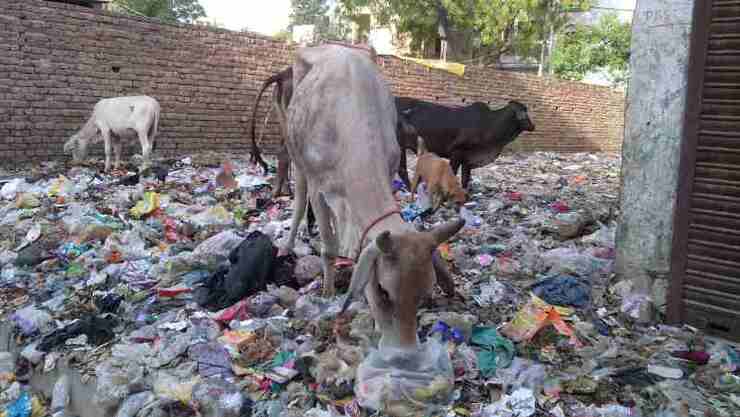
Starved cows eating household hazardous waste near a housing colony of Delhi. Dirty scenes like this are common in the national capital. Photo: Rakesh Raman / RMN News Service (Representational Image)

Systemic Decay and Political Privilege: 5 Warnings

Starved cows eating household hazardous waste near a housing colony of Delhi. Dirty scenes like this are common in the national capital. Photo: Rakesh Raman / RMN News Service (Representational Image)

Systemic Decay and Political Privilege: 5 Warnings

The constitutional guarantee of personal liberty, enshrined most visibly in India’s bail jurisprudence, has been transformed into a political privilege.

RMN Foundation Report
December 3, 2025

Introduction: A Glimpse Into the Unrest

In a world saturated with information, it’s easy to miss the signals for the noise. But sometimes, a single snapshot can reveal the tectonic shifts happening just beneath the surface. This article cuts through the chaos to distill five developments highlighted in a single, stark issue of the news magazine ‘The Unrest‘ from December 1-15, 2025, which covers global economic and political upheavals. The magazine’s cover story, the “India Corruption Research Report 2025,” sets a grim tone for the dispatches that follow.

1. In India, Corruption Isn’t Just an Action—It’s the System

The cover story from ‘The Unrest,’ the “India Corruption Research Report 2025,” delivers a stark conclusion: corruption in India is no longer a series of isolated acts but has become systemic, deeply embedded within the country’s governance frameworks. This finding points to a far more profound issue than individual bribery, suggesting a “systemic decay” where the very structures meant to serve the public are fundamentally compromised. This erosion of institutional integrity is a key feature of democratic backsliding, where the rules that govern a society begin to decay from within.

2. A Constitutional Right Has Morphed into a Political Privilege

‘The Unrest’ further explores this democratic backsliding with a report on India’s justice system. The principle of bail is intended to uphold the constitutional guarantee of personal liberty, one of the most fundamental rights in a democracy. However, the magazine makes a startling claim in a single sentence, suggesting this core tenet has been distorted:

The constitutional guarantee of personal liberty, enshrined most visibly in India’s bail jurisprudence, has been transformed into a political privilege.

This reported transformation is a chilling example of how foundational rights can be re-framed as conditional favors. When a right accessible to all citizens becomes a privilege awarded selectively, it undermines the very essence of the rule of law.

3. Delhi’s Biggest Killer Isn’t What You Think

Each winter, Delhi’s severe air quality crisis makes headlines. But the December 2025 issue of ‘The Unrest’ highlights a devastating and often understated fact: toxic air is the leading cause of death in the city. The reality that an environmental issue has become the primary public health threat for millions in a major global capital is a staggering indictment of policy failure. It raises a critical question about governance: what does it mean when a predictable, annual environmental crisis becomes the single largest cause of death in a nation’s capital?

4. A Former Prime Minister Is Sentenced to Death

In a politically charged development with significant regional implications, ‘The Unrest’ reports that Bangladesh’s International Crimes Tribunal has sentenced former Prime Minister Sheikh Hasina to death. The tribunal found her guilty of “alleged crimes against humanity.” A death sentence for a former head of government is a rare and momentous event, sending shockwaves through the international community and underscoring the immense political stakes involved.

5. You Could Be Targeted by International Copyright Enforcers

The magazine also sheds light on a surprising threat emerging for ordinary internet users. A growing number of individuals from around the world report being targeted by a Germany-based company called Copytrack. While the company claims to enforce copyright protections, the report in ‘The Unrest’ characterizes its activity as an “intimidation campaign.” This development is a concerning sign of how digital spaces are becoming increasingly policed, suggesting that everyday online activities could attract aggressive international enforcement.

Conclusion: The Stories Beneath the Surface

These dispatches from late 2025 paint a stark picture: a world where foundational rights become political tools, environmental neglect becomes the leading killer in a metropolis, and former leaders face the ultimate penalty. They reveal that the most significant global shifts often happen away from the main headlines, exposing deeper truths about the state of our world. As the structures of democracy, law, and even the environment show signs of systemic decay, the critical question isn’t just what we’re missing in the headlines, but whether the systems we rely on are breaking down from within.

Photo: Starved cows eating household hazardous waste near a housing colony of Delhi. Dirty scenes like this are common in the national capital. Photo: Rakesh Raman / RMN News Service (Representational Image)

Multiple Subject Guide for Primary Learning

Multiple Subject Guide for Primary Learning

Multiple Subject Guide for Primary Learning Multiple Subject Guide for Primary Learning

RMN Foundation school – which provides modern education free of charge to deserving children – has introduced its new book to educate the students at primary level.

Written by RMN Foundation founder and teacher Rakesh Raman, the book is a multiple subject guide comprising the following subjects:

1. Moral and Behavioural Education

2. English

3. Arithmetic

4. Information Technology (IT) / Computers

5. General Knowledge

You also can read Raman’s Tech Tale Series which is an innovative storybook concept that aims to educate children in the high-tech area of information and communications technology (ICT) through interesting stories.

RMN Foundation has launched the next phase of its education awareness campaign in India with the introduction of a comprehensive research report. The campaign aims to get the quality of education improved in schools so that students could get suitable employment. It is also planning to open free residential schools for deserving children.

The activities of RMN Foundation are being run single-handedly (without any external support) by RMN Foundation founder Rakesh Raman, who is a government’s National award-winning journalist.

He had also been associated with the United Nations (UN) through United Nations Industrial Development Organization (UNIDO) as a digital media expert to help businesses use technology for brand marketing and business development.

Download the Book

You can click here to download the book.

Donation

As RMN Foundation has limited resources, it invites people to get involved and donate for the Foundation’s educational as well as other social activities.

Donation: Individual donors can click here to donate online and click here to pay with PayPal.

Contact

Rakesh Raman
Editor, RMN News Service [ Website ]
Founder, RMN Foundation [ Website ]
463, DPS Apts., Plot No. 16, Sector 4
Dwarka, Phase I, New Delhi 110 078, India
WhatsApp / Mobile: 9810319059 | Contact by Email