Category: Unrest

Unnao Rape Case Legal Reversal: The Supreme Court of India has stayed a Delhi High Court order that previously granted bail to former BJP MLA Kuldeep Singh Sengar.

Connecting the Dots: Key Themes from “The Unrest”

Unnao Rape Case Legal Reversal: The Supreme Court of India has stayed a Delhi High Court order that previously granted bail to former BJP MLA Kuldeep Singh Sengar.

Connecting the Dots: Key Themes from “The Unrest”

Unnao Rape Case Legal Reversal: The Supreme Court of India has stayed a Delhi High Court order that previously granted bail to former BJP MLA Kuldeep Singh Sengar.

1. Introduction: Understanding a World of “Unrest”

Welcome to a deeper analysis of the global landscape. This summary synthesizes the major news stories from the January 1-15, 2026 issue of the RMN news magazine, “The Unrest.” While individual headlines about protests, technological breakthroughs, and legal battles can seem disconnected, they often point to larger, underlying global currents. The goal of this document is to connect these seemingly separate events under three powerful themes that emerge from the magazine’s coverage: widespread political and social instability, the dual-edged nature of technology, and a growing fight for truth and justice. We begin by exploring the first and most prominent theme: a world in a state of upheaval.

2. Theme 1: A World in Upheaval – Political & Social Unrest

Across the globe, numerous societies are grappling with significant internal and external conflicts. The magazine’s coverage highlights a pattern of citizen-led protests, challenges to government authority, and escalating diplomatic tensions.

The following table summarizes the domestic challenges reported in three key nations:

Country Nature of Unrest Key Detail
India Challenges to ruling party and democratic integrity Linked to a systemic corruption crisis and “democratic backsliding.”
Bangladesh Massive national protests Erupted after activist Sharif Osman Hadi died from injuries sustained in an assassination attempt.
Iran Anti-government demonstrations Fueled by skyrocketing inflation and the devaluation of the national currency.

Beyond internal struggles, the magazine highlights how international conflicts are increasingly fought not with armies alone, but through narratives, accusations, and the strategic control of information. Truth itself has become a contested territory, as seen in two major diplomatic disputes. A major diplomatic rift has opened between Russia and Ukraine after Moscow alleged that Kyiv launched a drone attack on one of President Putin’s residences—a claim Kyiv dismisses as “Typical Lies.” This incident showcases how modern conflicts are fought not just on the battlefield but in the media, with truth itself becoming a casualty.

Similarly, a geopolitical firestorm has erupted between India and China over the film Battle of Galwan. Chinese state media accuses the film of distorting historical facts, while the Indian government defends it as an act of artistic freedom. Here, a cultural product becomes a proxy for a larger national and historical dispute, illustrating how media and art are increasingly weaponized in geopolitical confrontations.

This landscape of conflict, both domestic and international, is increasingly shaped and amplified by modern tools, leading us to the second major theme: the profound and often contradictory role of technology.

3. Theme 2: The Double-Edged Sword – Technology’s Impact on Society

The articles in “The Unrest” present technology as a powerful force with both immense potential for progress and a significant capacity for harm. It is simultaneously a tool for empowerment and a source of anxiety, creating a complex and often contradictory picture of our digital age.

The Promise of Technology

  • Empowering Businesses and Citizens: Technology is showcased as a key driver of opportunity and education. A “Beginner’s Guide” explains how small businesses can leverage Artificial Intelligence (AI) for social media marketing. This democratizes powerful marketing capabilities, allowing small enterprises to compete with larger corporations on a more level playing field. In a similar vein, the partnership between the Council of Europe and Google to advance digital citizenship education aims to equip the next generation with the critical thinking skills needed to combat misinformation and participate constructively in a digital society.
  • Driving Sustainable Change: Technology is also a crucial element in creating a more sustainable future. The BAFTA albert initiative, supported by industry giants like the BBC, Netflix, ITV, and Sky, is using technology to promote “Fossil Fuel-Free Production” in the film and TV industry, demonstrating its power to drive positive environmental change at a systemic level.

The Peril of Technology

Simultaneously, technology’s relentless push for automation fuels deep-seated anxieties, posing a dual threat to both economic security and personal autonomy. In the creative industries, Google’s new AI filmmaking tools spark fears of mass job displacement for roles from directors to writers. In consumer finance, ICICI Bank’s digital systems are shown to create “automated harassment,” demonstrating how the pursuit of efficiency can erode both professional livelihoods and personal dignity. This distrust culminates in the political arena, where calls in India for a mass movement to abolish Electronic Voting Machines (EVMs) reveal how technological systems, when perceived as opaque or insecure, can undermine faith in democracy itself.

The disruptive power of technology—its ability to create and destroy, to clarify and confuse—naturally leads to our final theme: a fundamental struggle over the very concepts of truth, freedom, and justice.

4. Theme 3: Under Siege – The Fight for Freedom, Truth, and Justice

Several articles highlight a growing crisis of confidence in foundational societal pillars. From the courts to the media, institutions responsible for upholding justice and disseminating truth are facing intense scrutiny and, in some cases, are perceived as failing.

  1. Eroding Justice Systems: The Unnao rape case in India serves as a powerful example of this crisis. The Delhi High Court’s decision to grant bail to the convicted former politician Kuldeep Singh Sengar was widely seen as a “profound failure to deliver substantive justice.” The ruling ignited “widespread fury” and was quickly reversed by the Supreme Court, but the incident exposed deep vulnerabilities in the justice system and its ability to protect the powerless.
  2. Declining Freedom of Expression: This is not just a localized issue but a global trend. A flagship report from UNESCO delivers a startling statistic: a “historic 10% decline in global freedom of expression between 2012 and 2024.” This erosion, depicted visually in the magazine with an image titled “ATTACK ON PRESS FREEDOM,” signals a worldwide threat to the ability of journalists and citizens to speak freely and hold power to account.
  3. A Crisis of Credibility: Trust in key institutions appears to be at an all-time low. The report on Bollywood reveals a “severe credibility crisis” where “paid reviews and manipulated media narratives” have become the industry norm, corroding public trust in cultural products. This is mirrored in the political sphere, where the India Corruption Research Report 2025 exposes a “systemic ecosystem” of corruption that is directly linked to “democratic backsliding.” This parallel decay—in both cultural and political institutions—reveals a comprehensive erosion of public trust, where neither entertainment nor governance can be taken at face value.

These interconnected struggles for justice, freedom, and truth paint a complex and challenging picture of the current global landscape.

5. Conclusion: Synthesizing “The Unrest”

The January 1-15, 2026 issue of “The Unrest” does more than report on isolated events; it chronicles a world defined by interconnected trends. The stories weave together to reveal three core themes: a global surge in political and social instability, from street protests to diplomatic standoffs; the disruptive, dual nature of technology, which acts as both a catalyst for progress and a source of societal anxiety; and a critical fight to defend foundational values like justice, freedom, and truth from erosion. These themes suggest we are living in an era where foundational pillars of society are being fractured, forcing a global contest over the future of truth, power, and technological control.

Top Image: AI-generated image of women protesting in front of the Supreme Court | Photo: RMN News Service
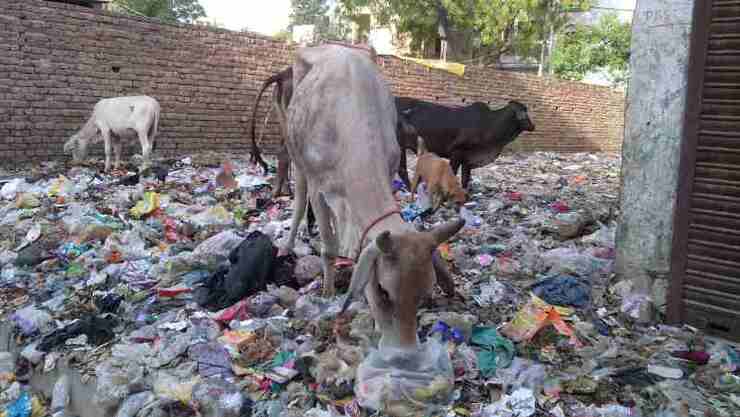
Starved cows eating household hazardous waste near a housing colony of Delhi. Dirty scenes like this are common in the national capital. Photo: Rakesh Raman / RMN News Service (Representational Image)

Systemic Decay and Political Privilege: 5 Warnings

Starved cows eating household hazardous waste near a housing colony of Delhi. Dirty scenes like this are common in the national capital. Photo: Rakesh Raman / RMN News Service (Representational Image)

Systemic Decay and Political Privilege: 5 Warnings

The constitutional guarantee of personal liberty, enshrined most visibly in India’s bail jurisprudence, has been transformed into a political privilege.

RMN Foundation Report
December 3, 2025

Introduction: A Glimpse Into the Unrest

In a world saturated with information, it’s easy to miss the signals for the noise. But sometimes, a single snapshot can reveal the tectonic shifts happening just beneath the surface. This article cuts through the chaos to distill five developments highlighted in a single, stark issue of the news magazine ‘The Unrest‘ from December 1-15, 2025, which covers global economic and political upheavals. The magazine’s cover story, the “India Corruption Research Report 2025,” sets a grim tone for the dispatches that follow.

1. In India, Corruption Isn’t Just an Action—It’s the System

The cover story from ‘The Unrest,’ the “India Corruption Research Report 2025,” delivers a stark conclusion: corruption in India is no longer a series of isolated acts but has become systemic, deeply embedded within the country’s governance frameworks. This finding points to a far more profound issue than individual bribery, suggesting a “systemic decay” where the very structures meant to serve the public are fundamentally compromised. This erosion of institutional integrity is a key feature of democratic backsliding, where the rules that govern a society begin to decay from within.

2. A Constitutional Right Has Morphed into a Political Privilege

‘The Unrest’ further explores this democratic backsliding with a report on India’s justice system. The principle of bail is intended to uphold the constitutional guarantee of personal liberty, one of the most fundamental rights in a democracy. However, the magazine makes a startling claim in a single sentence, suggesting this core tenet has been distorted:

The constitutional guarantee of personal liberty, enshrined most visibly in India’s bail jurisprudence, has been transformed into a political privilege.

This reported transformation is a chilling example of how foundational rights can be re-framed as conditional favors. When a right accessible to all citizens becomes a privilege awarded selectively, it undermines the very essence of the rule of law.

3. Delhi’s Biggest Killer Isn’t What You Think

Each winter, Delhi’s severe air quality crisis makes headlines. But the December 2025 issue of ‘The Unrest’ highlights a devastating and often understated fact: toxic air is the leading cause of death in the city. The reality that an environmental issue has become the primary public health threat for millions in a major global capital is a staggering indictment of policy failure. It raises a critical question about governance: what does it mean when a predictable, annual environmental crisis becomes the single largest cause of death in a nation’s capital?

4. A Former Prime Minister Is Sentenced to Death

In a politically charged development with significant regional implications, ‘The Unrest’ reports that Bangladesh’s International Crimes Tribunal has sentenced former Prime Minister Sheikh Hasina to death. The tribunal found her guilty of “alleged crimes against humanity.” A death sentence for a former head of government is a rare and momentous event, sending shockwaves through the international community and underscoring the immense political stakes involved.

5. You Could Be Targeted by International Copyright Enforcers

The magazine also sheds light on a surprising threat emerging for ordinary internet users. A growing number of individuals from around the world report being targeted by a Germany-based company called Copytrack. While the company claims to enforce copyright protections, the report in ‘The Unrest’ characterizes its activity as an “intimidation campaign.” This development is a concerning sign of how digital spaces are becoming increasingly policed, suggesting that everyday online activities could attract aggressive international enforcement.

Conclusion: The Stories Beneath the Surface

These dispatches from late 2025 paint a stark picture: a world where foundational rights become political tools, environmental neglect becomes the leading killer in a metropolis, and former leaders face the ultimate penalty. They reveal that the most significant global shifts often happen away from the main headlines, exposing deeper truths about the state of our world. As the structures of democracy, law, and even the environment show signs of systemic decay, the critical question isn’t just what we’re missing in the headlines, but whether the systems we rely on are breaking down from within.

Photo: Starved cows eating household hazardous waste near a housing colony of Delhi. Dirty scenes like this are common in the national capital. Photo: Rakesh Raman / RMN News Service (Representational Image)

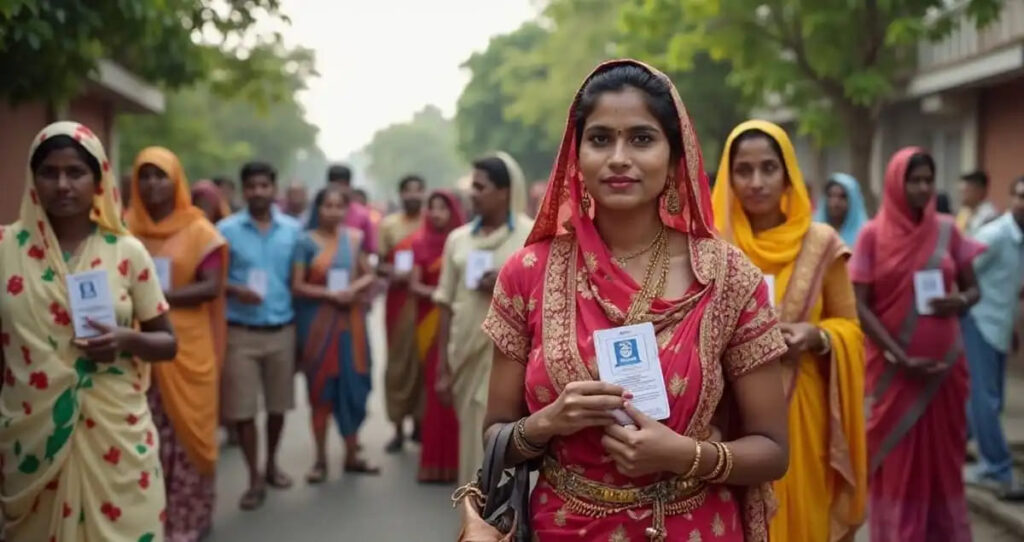
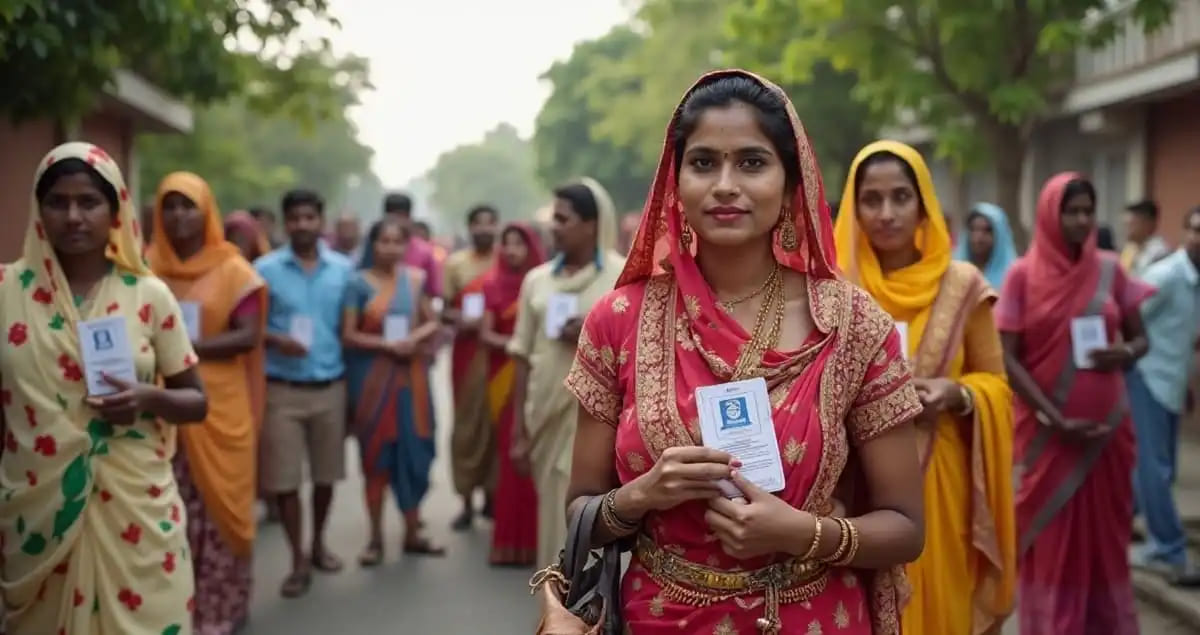
AI-generated representational image of men and women standing outside a polling booth to vote in an Indian election. Photo: RMN News Service

A Strategic Analysis of Systemic Instability in India

AI-generated representational image of men and women standing outside a polling booth to vote in an Indian election. Photo: RMN News Service

A Strategic Analysis of Systemic Instability in India

The dangerous combination of rising public anger and an apparent leadership vacuum poses a significant and growing threat to national stability.

1.0 Introduction: A Convergence of Crises

India is confronting a cascade of institutional failures that pose a direct threat to its internal stability and strategic trajectory. The foundations of governance are eroding under the dangerous convergence of systemic corruption, failing public institutions, and rising social discontent, creating an environment of profound uncertainty. This strategic analysis examines these compounding challenges—from the pervasive corruption that has shattered public trust to the critical decay of the nation’s judicial system and the resulting manifestations of civic unrest. By dissecting these issues and their interplay, this report assesses their collective impact on the nation’s governance, political landscape, and future stability.

2.0 The Pervasiveness of Corruption: An Erosion of Public Trust

Endemic corruption serves as a foundational challenge that corrodes public trust in state institutions at every level, from local civic administration to the highest echelons of national politics. It is not merely a transactional crime but a systemic condition that undermines the rule of law and the state’s legitimacy. This section dissects the profound public perception of corruption in India and its tangible manifestations.

The core finding of a recent survey reveals a profound crisis of faith in the nation’s integrity, a sentiment that is nearly universal among the populace.

An overwhelming 88% of survey respondents believe India is a corrupt country.

This figure is not merely a reflection of public dissatisfaction; it is a leading indicator of a potential collapse in state legitimacy, which carries significant risk for domestic policy execution and foreign investor confidence. This perception fuels cynicism and disengagement, creating fertile ground for instability. The specific manifestations of this corruption are visible at both the elite and grassroots levels.

  • High-Level Political Nepotism: A prominent example cited as evidence of high-level influence is the charge leveled by opposition figure Rahul Gandhi concerning the rise of Jay Shah, the son of the Home Minister, to the leadership of international cricket. This case is held up as a clear illustration of how political connections are perceived to supersede merit, reinforcing the public narrative that power and family ties are the primary currencies for advancement.
  • Grassroots Civic Corruption: At the local level, corruption directly impacts citizen life and safety through schemes like the “citywide construction-cum-corruption racket.” This system is reportedly orchestrated by criminals operating within the management committees of housing societies. This devolution of corruption to the community level shatters the last vestiges of safe civic space, turning neighbors into potential threats and proving that no aspect of daily life is insulated from systemic rot.

This normalization of graft at every level creates an environment where judicial integrity is no longer assumed but is itself seen as a commodity, making the judiciary not a bulwark against corruption but its next logical victim.

3.0 The Compromised Judiciary and Administrative Collapse

The judiciary is intended to be the ultimate guarantor of the rule of law, a bulwark against executive overreach and a forum for impartial justice. However, evidence suggests a severe degradation of the Indian judicial system, which is suffering from both internal decay and overwhelming external pressures. This section assesses the “Systemic Rot” that has compromised this vital institution.

According to analysis, the confluence of political influence and corruption has created what is described as a “marketplace of judgments,” where judicial outcomes are potentially for sale. This perception strikes at the very heart of judicial legitimacy. The failure is not isolated but is driven by a dual crisis of institutional capacity and external overload.

  1. Crippling Institutional Failures: The judiciary is plagued by deep-seated internal problems, including “crippling case backlogs” and “interminable delays” that deny timely justice to citizens. These long-standing issues are compounded by the persistent breakdown of essential infrastructure, exemplified by an urgent complaint filed with the Union Ministry of Law and Justice over the failure of the Delhi High Court’s e-Filing system. Furthermore, specific judicial actions, such as the Supreme Court’s refusal to entertain a plea from an incarcerated Member of Parliament, Amritpal Singh, challenging his detention, contribute to public concerns about access to legal recourse.
  2. Overload from Collapsed Grievance Systems: The crisis within the courts is directly exacerbated by the collapse of parallel administrative systems. The “India Judicial Research Report 2025” reveals that the failure of government-run citizen grievance mechanisms is forcing millions of ordinary administrative disputes into an already collapsing court system. Instead of being resolved at the administrative level, these cases flood the judiciary, magnifying its backlogs and rendering it incapable of performing its core constitutional functions effectively.

The cumulative breakdown of legal and administrative recourse has predictably led to a sharp rise in public frustration, pushing citizens toward more direct forms of protest and political expression.

4.0 Manifestations of Social Unrest and Political Vacuum

When formal systems of governance and justice fail to provide citizens with adequate recourse, public discontent inevitably manifests in more direct, and often disruptive, ways. The erosion of formal recourse has predictably ignited a series of low-grade, high-visibility social fires, each exposing a different facet of state incapacity.

Mounting social and civic distress is evident in a series of recent events, each serving as a clear indicator of a fracturing social contract:

  • Public Protests: A clash between demonstrators and police at Panjab University over the demand for senate elections signifies a failure of the democratic process, forcing citizens into direct confrontation with the state to demand basic institutional functions.
  • Severe Public Safety Failures: A deadly explosion near the Red Fort, which resulted in at least eight fatalities, represents a catastrophic failure of the state’s primary duty to provide basic security, eroding public confidence in the heart of the nation’s capital.
  • Environmental Governance Crisis: The confirmation that air pollution has become the leading cause of death in Delhi is a stark indictment of failed public welfare administration and a fundamental failure to protect the citizens’ right to life.

Compounding this climate of public anger is the ineffectiveness of the political opposition, which has created a dangerous leadership vacuum. The opposition’s failure is twofold: a failure of on-the-ground activism and a failure of constitutional responsibility, making it a vacuum, not an alternative. Key figures like Rahul Gandhi are portrayed as a “social media influencer” who is “not prepared to protest on the streets.” This critique suggests he is failing to lead effective field campaigns or protect the fundamental rights of citizens, leaving widespread discontent without a credible political channel.

The dangerous combination of rising public anger and an apparent leadership vacuum poses a significant and growing threat to national stability.

5.0 Conclusion: Assessing the Collective Impact on National Stability

The evidence presents a deeply concerning picture of systemic instability in India, driven by the mutually reinforcing failures of its core institutions. The analysis reveals a clear causal chain: pervasive corruption has fostered widespread public distrust, which is further entrenched by a compromised judiciary incapable of delivering justice. This collapse of formal grievance mechanisms has pushed public discontent onto the streets, yet this energy finds no constructive outlet in an opposition movement criticized for its detachment and ineffectiveness.

The compounding nature of these crises—political, judicial, and social—presents the primary risk to India’s domestic stability. For the international community, these developments must recalibrate assessments of India’s long-term trajectory. The nation’s credibility as a stable democratic anchor in Asia can no longer be assumed; it is now an open question, contingent on its ability to reverse this systemic decay.

Photo: AI-generated representational image of men and women standing outside a polling booth to vote in an Indian election. Photo: RMN News Service

Rakesh Raman  |  LinkedIn  |  Facebook  Twitter (X)

AI-generated representational image of men and women standing outside a polling booth to vote in an Indian election. Photo: RMN News Service

Strategic Analysis of Democratic and Economic Challenges in India

AI-generated representational image of men and women standing outside a polling booth to vote in an Indian election. Photo: RMN News Service

Strategic Analysis of Democratic and Economic Challenges in India

An October 2025 Snapshot

This web of interconnected issues risks creating systemic paralysis, where the state’s capacity to address any single major challenge is crippled by compounding failures in other essential domains.

By Rakesh Raman
New Delhi | October 19, 2025

1.0 The Crisis in Governance and Democratic Institutions

Robust democratic institutions and effective governance are the bedrock of national stability and long-term progress. They provide the framework for fair elections, accountable leadership, and the delivery of essential public services. However, recent events in India raise significant questions about the integrity and efficacy of the nation’s political and administrative systems. This section analyzes key incidents that highlight a growing crisis in electoral processes, high-level political conduct, and municipal administration.

1.1 Electoral Integrity Under Scrutiny

The foundation of any democracy is the trust citizens place in their electoral process. In India, this trust is being severely tested. While the Election Commission of India (ECI) defends its voter list revision process and announces new reforms for the upcoming Bihar Assembly election, scheduled for November 6 and November 11, critics allege these measures are a distraction from deeper issues of potential electoral manipulation.

This climate of distrust is fueled by a volatile cycle of accusations between the country’s main political forces. In Telangana, the Congress party faces accusations of “Vote Chori” (vote theft). Simultaneously, Congress continues to level serious allegations against Prime Minister Modi’s BJP, accusing it of systemic election theft through manipulation of electoral rolls and tampering with Electronic Voting Machines (EVMs). This perpetual state of mutual accusation does more than simply erode public confidence; it creates a crisis of legitimacy for India’s entire democratic framework, making effective governance and policy implementation exponentially more difficult regardless of which party is in power.

1.2 High-Profile Corruption Allegations

The persistence of high-level corruption charges against senior political figures remains a critical challenge to clean governance. A prominent case study is the legal action against former Union Railway Minister Lalu Prasad Yadav, against whom a Delhi court has officially framed charges of corruption, criminal conspiracy, and cheating. The case extends to his wife, former Bihar Chief Minister Rabri Devi, and his son, former Deputy Chief Minister Tejashwi Yadav, illustrating how allegations of corruption can permeate the highest echelons of political families. Such high-profile cases do more than damage public perception; they signal a significant political risk factor, indicating that key nodes of power may be compromised by corruption, with potential impacts on policy stability and the rule of law.

1.3 Municipal Governance Collapse: A Case Study

Failures in governance are not confined to the national political stage; they manifest starkly at the municipal level, directly impacting citizens’ daily lives. A recent report from Delhi provides a visceral example of this breakdown. A “massive, sprawling pile of filth” has completely overtaken a significant stretch of a public road, transforming it into a hazardous dump. This is not merely an issue of poor sanitation but stands as a “testament to the absence of effective administration.” When a capital city’s basic infrastructure fails so visibly, it signals a deeper collapse in the administrative machinery responsible for delivering essential services.

These pervasive failures in the political and administrative spheres put immense pressure on the judiciary, the one institution constitutionally mandated to act as a final check on executive and legislative power. However, as the next section explores, that institution is facing its own crisis of capacity.

2.0 The Eroding Authority of the Judiciary

The judiciary serves as a cornerstone of democracy, tasked with interpreting the law, safeguarding fundamental rights, and holding the executive and legislative branches accountable. Its authority rests on public trust in its integrity, impartiality, and efficiency. However, recent assessments and functional breakdowns suggest a systemic decline within this vital institution, threatening its capacity to fulfill its constitutional obligations.

2.1 Systemic Decline and Inefficiency

The India Judicial Research Report 2025 presents a sobering diagnosis of the country’s legal system, unveiling “alarming findings” that point to widespread and deep-seated problems. It identifies three core areas of decay: corruption, inefficiency, and moral decline. These are not isolated issues but symptoms of a systemic malaise affecting the judicial system across the board. Such a fundamental decline compromises the judiciary’s ability to deliver timely justice and act as an effective bulwark against executive overreach and administrative apathy.

2.2 Technological Breakdown and Procedural Opacity

The judiciary’s struggle with basic modernization further exemplifies its inefficiency. The implementation of the Delhi High Court’s E-Filing Portal, a critical tool for improving access to justice, has been a notable failure. The system has been “marred by frequent crashes, procedural opacity, and inaccessible interfaces.” This technological breakdown is more than a simple inconvenience; it is a concrete manifestation of the systemic inefficiency highlighted in the broader judicial report, creating significant barriers for legal professionals and citizens attempting to navigate the justice system.

A judiciary weakened by internal decay and operational failure creates a vacuum of accountability, a condition that emboldens malfeasance not only in government but also within the powerful corporate sector, where issues of transparency and governance are becoming increasingly acute.

3.0 Corporate Accountability and Systemic Economic Failures

A nation’s economic health and its attractiveness as an investment destination depend heavily on strong corporate governance, reliable infrastructure, and a high degree of consumer trust. Recent cases in India, however, highlight significant deficiencies in corporate accountability and systemic failures in service delivery, which stand in contrast to major developments in the global technology economy.

3.1 Global Scrutiny and Enforcement Challenges

The challenges of enforcing international corporate accountability are starkly illustrated by the case involving the Adani Group. The U.S. Securities and Exchange Commission (SEC) is reportedly struggling to serve summons to the group’s executives in relation to allegations of securities fraud and bribery. This difficulty in executing a basic legal procedure against a major Indian conglomerate on the global stage underscores the complexities and potential obstacles in holding powerful corporations accountable to international legal and regulatory standards.

3.2 Erosion of Consumer Trust and Corporate Transparency

Domestically, a lack of transparency and repeated service failures are eroding consumer trust in major corporations. Two recent examples highlight this trend:

The Bisleri Case: The bottled water giant Bisleri “continues to evade public accountability” by persistently refusing to disclose the methods it employs to verify and ensure the purity of its water. This lack of transparency on a fundamental public health issue undermines consumer confidence.

The Airtel Case: Recurring broadband outages experienced by Airtel customers in New Delhi are not “isolated technical glitches but symptoms of a deep-rooted systemic problem.” This indicates a critical infrastructural deficit and operational risk within a key sector, undermining the digital backbone required for a modern economy.

3.3 The AI Boom: A Contrasting Economic Narrative

While India grapples with these domestic systemic failures, the global technology landscape is undergoing a dramatic transformation. OpenAI, the creator of ChatGPT, has seen its valuation soar to an astonishing $500 billion following a secondary share sale of $6.6 billion. As commentator Imrana explains, it is crucial to understand that such a valuation is more about “belief than balance sheets.” It represents the market’s profound confidence in the company’s future potential, not the cash it currently possesses. This highlights a global economic narrative driven by forward-looking technological potential, which contrasts sharply with the on-the-ground reality of infrastructural and corporate challenges in India.

The ability to address these corporate and infrastructural challenges and participate more fully in future economic trends depends on a nation’s foundational asset: its human capital, which is directly shaped by the national education system.

4.0 The Education-Employability Disconnect

The quality of a country’s education system is directly linked to its long-term economic trajectory, innovation capacity, and global competitiveness. A system that effectively prepares its youth for the demands of the modern economy is essential for national development. However, a critical new report suggests that India’s school system is fundamentally failing in this primary objective.

4.1 The Core Crisis: A System Failing to Make Students Employable

The report, titled Job with Education: School Education Report 2025 to Make Students Employable, delivers a stark verdict on the state of Indian schooling. Its central argument is that there is an “undeniable line from the failing education system to its severe negative outcomes.” These consequences impact both individual students and the nation’s overall economic health. The report identifies a fundamental failure in human capital development, a core lagging indicator that threatens India’s future economic competitiveness and its ability to innovate.

4.2 A Call for Systemic Reform

This assessment is echoed by sharp commentary on the need for a paradigm shift in educational philosophy. Imrana argues that it is past time “to stop teaching yesterday’s lessons for tomorrow’s jobs.” The core mission of schools, according to this view, must be fundamentally reoriented to prepare students “to live, work, and succeed in the world” as it exists today and as it will exist in the future. This requires a systemic overhaul of what is taught and how it is taught.

The crisis in education forms the final piece of a complex puzzle, setting the stage for a broader understanding of the interconnected challenges facing the nation.

5.0 An Interconnected Web of Strategic Challenges

This analysis reveals a landscape of significant and deeply rooted challenges across India’s most critical sectors. The integrity of the democratic process is threatened by a crisis of legitimacy. Governance is faltering, evidenced by high-profile corruption cases and the visible collapse of municipal services. The judiciary, the institution meant to act as a check on such failures, is itself compromised by systemic inefficiency and decline. Simultaneously, the corporate and economic spheres are marked by issues of accountability and failing infrastructure, while the education system is failing to produce a workforce capable of meeting modern demands.

Crucially, these are not isolated problems but an interconnected web of mutually reinforcing challenges. A weakened judiciary is ill-equipped to hold powerful political actors accountable or to enforce transparency on major corporations. Systemic failures in governance lead directly to the degradation of public infrastructure, which in turn stifles economic activity. At the base of it all, an outdated education system fails to cultivate the human capital required to address this complex matrix of issues. This web of interconnected issues risks creating systemic paralysis, where the state’s capacity to address any single major challenge is crippled by compounding failures in other essential domains.

By Rakesh Raman, who is a national award-winning journalist and social activist. He is the founder of a humanitarian organization RMN Foundation which is working in diverse areas to help the disadvantaged and distressed people in the society.

Rakesh Raman  |  LinkedIn  |  Facebook  Twitter (X)

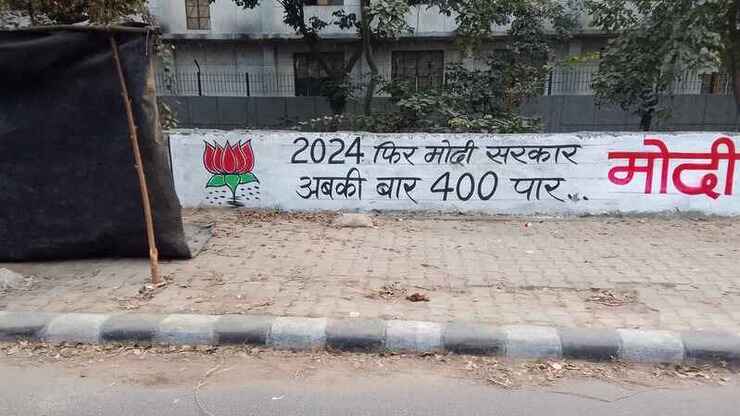
Election on EVMs. A wall painting in New Delhi shows Modi’s party BJP will win more than 400 seats in the 2024 Lok Sabha election. Photo by Rakesh Raman / RMN News Service

India Risks Losing Democratic Status Amid Widespread Election Fraud Allegations

Election on EVMs. A wall painting in New Delhi shows Modi’s party BJP will win more than 400 seats in the 2024 Lok Sabha election. Photo by Rakesh Raman / RMN News Service

India Risks Losing Democratic Status Amid Widespread Election Fraud Allegations

By RMN Foundation News Team
August 2, 2025 | New Delhi

Mounting allegations of electoral fraud and political interference have raised serious concerns about the future of democracy in India. The August 1–15, 2025 issue of The Unrest magazine, published by RMN News, highlights these troubling developments, warning that the country’s democratic framework may be in jeopardy if transparency and accountability continue to erode.

The lead story examines intensified claims of election manipulation, with opposition leaders accusing the ruling regime and the Election Commission of undermining free and fair elections. The publication notes a growing chorus of voices — both domestic and international — questioning the integrity of India’s electoral processes, which are increasingly viewed as compromised by systemic bias and lack of institutional independence.

The magazine also provides in-depth coverage of political, social, and global developments. A notable feature discusses growing calls for former U.S. President Donald Trump to receive the Nobel Peace Prize for his role in facilitating the India-Pakistan ceasefire, even as his past associations with Jeffrey Epstein resurface in public discourse.

At the national level, a major corruption case involving senior IAS officers has prompted renewed demands for an investigation by the Cabinet Secretariat. In Punjab, the government’s controversial Land Pooling Policy has sparked widespread protests among farmers and opposition parties.

Another focal point is the escalating crisis of judicial integrity. Union Minister Kiren Rijiju’s comments about corruption in India’s judiciary, especially regarding the Justice Yashwant Varma case, have added to public distrust in the legal system. The magazine documents the prevalence of a disturbing “bribe-for-bail” culture that further undermines judicial credibility.

Elsewhere in India, demolition drives targeting slum settlements in Delhi have drawn criticism. Opposition leaders have accused the government of displacing vulnerable communities without providing viable alternatives, while also calling out perceived political opportunism in response visits by opposition figures.

International coverage includes Canada’s plan to officially recognize the State of Palestine in September 2025, a development expected to influence global diplomatic dynamics. A new U.S.-EU trade agreement, announced by Donald Trump and Ursula von der Leyen, signals a shift in economic alignments. Simultaneously, Trump has imposed a 25% tariff and an unspecified penalty on Indian exports, further straining bilateral relations.

On the domestic front, the Association for Democratic Reforms (ADR) has urged the Supreme Court to intervene in Bihar’s voter roll revision process, warning that thousands of citizens risk being unlawfully excluded from the electoral rolls. Meanwhile, Congress leaders have challenged the Modi government’s narrative on the Pahalgam terror attack, demanding transparency and accountability.

The magazine also features Sonia Gandhi’s condemnation of the Modi administration’s silence on the Gaza crisis, describing it as a “shameful abdication” of moral responsibility in the face of human rights violations.

From a societal perspective, student writer Imrana offers a thoughtful critique of India’s rigid school education system in a special podcast segment titled Imrana’s Insight, proposing reforms to better prepare students for future employment.

To complement its print reporting, RMN News has launched RMN News Audio Reports, a multilingual series (English, Hindi, and Punjabi) designed to offer deeper analysis of current events. Additional services featured in the issue include the Pressed Reporter initiative, supporting persecuted journalists globally, and the Clean House service, empowering Delhi residents to report corruption in housing and civic systems.

The issue also includes findings from RMN Research, revealing that excessive and often misleading YouTube advertisements are alienating viewers and harming brand reputations. The research further highlights the prevalence of fake engagement metrics on the platform.

Finally, the magazine reports on the expansion of Delhi’s Health Information Management System (HIMS), introduced by Chief Minister Rekha Gupta to modernize public healthcare delivery in the capital.

The full magazine is available for download on the RMN News website, along with an audio analysis of the major stories.

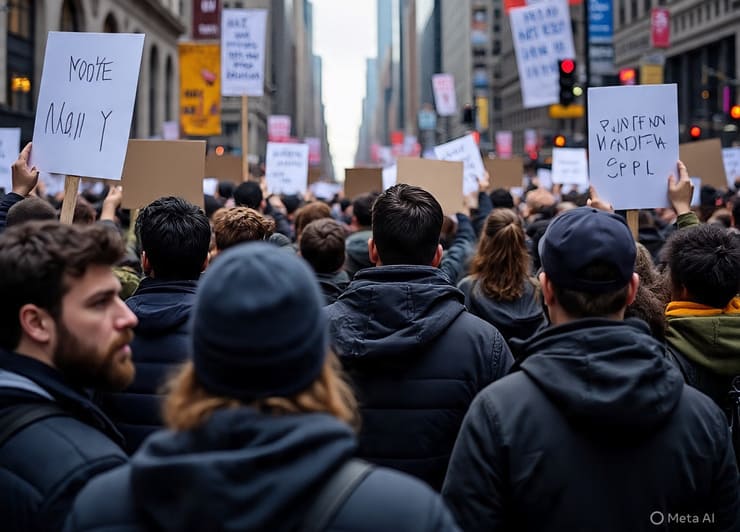
The Unrest: Representational Image of a Protest Created with Meta Generative AI. By RMN News Service

Global Turmoil Deepens Amid Political Strife, Economic Instability, and Human Rights Concerns


The Unrest: Representational Image of a Protest Created with Meta Generative AI. By RMN News Service

Global Turmoil Deepens Amid Political Strife, Economic Instability, and Human Rights Concerns

To enhance accessibility and engagement, RMN News has also published an audio analysis of the magazine’s content in Hindi, now available on the magazine download page.

📄 RMN Foundation News Report:
July 17, 2025

As political tensions and economic instability intensify worldwide, RMN News has released a new publication that highlights some of the most pressing developments affecting governance, civil society, and global peace.

The recently released (July 16-31, 2025) issue of RMN News’ investigative magazine The Unrest includes a wide range of stories that reflect the complex and often troubling realities of today’s world. Topics covered include the steady decline of school education in India, the persistent use of strategic lawsuits to silence dissent, and concerns about electoral integrity in Indian states such as Bihar.

The magazine also features critical analyses on international developments—from U.S. politics and trade tensions under Donald Trump to the implications of Elon Musk launching a new political party. A UN expert’s warning about the crisis in Palestine and shocking political events in Russia further underscore the growing fragility of global systems.

Readers will find in-depth articles on technological trends such as AI governance, environmental corruption in Indian cities, and a critical consumer investigation involving leading water brand Bisleri. The reporting is complemented by insights on controversial topics such as government borrowing, misinformation, and rising authoritarian tendencies in democratic setups.

To enhance accessibility and engagement, RMN News has also published an audio analysis of the magazine’s content in Hindi, now available on the magazine download page.

Managed by national award-winning journalist Rakesh Raman, RMN News and RMN Foundation continue to explore and expose critical issues affecting public life through investigative journalism and humanitarian work. With six global news sites attracting over 33 million page views annually (Webstat data), the RMN initiative remains a strong voice in the defense of democratic values, transparency, and civic empowerment.

📥 Download the latest magazine issue here:
https://rmnnews.com/2025/07/16/the-great-escape-the-unrest-magazine-of-rmn-news-july-16-31-2025-issue/

For continuous updates and advocacy support, visit RMN Foundation.